

Insulin Therapy Risk Calculator
Understand Your Risks
Estimate your hypoglycemia risk and weight gain potential based on your insulin therapy habits.
When you start insulin therapy, it’s not just about bringing your blood sugar down. It’s about doing it without crashing your system or packing on pounds. For people with type 1 diabetes, insulin isn’t optional-it’s life-saving. For many with type 2 diabetes, it’s the next step when pills aren’t enough. But here’s the reality: insulin therapy comes with two big, common, and often scary side effects-hypoglycemia and weight gain. And if you don’t know how to handle them, they can make life harder than the diabetes itself.
What Hypoglycemia Really Feels Like
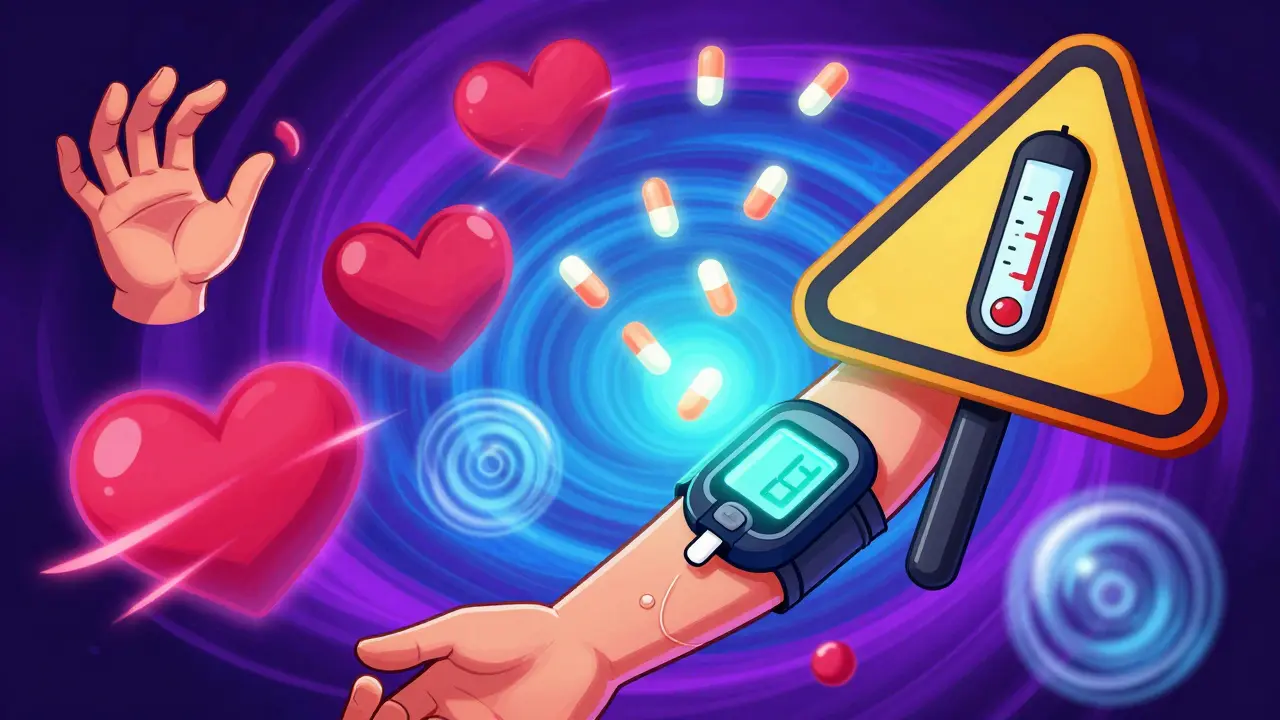
Hypoglycemia means your blood sugar drops below 70 mg/dL. It’s not just feeling a little shaky. It’s your body screaming for help. You might break out in a cold sweat, your heart races, your vision blurs, or you suddenly can’t think straight. Some people get hungry. Others feel dizzy or weak. In severe cases, you pass out. And if no one’s around? That’s when it gets dangerous. Studies show that people on intensive insulin therapy have about three times the risk of severe hypoglycemia compared to those on looser control. In type 1 diabetes, that’s roughly 2 to 3 serious low-blood-sugar events per person every year. That’s not rare. That’s normal. And it’s why so many patients say they’re terrified of insulin-even though they know they need it. The worst part? Over time, your body can lose the warning signs. This is called hypoglycemia unawareness. After 15 to 20 years with diabetes, about one in four people stop feeling the early symptoms. No shaking. No sweating. No warning. Just sudden confusion-or worse, unconsciousness. That’s why continuous glucose monitors (CGMs) are no longer a luxury. They’re a safety net. A CGM that alerts you before your sugar crashes can cut severe hypoglycemia by nearly half.Why Insulin Makes You Gain Weight
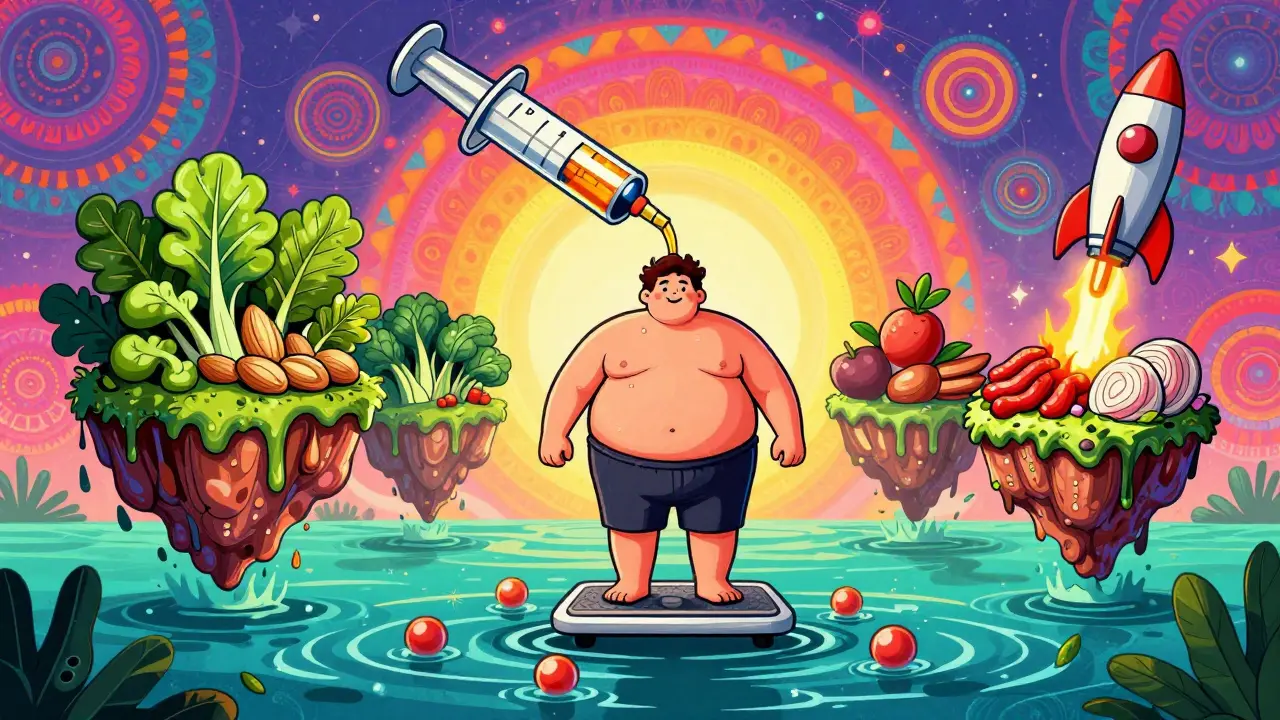
Insulin isn’t just a glucose transporter. It’s a storage hormone. When your body doesn’t have enough insulin, glucose builds up in your blood and spills out in your urine. You lose calories. You lose weight. When you start insulin, that stops. Your body finally starts holding onto the glucose it was wasting. That’s good for energy-but bad if you’re trying to avoid the scale. The average person gains 4 to 6 kilograms (about 9 to 13 pounds) in the first year of insulin therapy. For some, it’s more. For others, less. It depends on how much you eat, how active you are, and how your body responds. But here’s the catch: many people don’t realize they’re eating more because they’re afraid of lows. They snack to prevent a drop. They overcorrect. They eat carbs they don’t need. And insulin? It stores every extra calorie as fat. This isn’t just about looks. Extra weight makes insulin less effective. It increases your risk of heart disease. It makes managing diabetes harder. So weight gain isn’t just a side effect-it’s a trap. The more weight you gain, the more insulin you need. The more insulin you need, the more weight you gain.How to Prevent Low Blood Sugar
You can’t eliminate hypoglycemia-but you can drastically reduce it.- Check your blood sugar 4 to 6 times a day. Don’t skip meals, and don’t guess your numbers.
- Use a CGM. If you’re on multiple daily injections or an insulin pump, a CGM is the single best tool to prevent lows. It doesn’t just tell you your number-it shows you the trend. Are you dropping fast? Slow? Stable?
- Learn your insulin-to-carb ratio and correction factor. This isn’t guesswork. It’s math. If you eat 40 grams of carbs, how much insulin do you need? If your sugar is 12 mmol/L, how much do you correct? Your diabetes educator can help you figure this out.
- Always carry fast-acting sugar. Glucose tablets, juice, or candy. Not chocolate. It’s too slow. Glucose works in 10 minutes. Chocolate takes 30.
- Teach your family, coworkers, friends how to give you a glucagon injection. If you pass out, they need to act fast. Glucagon kits are small, easy to use, and lifesaving.
- Wear a medical alert bracelet. It’s simple. It’s cheap. And in an emergency, it could save your life.
How to Avoid Weight Gain
Weight gain from insulin isn’t inevitable. It’s manageable.- Work with a dietitian. Not a fad diet. Real, sustainable nutrition. Focus on protein, fiber, and healthy fats. These keep you full longer and reduce insulin spikes.
- Count carbs-but don’t overdo it. Many people eat more carbs than they need because they think insulin will handle it. It won’t. Insulin doesn’t erase calories. It stores them.
- Move more. Even 30 minutes of walking a day improves insulin sensitivity. That means you need less insulin. Less insulin = less weight gain.
- Don’t use insulin as a safety net. If you’re scared of a low, don’t eat 30 grams of carbs “just in case.” Eat 15. Check your sugar. Then decide.
- Ask about combination therapy. Newer drugs like semaglutide (Ozempic, Wegovy) or liraglutide (Victoza) can be added to insulin. They help you lose weight, lower blood sugar, and reduce insulin doses. Studies show people lose 5 to 10 kg over 30 weeks when they add these to insulin.
- Start early. If you get dietary counseling within the first month of starting insulin, you can cut average weight gain from 6.2 kg to just 2.8 kg in the first year.
What’s New in Insulin Therapy
Insulin hasn’t stood still. Newer versions are smarter.- Insulin degludec (Tresiba) lasts longer and causes 40% fewer nighttime lows than older insulins like glargine (Lantus).
- Insulin glargine U300 (Toujeo) has a flatter profile, reducing hypoglycemia risk-but it can delay recovery if you do go low.
- Artificial pancreas systems (closed-loop pumps) now automatically adjust insulin based on your glucose readings. In trials, they cut time spent in hypoglycemia by 72% compared to traditional pumps.
- Smart pens and apps now track your doses, remind you, and even suggest corrections based on your history.

The Real Risk: Fear Stops Treatment
Here’s the quiet crisis: 15 to 20% of people with diabetes intentionally skip or reduce their insulin doses to avoid weight gain or low blood sugar. They think they’re protecting themselves. They’re not. They’re risking kidney failure, nerve damage, blindness, heart attacks. Poor control leads to worse outcomes than insulin side effects. The goal isn’t perfect sugar. It’s safe, sustainable control. The American Diabetes Association now says your A1c target should be personal. If you’re elderly, have heart disease, or get frequent lows, aiming for 7.5-8.0% is safer than chasing 6.5%. It’s not failure. It’s wisdom.Final Thoughts: Balance, Not Perfection
Insulin therapy is a tool. Not a punishment. It’s not about being perfect. It’s about being informed. You can manage hypoglycemia. You can manage weight gain. You don’t have to choose between safety and scale. You can have both. Talk to your doctor. Ask about CGMs. Ask about GLP-1 drugs. Ask for a dietitian. Ask for a plan-not just a prescription. Your body is trying to survive. So are you. Work together.Can insulin cause seizures?
Yes, severe hypoglycemia from insulin can lead to seizures. When blood sugar drops too low, your brain doesn’t get enough fuel. This can cause muscle twitching, convulsions, and loss of consciousness. Seizures from low blood sugar are medical emergencies. If someone has a seizure due to hypoglycemia and doesn’t respond to glucagon or glucose within 10 minutes, call emergency services immediately.
Why do I gain weight even if I eat less?
Insulin changes how your body uses energy. Before insulin, excess glucose was lost in your urine. Once you start insulin, your body holds onto every calorie. Even if you eat the same amount, your body now stores more of it as fat instead of excreting it. This is a normal biological response-not a failure of willpower. Reducing insulin doses isn’t the answer; adjusting your diet and activity levels is.
Can I stop insulin if I lose weight?
For some people with type 2 diabetes, significant weight loss (10% or more of body weight) can improve insulin sensitivity enough to reduce or even stop insulin use. But this requires careful medical supervision. Never stop insulin on your own. Your doctor will monitor your blood sugar and adjust your treatment gradually. For type 1 diabetes, insulin is lifelong-you can’t stop it, even with weight loss.
Are there insulins that don’t cause weight gain?
All insulins promote fat storage because that’s how they work. But newer long-acting insulins like degludec (Tresiba) and glargine U300 (Toujeo) cause fewer lows, which means you’re less likely to overeat to prevent them. Combined with GLP-1 agonists like semaglutide, you can actually lose weight while using insulin. The insulin itself doesn’t cause weight gain-it’s how you respond to it that matters.
How do I know if I have hypoglycemia unawareness?
If you’ve had diabetes for 15-20 years and no longer feel the usual warning signs of low blood sugar-like shakiness, sweating, or a racing heart-you may have hypoglycemia unawareness. You might only notice it when you feel confused, dizzy, or pass out. A continuous glucose monitor (CGM) is the best way to detect this. If you’re having frequent lows without symptoms, talk to your doctor about getting one.

Bennett Ryynanen
December 31, 2025 AT 15:00Insulin made me gain 22 pounds in 6 months and I was terrified I’d crash every time I left the house. Then I got a CGM and started eating protein first. No more midnight snacks. No more panic. I’m not perfect, but I’m alive. And I’m not ashamed.
Chandreson Chandreas
January 1, 2026 AT 07:22Bro, insulin ain’t the enemy. Your fear is. 🤝 I was scared too. Then I realized my body was just learning to hold onto what it lost for years. Now I walk after meals, drink water, and let my glucose graph be my guide. It’s not magic. It’s math. And you got this. 💪
Darren Pearson
January 2, 2026 AT 23:45It is both astonishing and concerning that such a medically robust intervention as insulin therapy continues to be met with such widespread apprehension among patients, despite overwhelming clinical evidence supporting its necessity. The notion that weight gain constitutes a contraindication is not merely misguided-it is dangerously reductive. The metabolic imperative of glucose homeostasis must supersede aesthetic concerns, particularly when one considers the long-term complications of uncontrolled hyperglycemia: retinopathy, nephropathy, neuropathy. One cannot negotiate with physiology.
Stewart Smith
January 3, 2026 AT 10:38So you’re telling me the thing that keeps me from dying also makes me look like I’ve been feeding a small dog for a year? Thanks, biology. 😅
Retha Dungga
January 4, 2026 AT 22:44weight gain is just your body saying hey i finally got food you know i been starving for years lol insulin is just the gatekeeper now and its like oh you want sugar ok here take all of it 😂
Jenny Salmingo
January 4, 2026 AT 23:19I started insulin last year. I was scared. But I talked to my nurse. She said eat veggies first. Walk after dinner. And it’s okay to not be perfect. I’m not thin. But I’m not in the hospital either. That’s a win.
Aaron Bales
January 6, 2026 AT 02:12CGM is non-negotiable. Glucagon kit in your bag. Carbs measured, not guessed. Protein and fiber before carbs. Walk 30 minutes daily. These aren’t suggestions. They’re survival tools. Do them.
Paul Huppert
January 7, 2026 AT 04:23I didn’t realize I had hypoglycemia unawareness until I passed out at work. No warning. Just… black. Got a CGM after that. Now it beeps before I crash. I still get scared. But now I’m not alone when it happens. Just… grateful.