

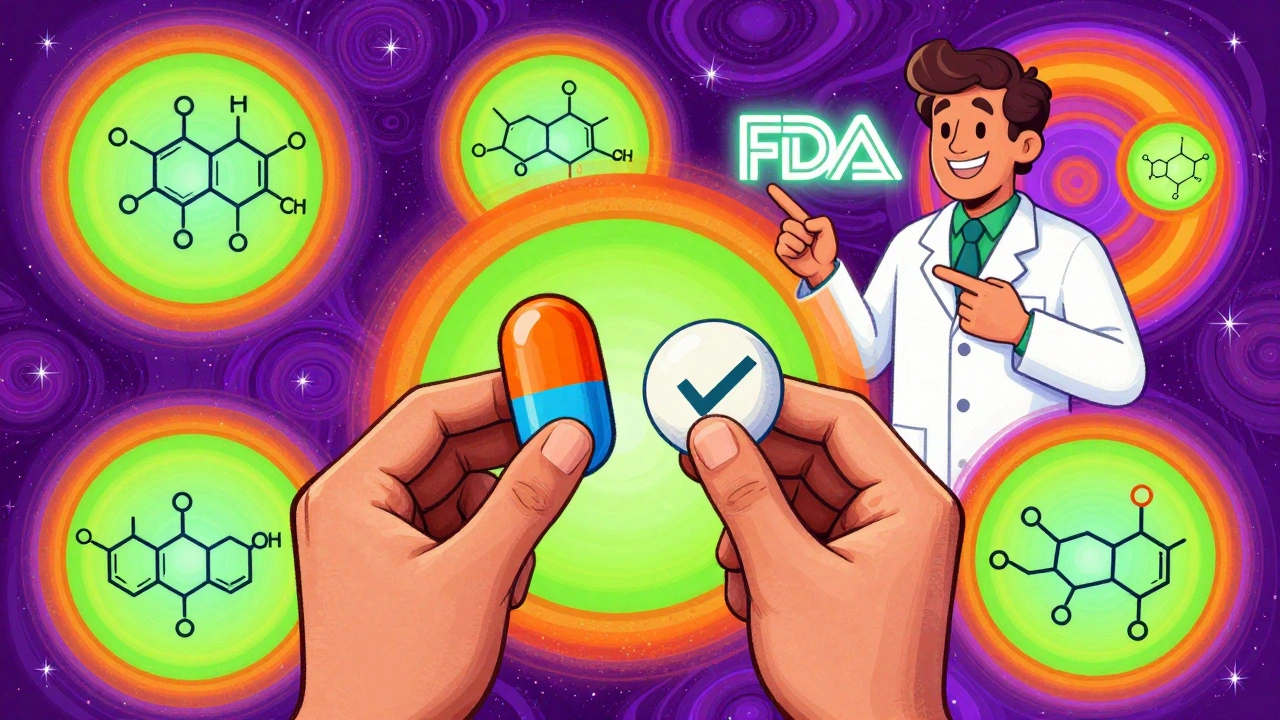
When your doctor says it’s time to switch from your brand-name medication to a generic, you might feel uneasy. What if it doesn’t work the same? What if you start feeling worse? These fears aren’t irrational-many patients have been burned by generics that felt different, even if they were technically approved. But there’s a quieter, often overlooked option: the authorized generic. It’s not just another generic. It’s the exact same pill, made by the same company, in the same factory, with the same ingredients. And it can make all the difference when you’re trying to stay stable on a critical medication.
What Exactly Is an Authorized Generic?
An authorized generic isn’t approved through the usual generic process. Instead, it’s produced by the original brand-name drugmaker-or a licensed partner-and sold under a different label, usually without the brand name on it. Think of it like a store-brand version of a product made by the same company that makes the name-brand version. The active ingredient? Identical. The inactive ingredients? Same too. The tablet shape, color, markings, even the coating? All the same. The only difference is the label and the price. The FDA recognizes these as true equivalents because they’re made under the original New Drug Application (NDA), not a separate Abbreviated New Drug Application (ANDA). That means they skip the bioequivalence testing required for regular generics. Why? Because they’re literally the same drug. No guesswork. No assumptions. According to FDA data, about 37.5% of brand-name drugs with generic versions also have an authorized generic available. That’s not every drug, but it’s common enough that you should always ask. For drugs with a narrow therapeutic index-like blood thinners, thyroid meds, seizure drugs, or some heart medications-this distinction matters more than you think. A 2023 study showed that switching to a regular generic in these cases led to a 28% higher chance of therapeutic failure compared to switching to the authorized version.Why Patients Switch Back (and How Authorized Generics Help)
It’s not uncommon for patients to go back to their brand-name drug after switching to a regular generic. A 2021 study found that 18.4% of patients switched back after trying a standard generic. That’s nearly 1 in 5. The reasons? Often, they’re not about effectiveness-they’re about perception and side effects. Regular generics can have different fillers, dyes, or preservatives. These inactive ingredients don’t affect how the drug works, but they can trigger reactions in sensitive people. One study found that 12.7% of patients reported issues like rashes, stomach upset, or headaches after switching to a regular generic, often because of lactose, gluten, or artificial coloring. With authorized generics? That number drops to just 2.3%. Patients with asthma, for example, saw a 42% lower rate of stopping their medication after switching to an authorized generic versus a regular one. Why? Because their inhalers didn’t suddenly taste different, or make their throat itch. They got the same medication, just cheaper. And the numbers back it up: switchback rates for authorized generics are only 7.2%, less than half of what you see with regular generics. That’s a 61% reduction in patients going back to the more expensive brand. That’s not just a win for the patient-it’s a win for the whole system.Cost Savings: More Than Just a Lower Price Tag
You might think, “If it’s the same drug, why isn’t it always cheaper?” The answer is insurance. Authorized generics often cost less at the pharmacy counter-sometimes 4% to 8% less than the brand-name version. But here’s the catch: some insurance plans treat them as if they’re on a higher tier. In fact, 28% of commercial insurance plans put authorized generics on Tier 3 (specialty tier), while the regular generic is on Tier 2. That means you could pay more out of pocket for the authorized version, even though it’s the same medicine. That’s why checking your plan’s formulary before switching is non-negotiable. A patient on Reddit shared: “My insurance covered the brand but not the authorized generic-cost me $45 more a month.” That’s not a savings. That’s a penalty. Medicare Part D changed that in 2022. Now, Medicare plans must cover authorized generics at the same or lower cost-sharing as the brand-name drug. That’s huge for older adults on chronic meds. For commercial plans? Still a mixed bag. Always call your insurer. Ask: “Is the authorized generic covered at the same tier as the regular generic?” And yes, the savings add up. The FTC found that authorized generics drive wholesale price drops of 7% to 14%. That’s money saved by insurers, pharmacies, and ultimately, patients.
How to Switch-A Simple 5-Step Plan
Switching doesn’t have to be confusing. Here’s a straightforward approach:- Check availability. Use the FDA’s Drugs@FDA database or the new Authorized Generic Finder tool. Search your brand-name drug. If it says “Authorized Generic” under the listing, it exists.
- Verify insurance coverage. Call your pharmacy or insurer. Ask for the exact copay for the authorized generic versus the brand and the regular generic. Don’t assume.
- Talk to your doctor. Ask them to write the prescription for the authorized generic specifically. If they’re unsure, give them the FDA link. Most aren’t trained on this distinction.
- Get educated. Pharmacists can use visual aids-side-by-side photos of the brand and authorized generic pill-to show they’re identical. Explain: “This is the same pill, just without the brand name.”
- Follow up. Schedule a check-in at 14 and 30 days. Especially if you’re on a narrow therapeutic index drug. Report any changes in how you feel-even small ones.
What You Need to Watch Out For
Even with all the benefits, there are pitfalls. First, availability. Only 37.5% of brand-name drugs have an authorized generic. If yours doesn’t, you’re stuck choosing between the brand and a regular generic. That’s frustrating, but it’s the reality. Second, electronic health records. Most systems don’t distinguish between authorized and regular generics. Your doctor might see “amlodipine” and think it’s all the same. But if you’ve had a bad reaction to a regular generic before, that’s critical info. Ask your pharmacist to note “Authorized Generic-same as brand” in your chart. Third, perception. Some doctors and patients believe authorized generics are “better” than regular generics. That’s misleading. The FDA approves regular generics just as rigorously. But for patients with sensitivities, the identical formulation of authorized generics makes them the safer choice-not because they’re superior, but because they’re identical. And finally, the long-term market effect. Some experts worry that if brand companies can just slap an authorized generic on the market, they might not face as much pressure from independent generic makers to lower prices. The FTC says this hasn’t happened yet-authorized generics still drive competition without killing generic innovation. But it’s something to keep an eye on.





Brooke Evers
December 6, 2025 AT 04:52I remember when I switched my mom to the authorized generic for her thyroid med. She’d been on the brand for years, and when the pharmacy switched her to a regular generic, she started having heart palpitations and couldn’t sleep. We didn’t know why until her pharmacist pulled up the FDA database and showed us the authorized version existed. She switched back, and within a week, she was herself again. I wish more doctors knew about this. It’s not about being picky-it’s about avoiding unnecessary suffering. I’ve since told three other people in my support group, and two of them had the exact same story. It’s wild how many people just assume all generics are equal. They’re not. The authorized ones are the silent heroes of medication safety.
And honestly? If your insurance won’t cover it, fight them. Call customer service. Ask for a prior authorization. Write a letter. You’re not asking for luxury-you’re asking for stability. Your body deserves that.
I even made a little handout for my pharmacy’s waiting room. People started asking questions. One guy came back two weeks later saying his wife’s migraines stopped after switching. Small wins, you know?
Don’t let the system make you feel like you’re being difficult. You’re being smart.
And yes, I’m still mad that my sister’s asthma inhaler didn’t have one available. That’s the real tragedy here-not the cost, but the lack of access.
Just ask. Always ask.
And if your doctor looks confused? Send them this article. I did. They apologized.
Thank you for writing this. It felt like someone finally spoke up for people like us.
Saketh Sai Rachapudi
December 6, 2025 AT 06:01India makes better generics than USA ever could! Why you waste money on this authorized crap? We make same pill for 1/10 price and no one dies! USA people always overthink and pay more! Your FDA is slow and corrupt! I work in pharma in Hyderabad and we export to US daily-your ‘authorized generic’ is just same pill with different label! No magic! Just greed!
joanne humphreys
December 6, 2025 AT 06:29I appreciate how thorough this is. I’ve been on a narrow therapeutic index drug for over a decade, and I’ve had two bad experiences with regular generics-one caused a minor seizure-like episode, the other made me feel like I was floating. Neither was life-threatening, but both were terrifying. I didn’t know about authorized generics until last year. My pharmacist showed me the pill comparison and I cried. It’s the same exact thing. I wish I’d known sooner. I’ve started sharing this info with friends who are on similar meds. It’s one of those things that shouldn’t be hidden. The fact that insurance sometimes penalizes you for choosing the safer option is ridiculous. I hope the FDA’s new labeling rules help more people find this without digging through databases.
Also, thank you for mentioning the 2023 study. I looked it up. The numbers are sobering.
pallavi khushwani
December 7, 2025 AT 16:55you know what’s funny? i used to think generics were all the same until i started noticing how different my pills looked every time i filled my prescription. one time the pill was blue, next time it was white, next time it had a weird aftertaste. i thought i was going crazy. turns out, i was just getting different manufacturers’ versions. then i found out about authorized generics and it was like a lightbulb. same pill. same factory. same me. no mystery. no guesswork. i feel like this should be the default option. why make people jump through hoops? why not just say ‘this one’s identical’ on the box? we’re not asking for luxury, just consistency. and honestly? if a company can make the same thing under two labels, why does one cost more? capitalism is weird.
Max Manoles
December 8, 2025 AT 19:26There is a structural flaw in the current system that this article does not fully address: the lack of interoperability between EHRs and pharmacy benefit managers. When a prescriber enters ‘amlodipine’ into the system, the pharmacy receives no indication of whether the authorized generic is preferred or even available. The pharmacist must manually override the default substitution protocol, which requires time, knowledge, and institutional support-resources often in short supply. This isn’t patient negligence. It’s system failure. Until the EHR vendors and PBMs integrate authorized generic flags into their formulary engines, this knowledge gap will persist. I’ve spoken with five pharmacists in the last month-all said the same thing: ‘We’d love to offer it, but the system won’t let us.’
And yes, I’ve seen patients revert to brand-name drugs because the pharmacy didn’t have the authorized generic in stock-and the prescriber didn’t specify it. That’s not a choice. That’s a glitch.
Katie O'Connell
December 10, 2025 AT 15:11One must acknowledge the profound epistemological implications of pharmaceutical equivalence. The FDA’s regulatory framework, while ostensibly grounded in empirical bioequivalence, fails to account for the phenomenological experience of the patient-the embodied reality of medication adherence. The authorized generic, in its ontological purity, represents not merely a pharmacological alternative, but a hermeneutic restoration of therapeutic continuity. To conflate it with the conventional generic is to commit a category error, akin to equating a Stradivarius with a factory-made violin because both produce A440. The patient’s subjective experience, particularly in cases of narrow therapeutic indices, is not anecdotal; it is data. And yet, the insurance industry, driven by actuarial logic divorced from clinical phenomenology, continues to penalize fidelity to therapeutic identity. This is not merely a pricing issue. It is a moral failure of the healthcare apparatus.
Clare Fox
December 10, 2025 AT 19:31i didn’t even know this was a thing until my roommate told me she stopped getting headaches after switching. i was like… wait, there’s a difference? so i looked it up and yeah, turns out my blood pressure med had one. my pharmacy didn’t even mention it. i just got the cheapest one. now i’m on the authorized one and my anxiety’s way down. weird, right? i didn’t think the dye or whatever in the other one was doing that. also, i spelled ‘authorized’ wrong in my search three times. so yeah. just saying. this info needs to be everywhere.
Akash Takyar
December 11, 2025 AT 16:45Thank you for this detailed and compassionate overview. As a healthcare provider in India, I see daily how medication changes impact patient outcomes. The concept of the authorized generic is not widely known even among professionals here, despite the fact that many Indian manufacturers produce identical formulations for global markets. The real challenge lies in education-not just for patients, but for physicians and pharmacists. A simple label change, as proposed by the FDA, could transform understanding. I will share this with my team. We must advocate for transparency, not just cost. Your five-step plan is excellent. I will adapt it for our clinic. Let us not underestimate the power of clarity in medicine.
Arjun Deva
December 12, 2025 AT 03:45Wait… so you’re telling me the drug companies are just rebranding their own pills to make more money? And the FDA is okay with this? This is a scam. They make the same pill, slap a new label on it, and charge the same price-or worse, make insurance pay more for it? And now they’re going to change the labels so we KNOW it’s the same? Why didn’t they do that ten years ago? This is corporate manipulation disguised as ‘patient care.’ They want you to think you’re getting a ‘better’ option so you don’t complain about the brand price going up. And don’t get me started on the ‘study’ they funded-of course it says authorized generics are better. They paid for it! This whole thing is a money-laundering scheme disguised as medical advice. You’re being played. Always.
Jackie Petersen
December 13, 2025 AT 06:31Ugh, I’m so tired of this. My insurance covered the brand, but when they switched me to the ‘authorized generic’ I got charged $50 more. I called them. They said ‘it’s on a higher tier because it’s made by the brand company.’ WHAT. IS. THIS. MADNESS? I’m paying more for the SAME THING? And now you’re telling me I should fight for it? No. I’m done. I’m going back to the brand. Screw it. I’m not playing their game anymore. This system is rigged.