

Medication Monitoring Timeline Calculator
Personalized Monitoring Timeline
Recommended Monitoring Timeline
When you start a new medication, you’re told to watch for side effects. But what does that actually mean? Most people think it’s just about noticing a rash or feeling dizzy. The truth is, catching side effects early isn’t about waiting for something dramatic-it’s about tracking subtle changes before they become serious. And the difference between spotting a problem early and missing it can be the difference between a quick fix and a hospital visit.
Why Routine Monitoring Matters More Than You Think
Most drug safety data comes from clinical trials. But those trials involve a few hundred people, usually healthy adults, monitored for weeks or months. Real life is different. People take five, six, even ten medications at once. They have diabetes, heart disease, kidney problems. Their bodies react in ways no trial could predict. That’s why up to 94% of serious drug side effects go unreported in traditional systems. The FDA’s FAERS database holds reports from 11 million patients-but that’s just the tip of the iceberg. Studies show only about 6% of actual adverse reactions get reported. Why? Because patients don’t know if their headache is from the new blood pressure pill or just stress. Doctors don’t have time to dig through every symptom during a 10-minute visit. Routine monitoring changes that. It’s not about waiting for a crisis. It’s about building a pattern. A slow rise in liver enzymes. A persistent dry cough. A change in mood that shows up three weeks after starting a new antidepressant. These aren’t emergencies. But they’re clues. And if you catch them early, you can adjust the dose, switch meds, or add a protective drug-before the damage is done.What Tests Are Used to Catch Side Effects Early?
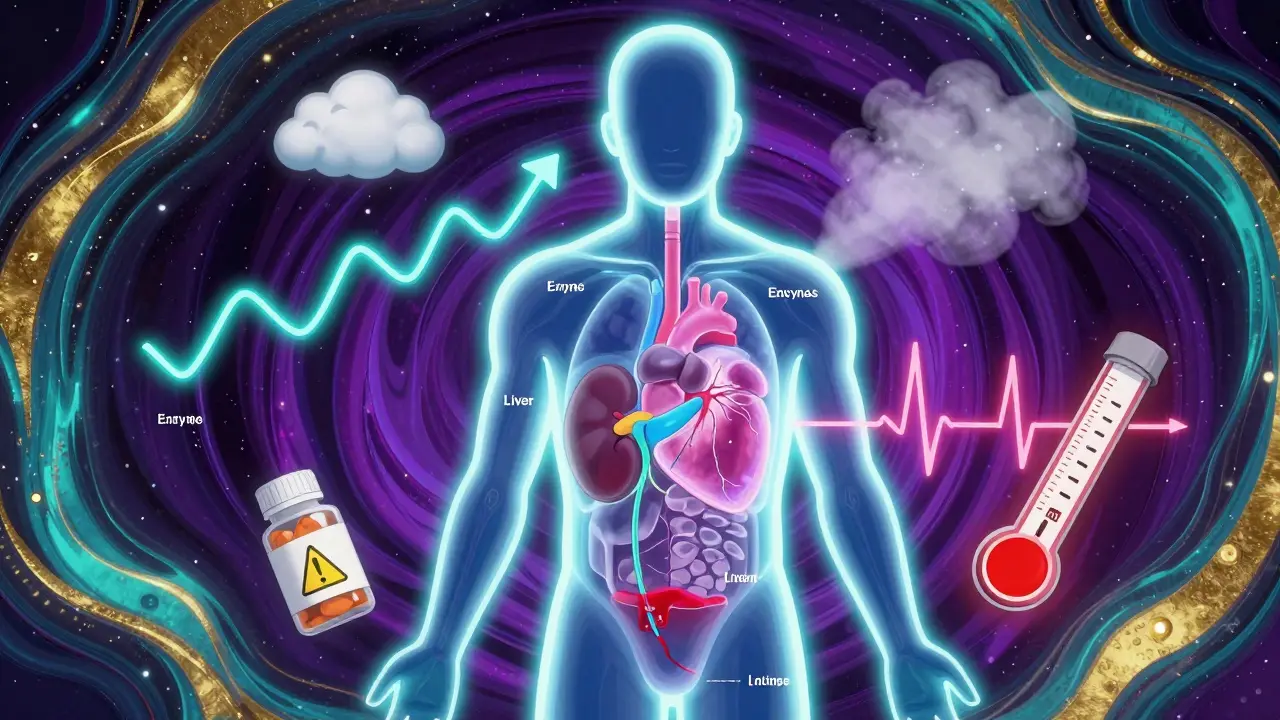
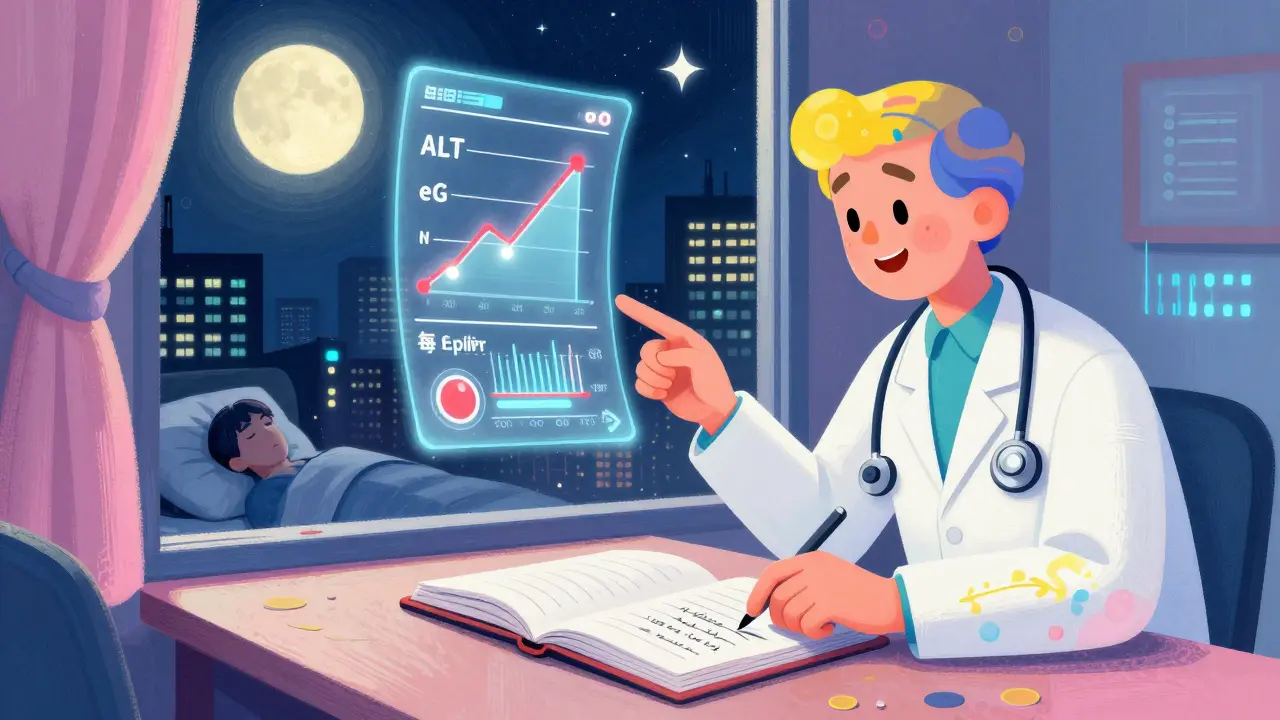
Not every medication needs the same tests. But most long-term drugs require some kind of lab monitoring. Here’s what’s commonly tracked:- Liver enzymes (ALT, AST): Needed for statins, antibiotics like isoniazid, and some seizure meds. Normal levels vary, but a rise above 3x the upper limit often signals trouble.
- Kidney function (creatinine, eGFR): Critical for NSAIDs, certain diabetes drugs, and blood pressure meds like ACE inhibitors. A drop in eGFR over time means your kidneys are under stress.
- Blood counts (CBC): For drugs like methotrexate, clozapine, or some antivirals. A sudden drop in white blood cells or platelets can be dangerous if ignored.
- Electrolytes (potassium, sodium): Diuretics and some heart meds can throw these off. Low potassium leads to muscle cramps, irregular heartbeat. High sodium? Brain fog, confusion.
- Thyroid function (TSH): Lithium and amiodarone can mess with your thyroid. Symptoms like fatigue or weight gain might seem normal-but they’re not.
When Should You Get Tested? Timelines That Save Lives
Timing isn’t arbitrary. It’s based on when side effects actually show up.- Weeks 1-4: This is when the body is adjusting. Watch for nausea, dizziness, or sleep changes. These are common and often pass. But if they get worse, don’t wait. Call your doctor.
- Weeks 4-12: This is the critical window for organ damage. Liver and kidney tests are usually done here. If you’re on methotrexate, a CBC at 4 weeks is standard.
- Months 3-6: For drugs like lithium or amiodarone, side effects can take months to appear. Blood tests every 3-6 months are non-negotiable.
- Every 6-12 months: For long-term meds like statins or metformin, annual checks are the minimum. But if you’re over 65 or have other conditions, every 6 months is smarter.
How Technology Is Changing the Game
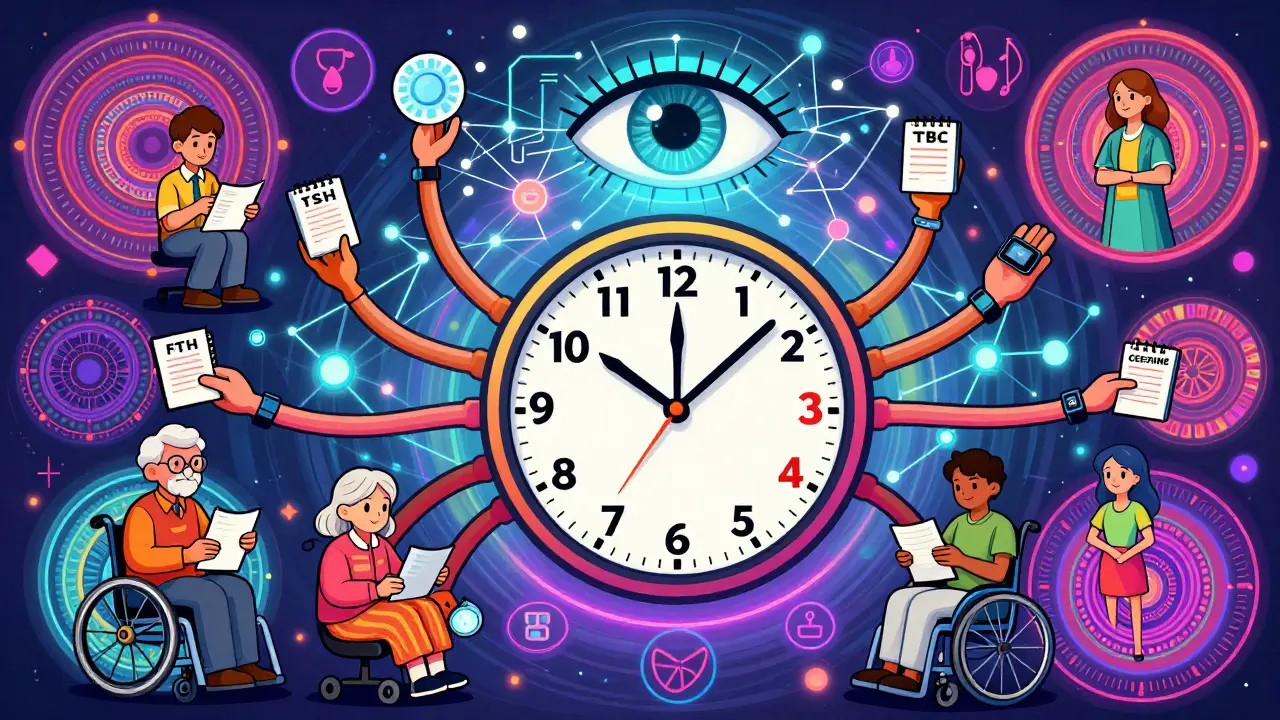
For years, doctors relied on patients to report symptoms-or on pharmacies to flag interactions. But that’s not enough. Now, systems are using the data already being collected. At Stanford, researchers started mining doctors’ clinical notes-not just coded insurance forms-to find hidden patterns. They found side effects two years before the FDA officially warned about them. Why? Because doctors write things like, “Patient reports persistent dry cough since starting lisinopril,” even if it’s not a coded diagnosis. That note gets picked up by AI tools that look for trends across thousands of patients. Hospitals with smart EHR systems now use Clinical Decision Support Systems (CDSS). When a doctor prescribes a new drug, the system checks: “Does this patient have kidney disease? Are they already on a diuretic? Is there a known interaction?” If yes-it pops up a warning. No more guessing. And it’s not just doctors. Wearables now track heart rate variability, sleep quality, and activity levels. If someone starts taking a new beta-blocker and their sleep drops 40% in two weeks, that’s a red flag. Apps let patients log symptoms daily: “Headache at 3 PM, severity 7/10, after taking metoprolol.” That data, over time, becomes powerful.What You Can Do Right Now
You don’t need a fancy system to protect yourself. Here’s what works:- Keep a symptom log. Use a notebook or your phone. Write down: date, symptom, severity (1-10), time since last dose, food or alcohol consumed, other meds taken. You’d be surprised how often a symptom links to a specific time window.
- Ask for your test results. Don’t wait for a call. Log into your patient portal. Know your creatinine, ALT, potassium levels. If they’re trending up, ask why.
- Know your meds. Keep a list-name, dose, reason, start date. Share it with every provider, even the dentist. Polypharmacy is the silent killer.
- Don’t ignore ‘minor’ symptoms. Fatigue, brain fog, dry mouth, constipation-they’re not normal just because you’re older or stressed. They could be your body telling you a drug isn’t right.
The Bottom Line: Monitoring Is a Habit, Not a One-Time Check
Medications save lives. But they’re not harmless. The goal isn’t to scare you off your prescriptions. It’s to help you take them safely. Routine monitoring isn’t about paranoia. It’s about awareness. It’s about knowing your body well enough to notice when something’s off. And it’s about trusting the data-not just your gut, but the numbers from your blood tests, your logs, your wearable. The best systems combine tech and human attention. AI spots patterns. Doctors interpret them. Patients report them. When all three work together, side effects don’t sneak up. They get caught early-and fixed before they hurt.Frequently Asked Questions
How often should I get blood tests when taking medication?
It depends on the drug and your health. For most long-term medications like statins or metformin, annual blood tests are standard. But for higher-risk drugs like lithium, methotrexate, or certain antibiotics, tests every 3-6 months are needed. Always ask your doctor for the specific timeline based on your meds and health history.
Can I rely on my pharmacist to catch drug interactions?
Pharmacists are great at spotting obvious interactions, but they don’t have your full medical history. They see your current prescription, but not your doctor’s notes, lab results, or symptoms you haven’t reported. That’s why you need to track your own symptoms and keep your medication list updated with every provider.
What if I feel fine? Do I still need monitoring?
Yes. Many serious side effects-like liver damage or low blood cell counts-don’t cause symptoms until they’re advanced. That’s why blood tests and checkups are scheduled even when you feel perfectly fine. Feeling good doesn’t mean your body isn’t under stress.
Are over-the-counter meds safe to take with prescriptions?
No. Common OTC drugs like ibuprofen, antacids, or even St. John’s Wort can interact dangerously with prescriptions. Ibuprofen can raise blood pressure and hurt kidneys if you’re on ACE inhibitors. St. John’s Wort can make antidepressants or birth control ineffective. Always check with your doctor or pharmacist before adding anything-even if it’s ‘natural’.
How do I know if a symptom is from my medication or something else?
Track it. Note when it started, how often it happens, and what you took before it appeared. Did the symptom begin within days of starting a new drug? Does it improve when you skip a dose? Did it get worse after eating certain foods? Patterns like this help your doctor separate medication side effects from other causes like stress, infection, or aging.
What should I do if I notice a side effect?
Don’t stop the medication without talking to your doctor. Some side effects can be managed with dose changes or added treatments. Stopping suddenly can be dangerous-especially for blood pressure, seizure, or mental health meds. Instead, write down the symptom, when it started, and how it’s affecting you. Bring that info to your next appointment.



Jane Wei
December 17, 2025 AT 17:08Been on statins for 5 years. Never got a single test until my liver enzymes were through the roof. Docs just assume you’re fine if you don’t scream. Don’t wait for the crash.
Radhika M
December 19, 2025 AT 01:05My mom took lithium for 20 years. Every 3 months, blood test. No excuses. Even when she felt great. That’s how you stay safe. Simple. No fancy tech needed.
Victoria Rogers
December 20, 2025 AT 12:23Oh great another ‘trust your doctor’ PSA. The system is broken. My PCP forgot I was on methotrexate and prescribed ibuprofen. I had to catch it. If I didn’t track it myself I’d be in the ER. These tests? Mostly for insurance, not patients.
amanda s
December 21, 2025 AT 13:08AMERICA NEEDS TO STOP LETTING BIG PHARMA CONTROL OUR HEALTH. WHY ARE WE STILL USING THESE TOXIC DRUGS WHEN WE COULD BE USING NATURAL REMEDIES? I’VE BEEN OFF ALL MEDS FOR 3 YEARS AND MY BLOOD PRESSURE IS BETTER THAN WHEN I WAS ON 4 PRESCRIPTIONS. THIS ARTICLE IS A CORPORATE SHILL.
Brooks Beveridge
December 23, 2025 AT 00:11You’re not alone if you’ve felt ignored by the system. But don’t give up. Tracking your own symptoms? That’s power. That’s your body talking. Write it down. Bring it in. You’re not being ‘annoying’-you’re being smart. And if your doc rolls their eyes? Find a new one. You deserve better.
And yes, even if you feel fine. That’s the whole point. The damage doesn’t knock. It creeps.
Also-yes, wearables help. I started logging my sleep after starting metoprolol. Turns out, I was crashing at 2am every night. Doc adjusted my dose. Changed my life.
You got this. One note at a time.
Philippa Skiadopoulou
December 23, 2025 AT 05:36Monitoring protocols are evidence-based and time-tested. The absence of symptoms does not equate to physiological safety. Regular laboratory surveillance for nephrotoxic and hepatotoxic agents remains a cornerstone of pharmacovigilance. Disregarding scheduled testing is not prudent. It is negligent.
Chris Van Horn
December 24, 2025 AT 20:25Let me just say-this article is laughably naive. You think a CBC every six months saves lives? I’ve seen patients on clozapine who died because their doctor was too lazy to check WBCs for 14 months. And you think AI will fix this? Please. The real problem is that doctors don’t read. They click. They delegate. They assume. The system is a house of cards built on placebo compliance and corporate greed. You need to be your own damn pharmacist. And if you’re not? You’re asking for death.
Salome Perez
December 26, 2025 AT 17:31As someone raised in a family where medication was treated like a sacred trust-not a suggestion-I’ve seen how vigilance saves lives. My grandmother took warfarin for 18 years. Every Tuesday, without fail, she’d go get her PT/INR. Even when she felt perfect. Even when the weather was awful. She said, ‘If my body’s paying the price, I’ll pay the price of showing up.’
That’s not paranoia. That’s love-for yourself, for your family, for the people who worry about you.
And yes, log your symptoms. Even the ‘tiny’ ones. I once noticed I got dizzy after eating avocado while on lisinopril. No one else would’ve thought to connect it. But I did. Turned out, the potassium in avocado was masking a dangerous drop. My doctor called it ‘a miracle of patient observation.’
You’re not being difficult. You’re being the hero of your own story.
Kent Peterson
December 27, 2025 AT 06:07Wait-so you’re telling me I’m supposed to get blood tests every 3–6 months… for a drug I’ve been on for 10 years… and I’ve never had a single side effect? That’s not monitoring-that’s medical harassment. I’ve spent more money on pointless labs than I have on my rent. This isn’t healthcare-it’s a revenue stream for labs and insurance middlemen. And don’t get me started on ‘symptom logs.’ Who has time to write down ‘headache at 3 PM’? I’ve got a job, kids, and a dog that pees on the rug. I’m not your lab rat.
And FYI-I Googled ‘lisinopril dry cough’ and found 12 million results. So yeah, I know what’s going on. I don’t need an app to tell me my throat is dry. I’ve got a throat.
Naomi Lopez
December 28, 2025 AT 11:14There’s a reason why the FDA’s FAERS database is so underreported-it’s because patients aren’t trained to recognize pharmacokinetic anomalies. A ‘dry cough’ isn’t a ‘cold’-it’s a bradykinin-mediated response to ACE inhibition. If you don’t understand the mechanism, you can’t contextualize the symptom. This article is dangerously oversimplified. You need to understand *why* the test matters, not just *when* to take it.
Brooks Beveridge
December 29, 2025 AT 13:51Hey-just wanted to say, I read Kent’s comment. And I get it. It’s exhausting. I’m tired too. But here’s the thing: one person logging their symptoms? That’s noise.
10,000 people logging? That’s data.
That’s how Stanford found those hidden side effects two years early.
You don’t have to love the system. Just use it. One note. One test. One conversation. That’s how change starts.
And if you’re tired? That’s okay. Take a break. But don’t quit. Your body’s still fighting for you. So can you.