

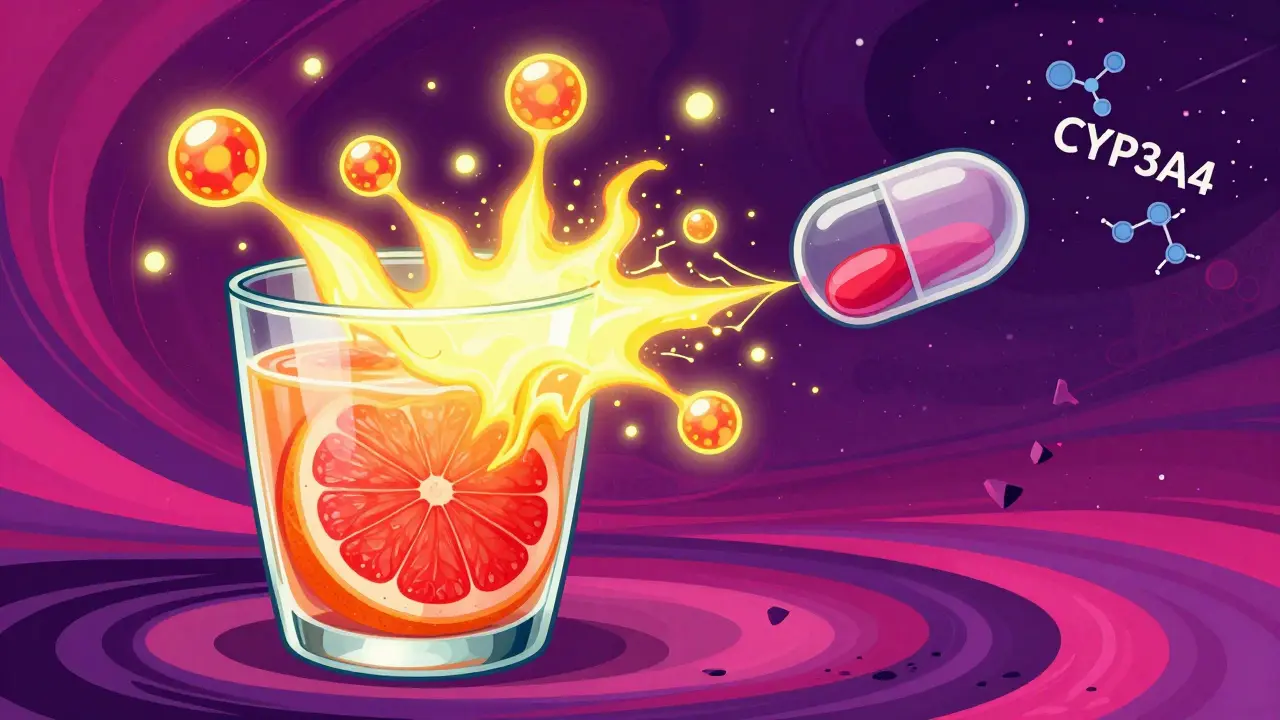
One glass of grapefruit juice in the morning might seem like a healthy habit-until it turns into a silent threat. For people taking certain medications, that refreshing citrus drink can cause dangerous spikes in drug levels, leading to side effects so severe they land patients in the hospital. This isn’t a myth or a warning from an overcautious doctor. It’s science, backed by decades of research and real-world cases. And the worst part? Many people have no idea their meds are at risk.
How Grapefruit Juice Changes How Your Body Handles Medication
It all starts in your gut. When you swallow a pill, your body doesn’t just absorb it directly. Many drugs pass through the intestinal wall, where enzymes-specifically CYP3A4-break them down before they enter your bloodstream. This is called first-pass metabolism. It’s a natural filter. Grapefruit juice messes with that filter.
The culprits? Furanocoumarins, especially bergamottin and 6',7'-dihydroxybergamottin. These compounds in grapefruit permanently disable CYP3A4 enzymes in your intestines. Once they’re turned off, your body can’t break down the drug properly. That means more of the drug slips into your bloodstream than intended. For some medications, a single 200-milliliter glass of grapefruit juice can increase drug levels by 300% to 800%. That’s not a little bump-it’s a medical emergency waiting to happen.
And here’s the twist: it doesn’t matter if you drink it before or after your pill. The enzyme damage lasts for up to 72 hours. So even if you take your medication at night and drink grapefruit juice at breakfast, you’re still at risk. Recovery isn’t quick. Your body has to make new enzymes from scratch.
Which Medications Are Most at Risk?
Not all drugs are affected the same way. Some are barely touched. Others? They’re in the danger zone.
Statins are a major concern. Simvastatin and lovastatin, used to lower cholesterol, are metabolized by CYP3A4. With grapefruit juice, simvastatin levels can jump 330%. That raises the risk of rhabdomyolysis-a condition where muscle tissue breaks down and can lead to kidney failure. Atorvastatin has a moderate interaction. But pravastatin, rosuvastatin, and fluvastatin? They’re safe. They use different metabolic pathways.
Calcium channel blockers like felodipine and nifedipine, used for high blood pressure, also get hit hard. Felodipine levels can skyrocket. Amlodipine? No problem. The difference comes down to how each drug is processed.
Benzodiazepines like midazolam (used for sedation) and triazolam (for insomnia) can cause extreme drowsiness or even respiratory depression when combined with grapefruit. Antiarrhythmics like amiodarone, immunosuppressants like cyclosporine, and even some antidepressants like sertraline are on the list too.
Some drugs do the opposite-they become less effective. Theophylline and itraconazole show lower blood levels with grapefruit juice. The reason isn’t fully understood, but it’s likely tied to OATP transporter inhibition, another pathway grapefruit disrupts.
The U.S. FDA has flagged 21 high-risk medications that must carry grapefruit warnings on their labels. That includes Zocor (simvastatin), Plendil (felodipine), and Neoral (cyclosporine). But the real number? Over 85 medications are known to interact. About 43 of them carry serious risks.
Why Some People Are More at Risk Than Others
Not everyone reacts the same way. Studies show that one person might see their drug levels triple after grapefruit juice, while another sees no change at all. Why?
It comes down to genetics and biology. People with naturally higher levels of CYP3A4 in their intestines experience stronger interactions. A 2023 study found that those with a specific genetic variant (CYP3A4*22) are more susceptible. Age matters too. Older adults often take multiple medications, and their bodies process drugs more slowly. The American Geriatrics Society lists grapefruit interactions as a key concern for adults over 65.
And here’s something most people don’t realize: it’s not just the juice. Fresh grapefruit, frozen concentrate, and even grapefruit-flavored sodas can trigger the reaction. The amount doesn’t have to be large-just 200 mL (about 6.8 fluid ounces) is enough. And it doesn’t matter if it’s white or pink grapefruit. White grapefruit actually has 20-50% more of the harmful compounds.
What About Other Citrus Fruits?
Not all citrus is the same. Regular oranges, tangerines, and clementines are safe. They don’t contain furanocoumarins. But Seville oranges-used in marmalade-and pomelos? They’re just as dangerous as grapefruit. If you’re on a high-risk medication, skip them too.
Even some herbal supplements and teas made from citrus peel can contain these compounds. Always check the ingredients if you’re unsure.
What Should You Do?
If you take any prescription medication, the safest move is to assume grapefruit is off-limits unless your doctor or pharmacist says otherwise. Don’t wait for a warning label. Many drugs with serious interactions don’t have them.
Here’s what to do:
- Check your medication list. If you’re on statins, blood pressure meds, immunosuppressants, or certain anxiety/sleep drugs, ask your pharmacist.
- Don’t rely on memory. Bring your pill bottles or a list to your next appointment.
- Ask: “Does this interact with grapefruit or Seville oranges?”
- If you’ve been drinking grapefruit juice, tell your doctor. They may switch you to a safer alternative.
For example, if you’re on simvastatin, your doctor might switch you to pravastatin or rosuvastatin. Both work just as well for lowering cholesterol-and they’re grapefruit-safe.
Some pharmacies now offer free medication reviews. Take advantage of them. A 2021 study found that only 28% of patients could correctly name their grapefruit-risk medications-even after being told.
Why This Problem Keeps Growing
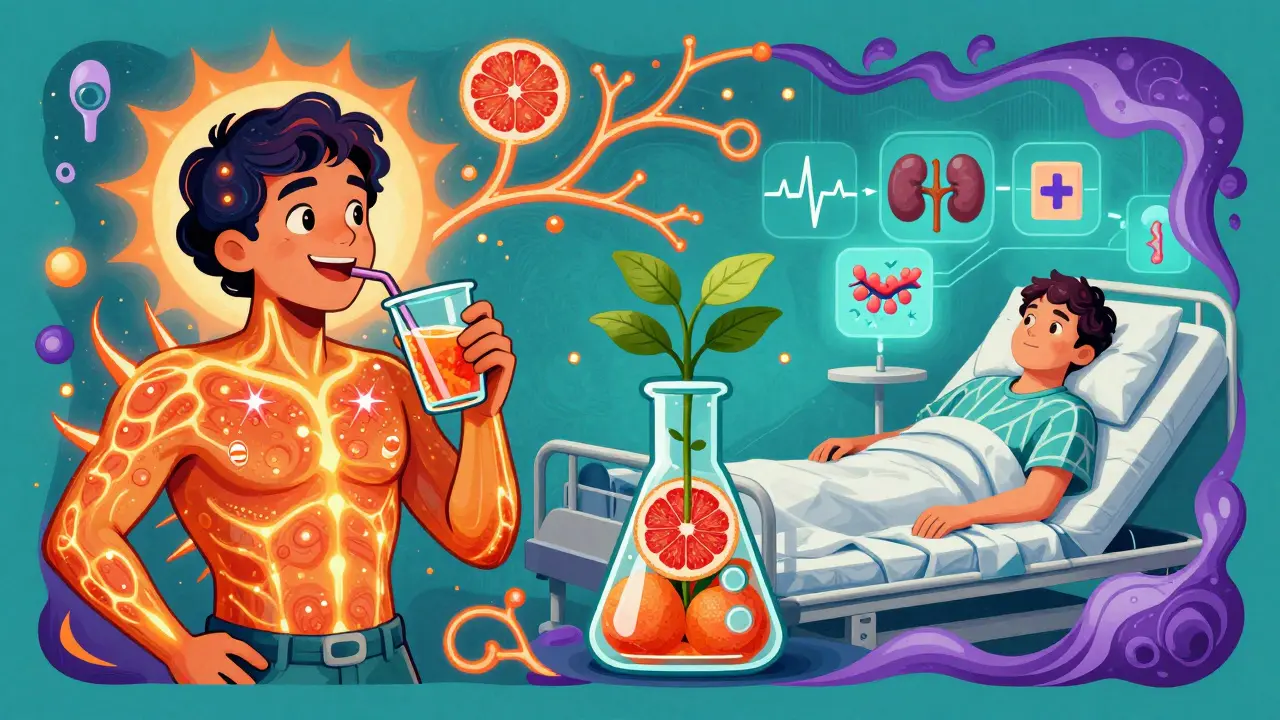
Despite decades of research, grapefruit interactions remain under-recognized. A 2022 survey by the National Community Pharmacists Association found that 47% of patients on high-risk medications still consume grapefruit products. Among those over 65, the rate jumps to 63%.
Doctors aren’t always aware. Pharmacists are better informed, but only 37% consistently counsel patients. And patients? They often think “natural” means “safe.”
Technology is catching up. Electronic health records now include over 128 grapefruit interaction alerts. Drug interaction software flags these risks in real time. Pharmaceutical companies are even reformulating drugs-like extended-release felodipine-to reduce the interaction. But none of that replaces patient awareness.
Research is also exploring ways to eliminate the problem entirely. Scientists at the University of Florida are using CRISPR gene editing to create furanocoumarin-free grapefruit. It’s still in trials. Until then, avoidance is the only guaranteed safety net.
What Happens If You Ignore the Warning?
Real people have suffered. The European Medicines Agency recorded 12 deaths between 2000 and 2019 directly linked to grapefruit-drug interactions. In the U.S., hundreds of serious adverse events are reported each year. Many go unreported because the connection isn’t obvious.
Symptoms can include:
- Severe muscle pain or weakness (sign of rhabdomyolysis)
- Irregular heartbeat
- Sudden dizziness or fainting
- Extreme drowsiness or confusion
- Nausea, vomiting, or dark urine
If you’re on a high-risk medication and experience any of these after drinking grapefruit juice, seek medical help immediately.
Bottom Line: When in Doubt, Skip It
Grapefruit juice isn’t evil. It’s full of vitamin C and antioxidants. But when it comes to certain medications, it’s not worth the risk. You wouldn’t drink alcohol with antibiotics. You shouldn’t drink grapefruit juice with statins or blood pressure meds either.
The science is clear. The risks are real. And the solution is simple: avoid grapefruit and its close relatives if you’re on a medication that interacts with it. Talk to your pharmacist. Ask your doctor. Keep a list of your meds and review it every six months. Your life might depend on it.

Jennifer Littler
January 11, 2026 AT 08:26Okay, but let’s be real-this isn’t just about grapefruit. It’s about how pharma companies don’t prioritize patient education. I’ve seen people on statins chug grapefruit juice for years because their doctor never mentioned it. The system fails us daily. The FDA’s 21-flagged list? Barely scratches the surface. We need mandatory pharmacist counseling, not just labels.
Alfred Schmidt
January 11, 2026 AT 22:50THIS IS WHY PEOPLE DIE. I WORKED IN ER FOR 12 YEARS. I’VE SEEN 3 CASES OF RABDOMYOLYSIS FROM GRAPEFRUIT + SIMVASTATIN. ONE GUY WAS 68, SWORE HE ‘JUST HAD A SIP.’ HIS KIDNEYS FAILED. HE DIDN’T MAKE IT. WHY IS THIS STILL NOT ON EVERY MEDICATION BOTTLE?!?!?!
Priscilla Kraft
January 13, 2026 AT 00:07Thank you for this. 🙏 I just switched from simvastatin to rosuvastatin last month after my pharmacist flagged it. My mom used to drink grapefruit juice with her blood pressure meds-she’s fine now, but I’m so glad someone finally spelled it out clearly. Also, pomelos are sneaky! I had no idea. 🍊🚫
Vincent Clarizio
January 13, 2026 AT 08:28Let’s not pretend this is a ‘health tip.’ This is capitalism in action. We’re told ‘natural = safe’ so we consume grapefruit like it’s holy water, while Big Pharma profits off the confusion. They don’t reformulate drugs because it’s cheaper to let people die quietly. CRISPR grapefruit? That’s not science-it’s PR. The real fix is universal healthcare with mandatory medication reconciliation. Until then, we’re all just playing Russian roulette with our liver enzymes.
Sam Davies
January 14, 2026 AT 17:56Oh wow, another ‘you’re all idiots’ lecture on citrus. How original. I suppose next you’ll tell me oxygen is dangerous if you have COPD? The fact that you need a 2000-word essay to explain that grapefruit interferes with CYP3A4 substrates suggests the real problem is overmedication, not the fruit. I mean, really-85 drugs? That’s not a warning, that’s a pharmaceutical industry failure. Pass the tonic water, darling.
Christian Basel
January 16, 2026 AT 12:10Statins are overprescribed anyway. Why not just stop taking them? Also, grapefruit juice is just a scapegoat. The real issue is lazy doctors and patients who think supplements are ‘natural’ so they’re safe. You’re all overreacting. I drink it with my blood pressure meds. Still alive.
Alex Smith
January 18, 2026 AT 00:57So… if you’re on a statin and you drink grapefruit juice, you’re basically doing a slow-motion drug overdose? That’s wild. I mean, we’ve got apps that tell you if your avocado is ripe-why can’t we have a barcode scanner that says ‘DON’T DRINK GRAPEFRUIT WITH THIS’? We’re living in 2025. This should be automated.
Michael Patterson
January 19, 2026 AT 07:25yo i read this whole thing and im like wow but i just wanna say i think the real issue is that people dont read the little print on the bottle like its 1995 and we still live in a world where you have to be a phd to understand your own med instructions like why is this so hard
Matthew Miller
January 21, 2026 AT 02:42Everyone’s acting like this is a revelation. It’s been known since the 90s. The fact that you’re surprised means you’ve never once Googled your meds. You’re not a victim-you’re negligent. And if you think your ‘natural’ diet makes you immune to consequences, you’re the reason ERs are full.
Madhav Malhotra
January 21, 2026 AT 08:35Interesting! In India, we don’t really drink grapefruit juice-but we do have bitter gourd and neem, which also interact with meds. My uncle took blood thinners and drank neem tea daily-no one warned him. Maybe we need a global ‘med interaction’ awareness campaign. Culture matters, but science doesn’t care where you’re from.
Priya Patel
January 22, 2026 AT 04:12OMG I just realized I’ve been drinking grapefruit juice with my antidepressant for 3 years 😱 I’m switching to orange juice today!! Thank you so much for this!! 🙌💛
Jason Shriner
January 22, 2026 AT 18:11so like… if i drink grapefruit juice at 7am and take my pill at 11pm… am i still doomed? or is it just a vibe thing? 🤔
Sean Feng
January 23, 2026 AT 04:09Just don't drink it. End of story. Why is this even a debate?
Roshan Joy
January 23, 2026 AT 21:15Great breakdown! I’m a pharmacist in Delhi and I’ve had patients come in confused because their doctor said ‘avoid citrus’ but they didn’t know what that meant. We now have a printed handout: ‘Safe: Oranges, tangerines. Unsafe: Grapefruit, pomelo, Seville orange. Juice, fruit, even flavoring.’ Simple. Clear. Saves lives. 🌟