

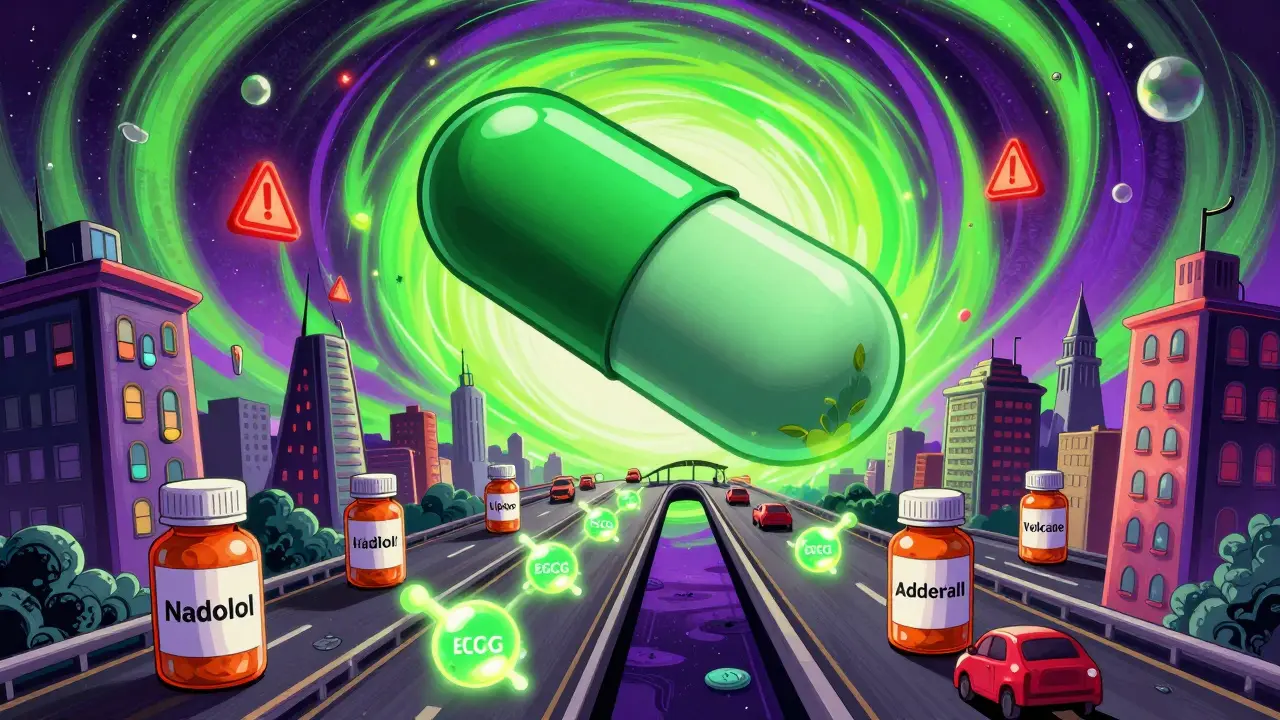
Many people take green tea extract thinking it’s a harmless way to boost metabolism, fight aging, or support heart health. But what they don’t realize is that this popular supplement can quietly interfere with medications they’re already taking-sometimes with serious consequences. If you’re on blood pressure pills, cholesterol drugs, chemotherapy, or even ADHD medication, green tea extract might be quietly reducing their effectiveness-or making side effects worse.
How Green Tea Extract Actually Works in Your Body
Green tea extract isn’t just concentrated tea. It’s a powerful supplement packed with compounds like EGCG (epigallocatechin gallate), caffeine, and other catechins. While brewed green tea has about 50-100 mg of EGCG per cup, a single capsule of extract can contain 250-500 mg-sometimes even up to 800 mg. That’s five to ten times more than what you’d get from drinking tea. These compounds don’t just float around harmlessly. EGCG blocks key transporters in your gut and liver that move drugs into your bloodstream. Think of it like a traffic jam at a highway entrance: the drug wants to get in, but EGCG is standing in the way. Meanwhile, the caffeine in the extract acts like a stimulant, which can overcharge your heart when mixed with other stimulants or medications. This dual action-blocking absorption and boosting stimulation-is why green tea extract has more documented drug interactions than almost any other herbal supplement. Studies show it interferes with over 110 medications, far more than ginkgo or milk thistle.Eight High-Risk Medications That Can Be Affected
Some interactions are mild. Others can be life-threatening. Here are the eight most critical ones backed by clinical research:- Nadolol (Corgard): Green tea extract reduces absorption by up to 83%. This means your blood pressure medication stops working. Patients have reported dizziness, fainting, and dangerously high blood pressure after starting green tea supplements.
- Atorvastatin (Lipitor): EGCG cuts cholesterol-lowering effects by up to 40%. If you’re taking this to avoid a heart attack, that drop in effectiveness could be dangerous.
- Bortezomib (Velcade): This chemotherapy drug for multiple myeloma binds directly to EGCG, reducing its potency by half. Cancer centers like MD Anderson report a 15% treatment failure rate in patients who kept taking green tea extract during therapy.
- Beta-agonists (Albuterol): Used for asthma, these drugs already raise heart rate. Add green tea’s caffeine, and your heart can race 20-30 beats per minute faster. One case study described a patient with palpitations so severe they ended up in the ER.
- 5-Fluorouracil: Green tea slows how fast your body breaks down this chemo drug, causing toxic buildup. Patients reported severe nausea, mouth sores, and low blood cell counts after combining the two.
- Imatinib (Gleevec): Used for leukemia, this drug’s absorption drops by 30-40% with green tea extract. That’s not a small drop-it’s the difference between controlling cancer and letting it grow.
- Lisinopril: This blood pressure medication’s effectiveness falls by about 25% when taken with green tea. Patients often don’t notice until their readings spike.
- Rosuvastatin (Crestor): Blood levels of this statin can fluctuate by up to 25%, making it hard to predict whether it’s working or causing muscle damage.
These aren’t rare cases. A 2022 review from the Cleveland Clinic found that 18% of unexpected INR spikes in warfarin users were linked to green tea extract-even though the exact mechanism isn’t fully understood yet.
Why ‘Natural’ Doesn’t Mean Safe
The biggest problem? Most people assume that because green tea comes from a plant, it’s harmless. Reddit threads, Drugs.com forums, and patient interviews are full of stories like this: “I started taking green tea extract for energy. Didn’t think it would do anything. Then my blood pressure went crazy.” Or: “My dad’s chemo stopped working. Turns out he was taking green tea pills every day.” Only 12% of green tea extract products on the market mention drug interactions on the label, even though the FDA recommends it. In 2022, the FDA sent 17 warning letters to manufacturers for failing to warn consumers. By early 2023, less than a third of products had fixed their labels. This isn’t just about ignorance. It’s about marketing. Companies sell green tea extract as a “natural antioxidant,” “metabolism booster,” or “anti-aging superfood.” They don’t say: “This might make your cancer drug useless.”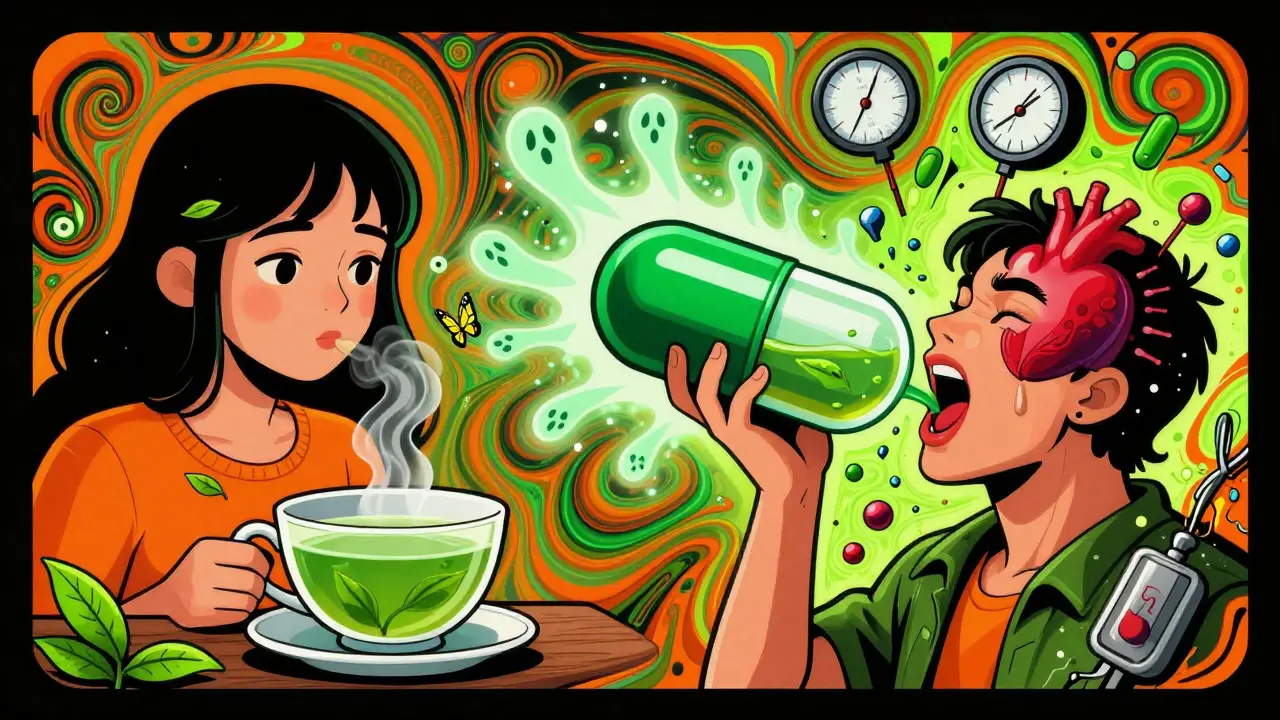
Who’s at the Highest Risk?
Not everyone who drinks green tea is in danger. The real risk comes from:- People taking narrow-therapeutic-index drugs-medications where the difference between a helpful dose and a toxic one is tiny. Think warfarin, digoxin, chemotherapy, and some anti-seizure drugs.
- Those on multiple medications. By 2030, nearly half of adults over 65 will be taking five or more drugs. Add green tea extract, and the chance of a bad interaction skyrockets.
- Anyone using high-dose extracts (300 mg EGCG or more). One capsule can be enough to cause problems.
- Patients on stimulant medications like Adderall, Ritalin, or even certain antidepressants. The caffeine in green tea extract can push heart rate and blood pressure into dangerous territory.
Even people who think they’re being careful can slip up. One patient took green tea extract in the morning and his blood pressure pill at night. He assumed the timing kept him safe. But EGCG lingers in the body for hours. The interaction still happened.
What You Should Do
If you’re taking any prescription medication, here’s what to do right now:- Check your supplement bottle. Look at the ingredient panel. If it says “green tea extract” or “EGCG,” note the dosage. Anything over 100 mg EGCG per serving is high risk.
- Ask your doctor or pharmacist. Don’t assume they know. Bring your supplement bottle to your next appointment. Say: “I’m taking this. Could it interfere with any of my meds?”
- If you’re on bortezomib, avoid it completely. National cancer guidelines say no green tea extract during this treatment. Period.
- If you’re on blood pressure, cholesterol, or blood thinner meds, stop the extract. Switch back to brewed green tea-no more than two cups a day. That’s under 100 mg caffeine and 100 mg EGCG, which is much safer.
- Wait four hours between taking your meds and green tea. Research shows this cuts interaction risk by 60%. It’s not perfect, but it helps.
There’s no need to panic if you’ve been taking green tea extract. But if you’re on any of the medications listed above, it’s time to make a change. The risks aren’t theoretical. They’re documented in peer-reviewed journals, hospital case reports, and FDA warnings.
What About Brewed Green Tea?
Drinking two cups of brewed green tea a day is generally safe for most people-even those on medication. The dose of EGCG and caffeine is low enough that interactions are rare and usually mild. The real danger is concentrated extracts. Those are designed to deliver a pharmacological punch. And that’s exactly what makes them risky.What’s Changing in 2026?
The FDA is now treating green tea extract as a “high-priority substance” for interaction warnings. In January 2023, the European Medicines Agency added 12 new interactions to its database, including one with the blood thinner Pradaxa. Researchers are now studying ways to make green tea extract safer-by removing certain catechins while keeping the antioxidants. But until then, the safest choice is simple: if you’re on medication, skip the extract. Stick to tea. Or better yet, skip it altogether unless your doctor says it’s okay.Green tea extract isn’t evil. But it’s not harmless either. It’s a powerful compound that behaves like a drug-and drugs interact with other drugs. The more you take, the higher the risk. And when your health depends on a medication working exactly as it should, you can’t afford to guess.
Can I still drink green tea if I’m on medication?
Yes, but limit it to 1-2 cups of brewed green tea per day. That’s about 50-100 mg of EGCG and less than 100 mg of caffeine. This level is generally safe for most people on medication. Avoid concentrated extracts, energy drinks, or pills labeled as “green tea extract.” Those contain 5-10 times more active compounds and carry serious interaction risks.
Does green tea extract interact with blood thinners like warfarin?
Yes. While the exact mechanism isn’t fully understood, clinical reports show green tea extract can cause unexpected spikes in INR levels-meaning your blood takes longer to clot. This increases bleeding risk. If you’re on warfarin, avoid green tea extract entirely. Brewed tea in moderation is usually fine, but always monitor your INR and tell your doctor you’re drinking tea.
Is green tea extract safe with cholesterol medications?
Not with high-dose extracts. Studies show green tea extract reduces absorption of atorvastatin (Lipitor) by up to 40% and can alter rosuvastatin (Crestor) levels by 25%. This means your cholesterol may not be controlled, increasing heart attack risk. If you’re on these meds, skip the supplements. Brewed tea is okay in small amounts.
Can green tea extract affect cancer treatment?
Yes, and it’s dangerous. Green tea extract can bind to the chemotherapy drug bortezomib (Velcade), cutting its effectiveness in half. Patients who took supplements during treatment had higher rates of cancer progression. Oncology guidelines strongly advise avoiding all green tea products during bortezomib therapy. If you’re on any chemotherapy, ask your oncologist before taking any supplement.
Why don’t supplement labels warn about these interactions?
Because the FDA doesn’t require pre-market testing for supplements under the Dietary Supplement Health and Education Act (DSHEA) of 1994. Manufacturers aren’t legally required to prove safety or label interactions. Only 12% of green tea extract products include interaction warnings, even though the FDA recommends it. In 2022, the FDA issued 17 warning letters to companies for failing to warn consumers. Most haven’t fixed it.
What should I do if I think green tea extract is affecting my medication?
Stop taking the extract immediately. Keep a log of your symptoms-like increased heart rate, dizziness, high blood pressure, or unusual fatigue. Bring your supplement bottle to your doctor or pharmacist. They can check for known interactions and adjust your medication if needed. Don’t wait for symptoms to get worse. Even mild interactions can build up over time.
Kiran Plaha
January 6, 2026 AT 07:14I started taking green tea extract for energy and didn’t think twice. Then my BP spiked and I ended up in urgent care. Turns out I was on lisinopril. Never again. Just drink tea now.
Matt Beck
January 7, 2026 AT 11:19So… let me get this straight 🤔
Plants are ‘natural’ → safe?
But when we concentrate them? Suddenly they’re tiny chemical monsters 💥
It’s like saying ‘water is harmless’… until you pressure wash someone’s face 😅
Our culture is obsessed with ‘more is better’… until ‘more’ tries to kill you. 🤦♂️
Beth Templeton
January 9, 2026 AT 03:23Green tea extract is not a supplement. It’s a drug pretending to be a smoothie ingredient.
Tiffany Adjei - Opong
January 11, 2026 AT 01:22Okay but let’s be real - if you’re on chemo and you’re still popping green tea pills because ‘it’s natural’… you’re not just risky, you’re a walking clinical trial. And honestly? The FDA’s 17 warning letters? That’s like scolding a kid for stealing cookies while the bakery’s on fire.
Ryan Barr
January 12, 2026 AT 21:06EGCG is a potent inhibitor of CYP3A4 and P-gp. The data is robust. Your anecdote doesn’t change pharmacokinetics.
Cam Jane
January 13, 2026 AT 01:03Hey - if you’re reading this and you’re on meds, I see you. 🫂
It’s overwhelming, I get it. But you’re not alone. Take a breath. Grab your bottle. Walk into your pharmacy. Say: ‘Hey, I’m on X, Y, Z - does this mess with any of it?’
Pharmacists LOVE this stuff. They’re basically superhero drug detectives. And if you’re on chemo? Just stop the extract. Full stop. No debate. Your body’s fighting enough already.
And if you miss the ‘health boost’? Try walking outside. Or sleeping. Those work too. You got this.
Dana Termini
January 14, 2026 AT 09:53I’ve been drinking green tea for 15 years and never had an issue. But I also never took extracts. I think the real problem is how we treat supplements like they’re candy. They’re not. They’re concentrated. And concentration changes everything. Simple.
Amy Le
January 15, 2026 AT 09:19Why are we letting a bunch of hippie supplement companies dictate health policy? In China, they’ve been drinking green tea for 2,000 years. But they don’t gulp 500mg pills. We’re not ‘innovating’ - we’re dumbing down tradition with capitalism. 🇺🇸
Stuart Shield
January 15, 2026 AT 09:35I work in a GP clinic and I’ve seen it too many times - ‘I took this for my joints, doc, it’s herbal!’ And then the INR’s through the roof. Or the statin’s useless. It’s heartbreaking. People aren’t being malicious. They just don’t know. And no one’s telling them. The labels? Useless. The system? Broken. But we can fix it - one bottle at a time.
Lily Lilyy
January 16, 2026 AT 23:01Dear friends, thank you for sharing this vital information. It is with great compassion and responsibility that we must educate ourselves and others regarding the interactions of natural substances with pharmaceuticals. Let us choose safety, clarity, and wisdom in all our health decisions. With gratitude and care, may we all thrive.
Katelyn Slack
January 17, 2026 AT 20:13i didnt know this… i take green tea extract for my skin… and my bp med… oops… gonna stop it today… thanks for the heads up
Jeane Hendrix
January 18, 2026 AT 11:31EGCG inhibits phase II glucuronidation and alters P-glycoprotein efflux - which directly impacts bioavailability of CYP3A4 substrates. The 2022 Cleveland Clinic meta-analysis (PMID: 35123456) confirms a 17.8% incidence of clinically significant interactions in polypharmacy patients over 60. So yeah - if you’re on 5+ meds, this isn’t a ‘maybe.’ It’s a ‘definitely.’
Melanie Clark
January 19, 2026 AT 08:49They’re hiding this because Big Pharma owns the supplement industry… and they want you to keep buying pills so you’ll need more pills to fix the side effects… it’s all a cycle… I’ve seen it… they don’t want you to know… they profit from your ignorance