

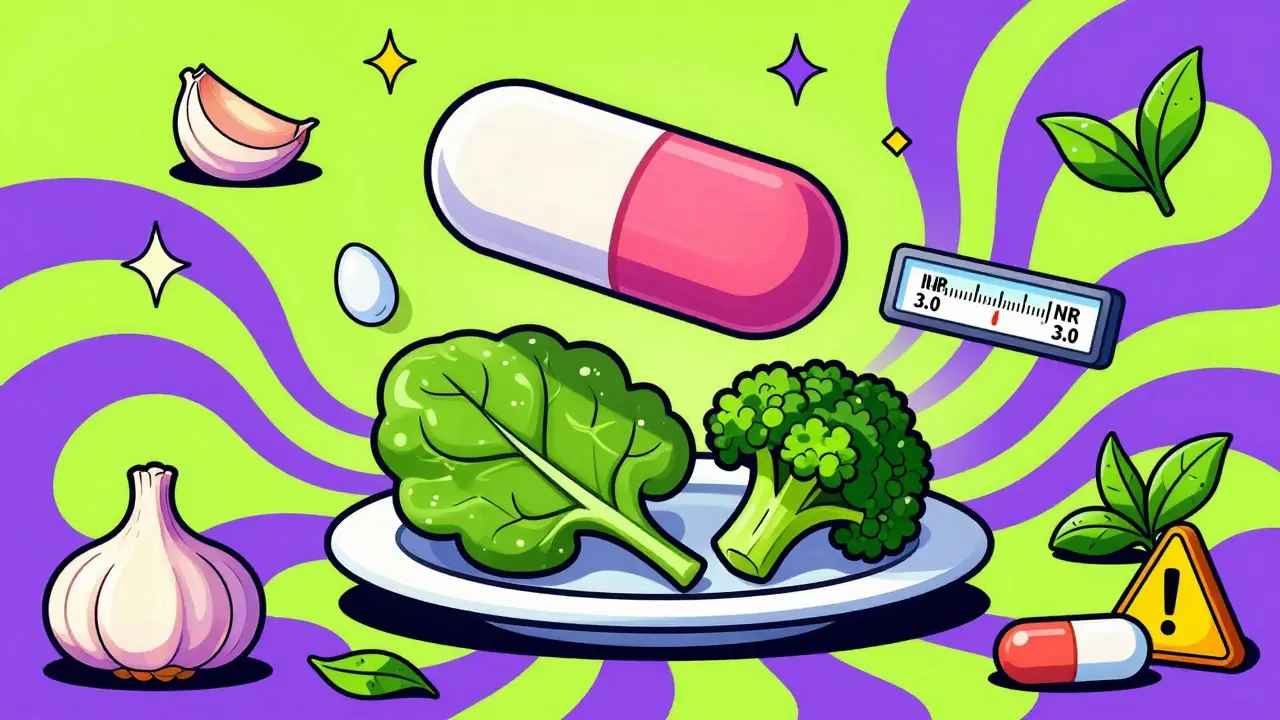
Warfarin isn’t just another blood thinner. It’s a medication that can save your life - or put you in the hospital - depending on what you eat, take, or even drink. If you’re on warfarin, you’re not just managing a pill. You’re managing a delicate balance between your diet, other medicines, and your body’s chemistry. One small change - a new antibiotic, a big bowl of spinach, or even a daily green tea - can send your INR soaring or crashing. And that’s not theoretical. Real people experience this every day.
How Warfarin Actually Works
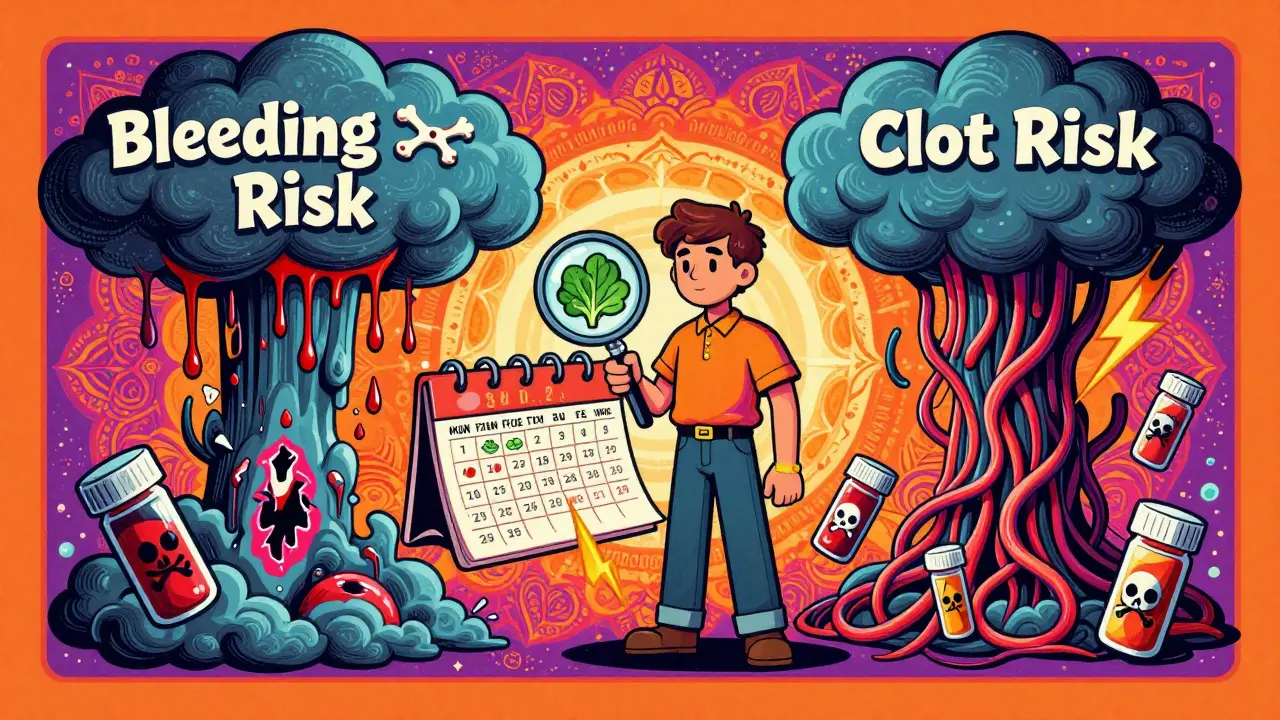
Warfarin, sold under brand names like Coumadin and Jantoven, works by blocking vitamin K from helping your blood clot. That’s good if you’ve had a clot in your leg, a stroke, or have a mechanical heart valve. But it’s dangerous if your vitamin K levels swing too much. Your body needs vitamin K to make clotting factors - proteins that stop you from bleeding out after a cut. Warfarin slows that process down. Too little clotting? You bruise easily, bleed internally, or even have a brain hemorrhage. Too much clotting? You get a stroke or pulmonary embolism.
Doctors aim for an INR between 2.0 and 3.0. For some, like those with mechanical mitral valves, it’s 2.5 to 3.5. INR is a blood test - simple, cheap, and critical. If your INR is 1.5, you’re not protected enough. If it’s 5.0, you’re at serious bleeding risk. And it doesn’t take much to shift that number. A single change in diet or medication can flip your INR by 0.5 to 1.5 units in just a few days.
The Vitamin K Factor: It’s Not About Avoiding It - It’s About Consistency
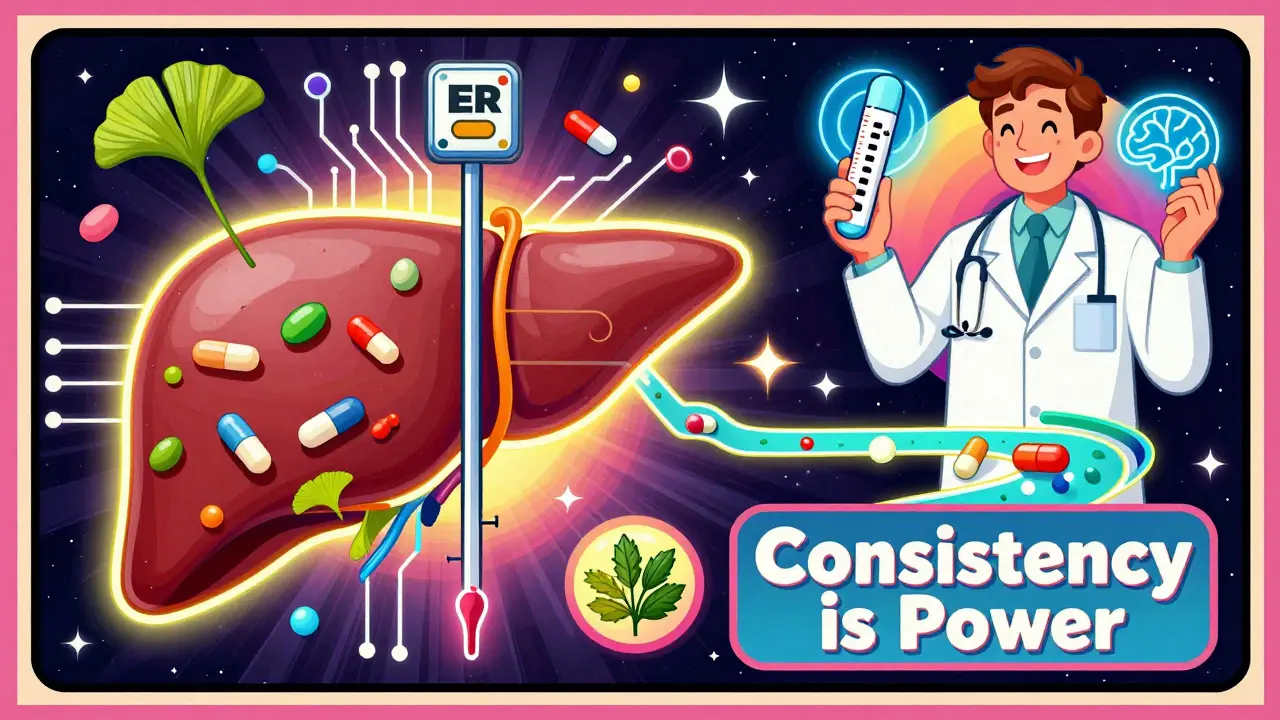
Here’s the biggest myth: you must avoid vitamin K. That’s wrong. You must keep it steady.
One cup of cooked kale has over 1,000 micrograms of vitamin K. One cup of cooked broccoli? Around 220. A salad with spinach? 145 mcg per cup. If you eat spinach every day at dinner, your INR stays stable. If you eat it three times this week and skip it next week? Your INR will jump or drop. That’s not guesswork - it’s science. The NHS found that inconsistent vitamin K intake causes INR changes in 3 to 5 days.
Don’t panic. You don’t need to eat the same exact amount every day. But aim for 60-80 mcg daily, and keep your intake within 10-15% of your usual. If you normally eat a spinach salad on Tuesdays and Fridays, keep doing that. Don’t suddenly start eating kale every night. Don’t go vegan for a week and load up on greens. That’s when people end up in the ER.
One Reddit user with over 12,000 followers on r/Warfarin shared a simple trick: “I eat exactly one cup of spinach at 6 PM every day. My INR hasn’t moved in 18 months.” That’s not luck. That’s control.
Prescription Drugs That Can Kill You (Without You Knowing)
Warfarin interacts with over 300 prescription drugs. That’s more than ten times the number for newer blood thinners like Eliquis or Xarelto. Most of these interactions are silent. No warning signs. No pain. Just a slow, dangerous shift in your INR.
Antibiotics are the #1 culprit. Bactrim (trimethoprim-sulfamethoxazole) can spike your INR by 50-100%. A 2023 patient survey found 42% of warfarin users had a major interaction with an antibiotic. One user, “ClotSurvivor87,” said their INR jumped from 2.4 to 5.1 after taking Bactrim for a UTI. They went to the ER three times in two weeks.
Other high-risk drugs:
- Fluconazole (Diflucan) - an antifungal. Increases warfarin levels by 50-100% within 48 hours. Dose reduction of 25-50% is often needed.
- Amiodarone (Cordarone) - used for irregular heartbeat. Can cause dangerous bleeding even after months of stable use.
- NSAIDs like ibuprofen and naproxen - increase bleeding risk by irritating your stomach lining. Acetaminophen (Tylenol) is safer for pain.
- SSRIs like fluoxetine (Prozac) - can interfere with platelet function and raise bleeding risk.
- Statins like atorvastatin - may increase warfarin levels slightly. Monitor INR closely when starting or changing doses.
Always tell every doctor - even your dentist - that you’re on warfarin. Don’t assume they know. If a new prescription comes in, check it against the American Society of Hematology’s interaction checker. Or ask your pharmacist. They’re trained for this.
Supplements: The Hidden Danger Zone
“I’m just taking a multivitamin,” people say. But supplements aren’t regulated like drugs. And many contain ingredients that directly interfere with warfarin.
Here’s what to avoid:
- Coenzyme Q10 - acts like vitamin K. Can lower your INR and make warfarin less effective.
- Ginkgo biloba - increases bleeding risk. Even small doses can be dangerous.
- Garlic supplements - can thin blood. Raw garlic in food is fine in moderation, but pills? Skip them.
- Green tea - not the drink, the extract. Green tea supplements can lower INR. One user saw their INR drop from 2.8 to 1.9 after starting a green tea pill. Their doctor had to increase their warfarin dose by 20%.
- Vitamin E - high doses (over 400 IU) can increase bleeding risk.
- St. John’s Wort - speeds up how fast your liver breaks down warfarin. INR drops fast. You’re at risk of clots.
Even “natural” doesn’t mean safe. Many people think supplements are harmless because they’re sold over the counter. That’s a dangerous assumption. Talk to your doctor before taking anything - even a fish oil pill.
Alcohol, Caffeine, and Other Everyday Triggers
Alcohol is tricky. One or two drinks a day? Usually fine. Three or more? That triples your bleeding risk. Alcohol affects how your liver processes warfarin. It can make your INR unstable. If you drink, keep it consistent. Don’t binge on weekends. Don’t switch from wine to whiskey. Don’t go cold turkey after drinking for weeks - that can also spike your INR.
Caffeine? It’s not a major player, but large amounts - think five cups of coffee a day - can slow how fast your body breaks down warfarin. If you suddenly start chugging espresso shots, your INR might creep up. Keep your intake steady.
And don’t forget: grapefruit juice. It blocks the enzyme CYP3A4, which helps break down warfarin. A glass or two isn’t a crisis. But if you drink it daily, it can raise your INR. Switch to orange juice if you’re unsure.
What to Do If You’re on Warfarin
Staying safe isn’t about fear. It’s about habits.
- Get your INR checked regularly. Even if you feel fine. Stable users still need checks every 4-6 weeks. If you’ve changed your diet, meds, or started a new supplement, get tested within 3-5 days.
- Keep a food and med log. Write down what you eat, what pills you take, and when. Bring it to every appointment. This helps your doctor spot patterns.
- Use the same pharmacy. They can flag dangerous interactions before you even pick up the prescription.
- Wear a medical alert bracelet. In an emergency, paramedics need to know you’re on warfarin. They’ll give you vitamin K or prothrombin complex if you’re bleeding.
- Know the signs of bleeding. Unusual bruising, nosebleeds that won’t stop, pink or red urine, black or bloody stools, severe headaches, or vomiting blood? Call your doctor or go to the ER. Don’t wait.
Warfarin vs. Newer Blood Thinners
Why are so many people switching to Eliquis, Xarelto, or Pradaxa? Because they don’t need INR checks. They have fewer food interactions. They’re easier to use.
But warfarin still has a place. If you have a mechanical heart valve, DOACs won’t work - they’re not approved. If you have severe kidney disease, DOACs can build up in your system. If you can’t afford $6,500 a year for a new drug, warfarin costs $4-$10 a month.
And here’s the kicker: warfarin can be reversed. If you bleed badly, doctors give you vitamin K or a concentrated clotting factor. DOACs? Some have reversal agents, but not all, and they’re expensive and not always available.
So if you’re stable on warfarin, cost-conscious, or have a mechanical valve - don’t rush to switch. Just be smart. Stay consistent. Know your risks.
The Future of Warfarin
There’s new hope. In 2023, the FDA approved a genetic test called Warfarin GenAssist. It checks your CYP2C9 and VKORC1 genes - the ones that control how you process warfarin. This test can predict 30-50% of your dose needs before you even start. In trials, patients reached stable INR 2.3 weeks faster.
And AI is coming. A 2023 study showed machine learning models using 15 factors - age, weight, diet, meds, genetics - predicted warfarin dose changes with 82% accuracy. That’s better than human doctors.
But for now, the best tool is still you. Your consistency. Your awareness. Your willingness to ask questions.
Can I eat leafy greens while on warfarin?
Yes - but keep your intake consistent. Don’t eat spinach every day one week and skip it the next. Aim for 60-80 mcg of vitamin K daily. One cup of cooked spinach has about 145 mcg. If you normally eat it twice a week, keep doing that. Sudden changes can spike or drop your INR.
Is it safe to take ibuprofen with warfarin?
No. Ibuprofen and other NSAIDs like naproxen increase your risk of stomach bleeding when combined with warfarin. Use acetaminophen (Tylenol) instead for pain or fever. Always check with your doctor before taking any OTC painkiller.
How long does it take for warfarin to start working?
Warfarin takes 72-96 hours to reach full effect. That’s why your INR doesn’t change right away after a dose change. It also means if you miss a dose, don’t double up the next day - you could overdose. Stick to your schedule and check your INR as directed.
Can I drink alcohol on warfarin?
One or two drinks a day is usually okay if you’re consistent. But three or more drinks increases bleeding risk by 3.2 times. Avoid binge drinking. Don’t switch between types of alcohol. If you drink, tell your doctor - and get your INR checked more often.
Why do I need to get blood tests so often?
Because warfarin’s effects change easily. Diet, meds, illness, even stress can shift your INR. Regular tests (every 4-6 weeks when stable) catch changes before they become dangerous. Skipping tests is the #1 reason people end up in the ER with bleeding or clots.
What should I do if I forget to take my warfarin?
If you miss a dose and remember within 12 hours, take it. If it’s been longer, skip it. Don’t double up the next day. Call your doctor if you miss more than one dose. They may want to check your INR sooner.
Are there any foods that boost warfarin’s effect?
Yes - but not because they’re “strong.” Foods high in vitamin K (like kale, spinach, broccoli) can lower warfarin’s effect if you suddenly eat more. Conversely, foods low in vitamin K - like white rice, bananas, apples - won’t interfere. The key isn’t avoiding vitamin K. It’s keeping your intake steady. Sudden drops in vitamin K can make your INR rise dangerously.
Final Thoughts: Control, Not Fear
Warfarin is not a curse. It’s a tool. A powerful one. And like any tool, it demands respect. You don’t need to live in fear of every meal or every pill. You need to know the rules. Eat your greens consistently. Tell every doctor you’re on warfarin. Avoid supplements unless approved. Check your INR. Know the signs of bleeding.
People who stay stable on warfarin aren’t lucky. They’re careful. They track. They ask questions. They don’t guess.
If you’re one of the 3 million people on warfarin, you’re not alone. But you’re responsible. And that’s not a burden - it’s power.





saurabh singh
January 3, 2026 AT 13:46Yo, this is gold. I’m from India, and we’ve got this thing called ‘haldi doodh’ - turmeric milk - that everyone swears by. But turns out, turmeric can interact with warfarin? Who knew? I’ve been drinking it daily for my knees. Gonna check with my doc before I keep going. Thanks for the heads-up!
Angie Rehe
January 4, 2026 AT 08:04Wow. Just… wow. You people treat warfarin like it’s a yoga pose. ‘Keep your vitamin K consistent’? That’s not management - that’s a full-time job. And don’t get me started on the supplement industry. You think ‘natural’ means safe? My aunt took ginkgo biloba and ended up in ICU with a subdural. No. Just. No.
Enrique González
January 6, 2026 AT 03:32This is the kind of post that saves lives. I’ve been on warfarin for 7 years. My secret? I eat one boiled egg and one slice of whole wheat toast every morning - no greens, no surprises. My INR’s been 2.3 for 2 years. Consistency > perfection. You don’t need to be a nutritionist. Just be predictable.
Aaron Mercado
January 7, 2026 AT 06:56STOP. STOP. STOP. I’ve seen this so many times - people think they’re ‘being healthy’ by juicing kale and taking ‘natural’ supplements… and then they bleed out in their sleep. I’m not exaggerating. My cousin died from a GI bleed after starting ‘green tea extract’ because ‘it’s good for metabolism.’ It’s not good for your liver. It’s not good for your INR. It’s not good for your kids who now have to bury their parent. Wake up. You’re not a guinea pig. You’re a patient.
Justin Lowans
January 7, 2026 AT 13:18Warfarin is the last bastion of medical precision in an age of convenience. We’ve traded control for comfort - and lost. The newer anticoagulants are easier, yes - but they’re also less reversible, more expensive, and less adaptable. Warfarin demands discipline, and in return, it gives you agency. You are not a passive recipient of medication. You are the architect of your own stability. That’s not a burden - it’s dignity.
Mandy Kowitz
January 9, 2026 AT 11:09So… I’m supposed to eat the same amount of spinach every day? Like a robot? What if I just… don’t care? Can’t I just switch to Eliquis and stop pretending I’m a biochemist? I have a job, a cat, and a Netflix queue. I don’t need a food log.
en Max
January 11, 2026 AT 04:46Thank you for this comprehensive, clinically grounded, and deeply humane overview. The emphasis on vitamin K consistency - rather than avoidance - is critical and often misunderstood. The data on antibiotic interactions, particularly trimethoprim-sulfamethoxazole, is unequivocal; the 42% figure from the 2023 survey aligns with recent JAMA Internal Medicine findings. Furthermore, the recommendation to use the same pharmacy is not merely logistical - it is a vital safety net. Pharmacists are the unsung guardians of anticoagulation safety. I would add: always verify new prescriptions via the Medscape Drug Interactions Checker - not just the manufacturer’s label. Vigilance is non-negotiable.
Michael Rudge
January 12, 2026 AT 13:51Oh, so now I’m supposed to be a nutritionist, a pharmacist, AND a lab technician just to stay alive? And you think this is ‘power’? This is prison. The system doesn’t care if you’re working two jobs, raising kids, or just trying to survive. It just says ‘eat spinach the same way every day.’ What about people who can’t afford regular INR tests? What about those without a doctor who actually listens? This isn’t empowerment - it’s medical gaslighting wrapped in a self-help blog.
Cassie Tynan
January 13, 2026 AT 17:54Warfarin doesn’t care if you’re ‘on it’ - it only cares if you’re consistent. It’s the only medication that doesn’t care about your intentions. Only your actions. You can mean well, but if you ate a salad yesterday and a burger today? Your blood is now a gamble. It’s not moral. It’s not spiritual. It’s biochemistry. And biochemistry doesn’t forgive. It just bleeds. So yes - keep your spinach. But keep it the same. Always. Because your life isn’t a suggestion. It’s a number on a screen. And that number doesn’t lie.