

UV Index Safety Calculator
Sun Safety Calculator
Calculate your UV index risk level and get personalized sun protection recommendations based on your location and the time of day.
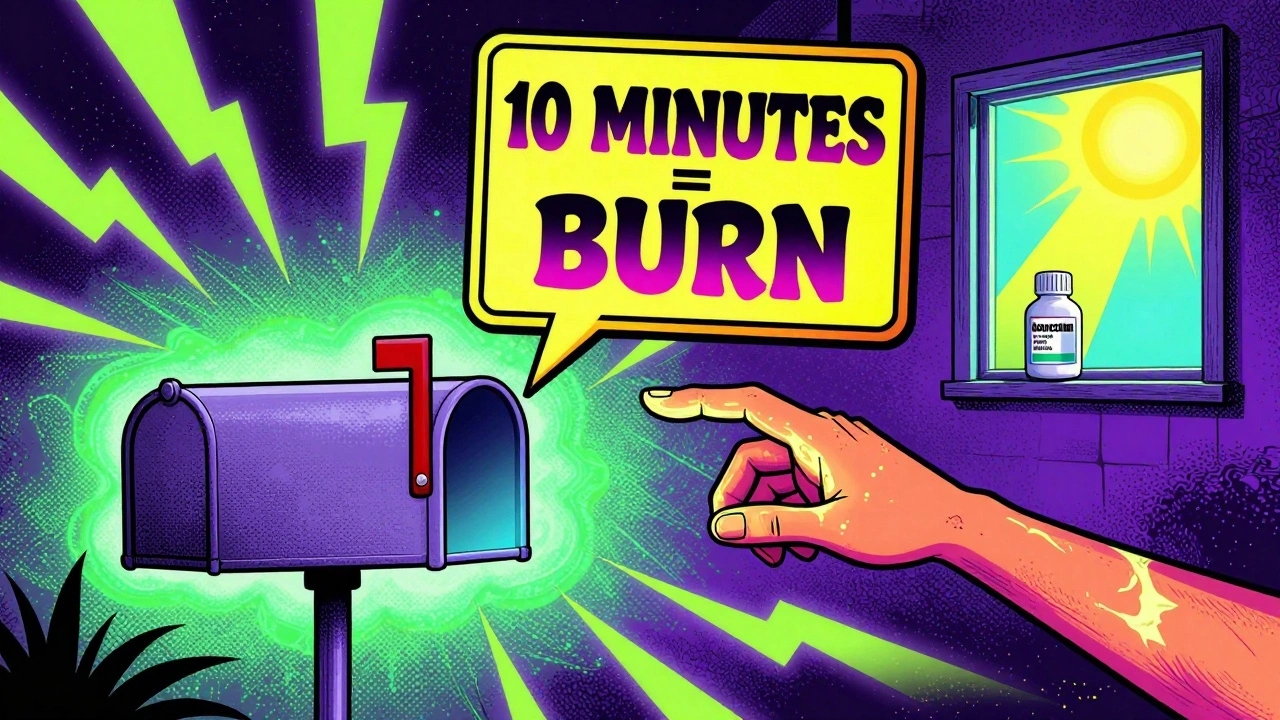
When the sun comes out, most people enjoy the warmth. But for someone with photosensitivity, even a short walk to the mailbox can trigger a painful rash, burning skin, or blistering that lasts for days. This isn’t just a bad sunburn. It’s a reaction to ultraviolet (UV) radiation that your skin isn’t equipped to handle-often because of a medication, autoimmune condition, or genetic predisposition. And if you’re not taking the right steps, you’re not just uncomfortable-you’re putting yourself at higher risk for long-term skin damage and even skin cancer.
What Exactly Is Photosensitivity?
Photosensitivity means your skin reacts abnormally to sunlight. It’s not the same as getting sunburned after hours at the beach. With photosensitivity, you can develop a rash, hives, or severe redness after just 10-15 minutes of exposure-sometimes even through a window. There are two main types: phototoxic and photoallergic.
Phototoxic reactions are more common. They happen when a substance in your body-like a medication-reacts with UV light and causes direct cell damage. Think of it like your skin being overexposed to a chemical burn. Photoallergic reactions are rarer and involve your immune system. Your body mistakes the sun-altered chemical for a threat and launches an allergic response. Both types can be triggered by common things: antibiotics like doxycycline, diuretics like hydrochlorothiazide, NSAIDs like ibuprofen, or even some perfumes and skincare ingredients like bergamot oil or retinol.
Why Standard Sunscreen Isn’t Enough
Many people think SPF 30 sunscreen is enough. For someone with normal skin, maybe. But for photosensitive skin, it’s not. SPF 30 blocks about 97% of UVB rays. SPF 50 blocks 98%. That 1% difference might sound small, but for someone whose skin reacts to tiny amounts of UV, it’s the difference between a mild redness and a full-blown flare-up.
And SPF only measures UVB protection. UVA rays-longer wavelengths that penetrate deeper-cause aging and contribute to skin cancer. They’re also the main trigger for many photosensitivity reactions. That’s why broad-spectrum is non-negotiable. But even broad-spectrum chemical sunscreens can irritate sensitive skin. Many people with photosensitivity do better with physical blockers: zinc oxide and titanium dioxide. These sit on top of the skin and reflect UV light instead of absorbing it. They work immediately, don’t break down as quickly in sunlight, and are less likely to cause allergic reactions.
The Real Power of UPF Clothing
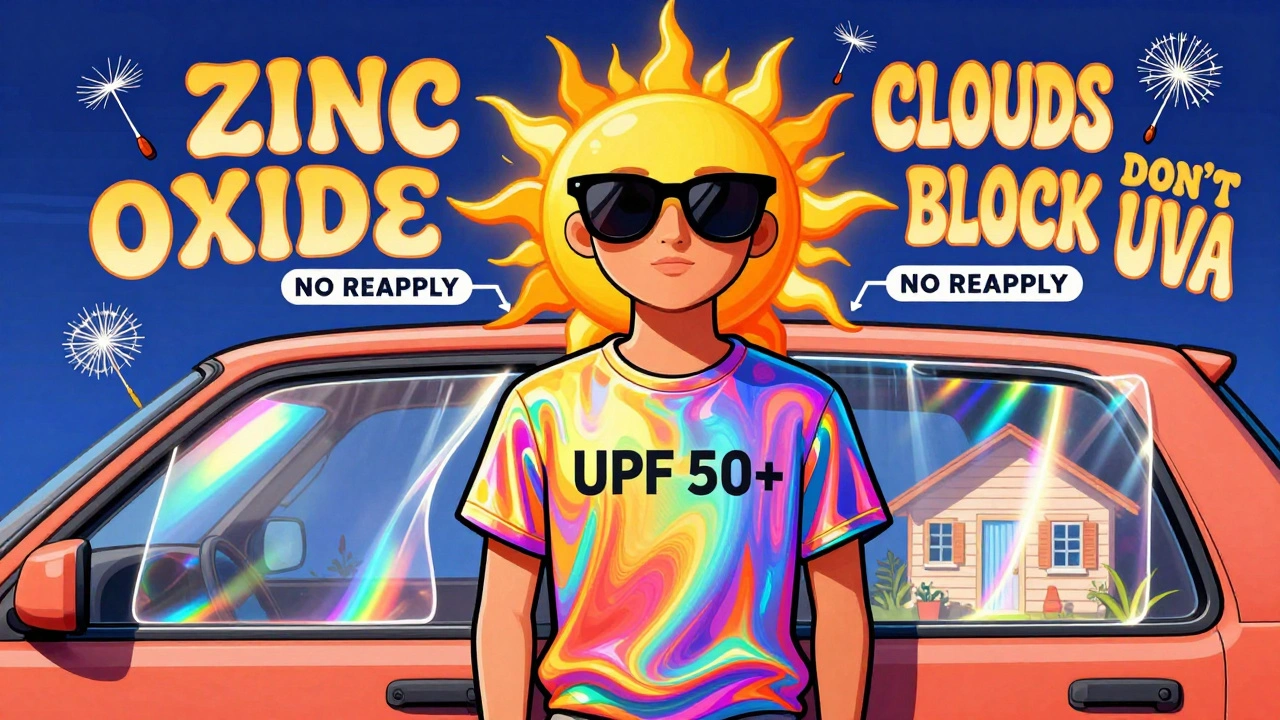
Think of your clothes as your first line of defense. A white cotton T-shirt might have a UPF (Ultraviolet Protection Factor) of only 5-meaning 20% of UV rays get through. That’s worse than most sunscreens. But a UPF 50+ garment blocks 98% of UV radiation. And unlike sunscreen, it doesn’t rub off, sweat off, or need reapplying.
Look for tightly woven fabrics like polyester, denim, or wool. Darker colors absorb more UV than light ones. But don’t assume all sun-protective clothing is stiff or hot. Modern UPF fabrics are designed to be lightweight and breathable-perfect for Perth’s climate. You can find long-sleeve shirts, wide-brimmed hats, and even UV-blocking swimwear that feels like regular clothing. Wear them even on cloudy days. Up to 80% of UV radiation penetrates cloud cover.
Windows Don’t Protect You-They Trick You
One of the biggest surprises for people with photosensitivity? You can still get burned inside your car or near a window. Standard glass blocks 97% of UVB rays-the ones that cause sunburn. But it lets through 75% of UVA rays. That’s why someone with lupus or on doxycycline might develop a rash after sitting by a window for an hour. The damage is slow, cumulative, and often missed.
The fix? Install UV-blocking window film. It’s not expensive-$5 to $15 per square foot-and it blocks up to 99% of UVA. You can get it for home windows, car windows, and even office cubicles. Some films are nearly invisible. Others have a slight tint. Either way, it’s one of the most effective, low-effort changes you can make.
When and Where to Be Outside
UV intensity isn’t constant. It peaks between 10 a.m. and 4 p.m., when your shadow is shorter than your height. That’s the danger zone. For photosensitive individuals, planning outdoor time for early morning or late afternoon-when the UV index is below 3-can make all the difference.
Check your local UV index daily. In Perth, even in winter, it can hit 8 or 9. Use apps or weather services that show real-time UV levels. If it’s 3 or higher, treat it like a warning. Wear your hat, your UPF shirt, your sunglasses, and reapply sunscreen-even if you’re just walking to the car.
What to Avoid in Skincare and Medications
Some of the most common skincare ingredients can make photosensitivity worse:
- Alpha-hydroxy acids (AHAs) like glycolic and lactic acid
- Retinoids (retinol, tretinoin)
- Essential oils like bergamot, lime, or lemon
- Some acne treatments like benzoyl peroxide
Always check labels. And if you’re on a new medication, ask your pharmacist: “Is this photosensitizing?” Common culprits include antibiotics (tetracyclines, fluoroquinolones), diuretics, antifungals, and even some antidepressants. Don’t assume your doctor told you-many don’t. A quick call to the pharmacy can prevent a painful reaction.

Supplements That Help-But Don’t Replace Protection
Some supplements can give your skin a little extra defense, but they’re not a substitute for sunscreen or clothing. Polypodium leucotomos, an extract from a Central American fern, has been shown in studies to reduce sun-induced inflammation and may offer the equivalent of SPF 3-5. Nicotinamide (vitamin B3) has stronger evidence: a 2015 study in the New England Journal of Medicine found that taking 500mg twice daily reduced new non-melanoma skin cancers by 23% in high-risk patients. That’s significant. But again, it’s an add-on, not a replacement.
Don’t expect tanning lotions with DHA (dihydroxyacetone) to protect you. They give you a fake tan but only offer SPF 3 at best. That’s not enough for photosensitive skin.
Creating a Daily Sun Protection Routine
Here’s what works for people managing photosensitivity day in and day out:
- Apply zinc oxide or titanium dioxide-based broad-spectrum SPF 50+ sunscreen every morning, 15 minutes before going out. Use about one ounce (a shot glass full) for your whole body.
- Reapply every two hours, and immediately after swimming or sweating-even if it’s labeled “water-resistant.”
- Wear UPF 50+ clothing, wide-brimmed hat, and UV-blocking sunglasses every time you’re outside.
- Install UV-blocking film on home and car windows.
- Avoid outdoor activities between 10 a.m. and 4 p.m. unless absolutely necessary.
- Check all medications and skincare products for photosensitizing ingredients.
- Consider taking 500mg of nicotinamide twice daily if your doctor approves it.
It sounds like a lot. But once it’s routine, it’s not hard. People who manage photosensitivity well don’t rely on willpower-they rely on systems. They keep sunscreen in their car, their desk, their purse. They have UPF shirts ready to grab. They set phone alarms to reapply. They don’t wait for a reaction to happen. They prevent it.
The Bigger Picture
Photosensitivity affects 10-20% of the population, especially those with lupus, porphyria, or on long-term medications. And with climate change increasing UV levels by 1-2% per decade, it’s getting worse. The global market for sun-protective clothing is growing fast-projected to hit $5.1 billion by 2028-because people are finally realizing: you can’t out-sunscreen your way out of this.
It’s not about avoiding the sun entirely. It’s about respecting it. Protecting your skin isn’t vanity-it’s medical necessity. And with the right tools, you can still enjoy life outside without paying the price.
Can you get photosensitivity from just one sun exposure?
No, photosensitivity is usually triggered by ongoing exposure combined with a trigger like medication or a medical condition. But once you’re photosensitive, even small amounts of UV can cause a reaction. One bad sunburn won’t make you photosensitive, but repeated exposure while on a photosensitizing drug can.
Is SPF 100 better than SPF 50 for photosensitivity?
Not significantly. SPF 50 blocks 98% of UVB rays. SPF 100 blocks 99%. That extra 1% offers minimal real-world benefit and can give a false sense of security. The key is using SPF 50+ correctly: applying enough, reapplying often, and combining it with clothing and shade.
Do I need to wear sun protection indoors?
If you’re near a window, yes. Standard glass blocks UVB but lets through 75% of UVA, which can trigger photosensitivity reactions. If you sit by a window all day-whether at home or in an office-UV exposure adds up. Install UV-blocking film or move your chair away from direct sunlight.
Can children have photosensitivity?
Yes. Conditions like xeroderma pigmentosum or lupus can cause photosensitivity in children. Certain medications, including some antibiotics, can trigger reactions too. Kids need the same protection: UPF clothing, broad-spectrum SPF 50+, shade, and avoidance of peak sun hours. Always check with a pediatric dermatologist if a child develops unusual sun reactions.
Are natural sunscreens safer for photosensitive skin?
Not necessarily. “Natural” doesn’t mean non-irritating. Many natural sunscreens use chemical filters or plant oils that can be phototoxic. Zinc oxide and titanium dioxide are the gold standard for sensitive skin because they’re inert, non-absorbing, and non-allergenic. Look for products labeled “mineral” or “physical” sunscreen, not “natural.”
How long does it take for photosensitivity to go away?
It depends on the cause. If it’s from a medication, symptoms usually fade within days to weeks after stopping the drug. If it’s from an autoimmune condition like lupus, it’s lifelong. Even then, consistent sun protection can prevent flares and reduce long-term damage. Never stop a prescribed medication without consulting your doctor.


Stacy Tolbert
December 10, 2025 AT 00:26I used to think sunscreen was enough until I got hit with a rash after sitting by my window for 20 minutes. Now I have UV film on every window in my house and I swear by my UPF shirts. It’s not glamorous, but it’s the only thing that lets me actually go outside without crying.
My dog even knows when it’s time to put on my hat-he barks at me if I forget.
Ronald Ezamaru
December 10, 2025 AT 07:22Photosensitivity isn’t just a nuisance-it’s a chronic health issue that gets ignored because it doesn’t look like a ‘real’ disease. People see you wearing long sleeves in July and assume you’re being dramatic. But if you’ve had a flare-up from a window, you know it’s not about fashion. It’s survival.
Zinc oxide is the MVP. Skip the fancy brands. Just get the thick white paste. It works. And yes, it leaves a ghostly cast, but so does the pain of a 3-day blistering reaction.
Ryan Brady
December 10, 2025 AT 07:45Why are we letting science get this complicated? Just don’t go outside. Problem solved. Australia’s got 10x the UV and they’re still walking around in tank tops like it’s nothing. Maybe if we stopped being so weak, we wouldn’t need all this gear.
Also, SPF 50? That’s just corporate greed. SPF 30 works fine for normal people. Stop buying into the fear marketing.
Ruth Witte
December 11, 2025 AT 12:19YESSSSS UPPPPP 😭🙌 I’ve been living this for 7 years with lupus and this post is literally my bible. I just bought my third UPF hoodie this month and I’m in love. Also, nicotinamide changed my life-no more hospital trips after summer walks. I’m not ‘being extra,’ I’m being alive. 💪☀️
PS: UV film on my car window = freedom. I can drive without looking like a ghost in a lab coat.
Noah Raines
December 12, 2025 AT 17:09Real talk: I used to roll my eyes at people with sun allergies until I started taking doxycycline. One weekend hike and I looked like I’d been boiled alive.
Now I keep a bottle of zinc sunscreen in my glovebox, my backpack, and my work drawer. I don’t think about it anymore. It’s just part of the routine, like brushing my teeth. And yeah, I wear a hat indoors if I’m near a window. No shame.
Katherine Rodgers
December 13, 2025 AT 19:01soooooo… you’re telling me that after 20 years of thinking i was just ‘fair skinned’ i was actually just… photosensitive? wow. thanks for the 20 year diagnosis, internet.
also, who the hell uses ‘UPF’ like it’s a brand of yoga pants? i’m wearing a hoodie and i’m fine. stop selling us fear.
Lauren Dare
December 15, 2025 AT 01:59The term ‘photosensitivity’ is being weaponized by the dermatology-industrial complex. The data on polypodium leucotomos is underpowered, the UPF clothing market is a $5B scam, and nicotinamide’s 23% reduction is statistically significant but clinically marginal.
Also, ‘UV-blocking film’? That’s a Band-Aid for a systemic failure in public health messaging. You’re treating symptoms, not root causes-like why we’re prescribing phototoxic drugs without proper patient education.
Gilbert Lacasandile
December 15, 2025 AT 04:04I’ve been on hydrochlorothiazide for years and never realized it was making me react to sunlight. This post saved me. I started using zinc oxide and now I can sit on my porch in the morning without breaking out. I feel like I’ve been given back a piece of my life.
Thanks to everyone who’s shared their experience here. I didn’t know I wasn’t alone.
Lola Bchoudi
December 16, 2025 AT 18:04For those new to this: your routine needs to be automated. Set phone reminders for sunscreen reapplication. Pre-pack your UV hat and shirt the night before. Keep a travel-sized zinc tube in your purse and your car. Make it frictionless.
Consistency > perfection. You don’t need to be flawless-you just need to be consistent. And if you miss a day? Don’t guilt-trip yourself. Just reset and keep going. You’re building a sustainable system, not a punishment.
Morgan Tait
December 18, 2025 AT 05:20Did you know the government is hiding the truth? UV radiation is being weaponized by Big Pharma to sell sunscreen and UPF gear. The real cause? 5G towers and chemtrails. They’ve been altering the atmosphere since the 90s to make us dependent on their products.
And don’t get me started on how they’re using ‘lupus’ as a cover for mind control experiments. I’ve seen the documents. The sun isn’t the enemy. The system is.
Also, I wear aluminum foil under my hat. It works better than film. Ask me how I know.
Darcie Streeter-Oxland
December 18, 2025 AT 23:14It is, regrettably, necessary to observe that the proliferation of colloquial terminology such as ‘UPF’ and ‘photosensitivity’-particularly when deployed in a context devoid of peer-reviewed clinical validation-risks obfuscating the medical reality of cutaneous photoreactivity. The utilisation of sunscreen, while commonplace, remains an imperfect palliative measure.
One might reasonably posit that the elevation of such measures to the status of medical necessity reflects a broader societal trend toward the medicalisation of ordinary environmental exposure.
Taya Rtichsheva
December 20, 2025 AT 22:00