

Why Older Adults Struggle to Take Their Medications
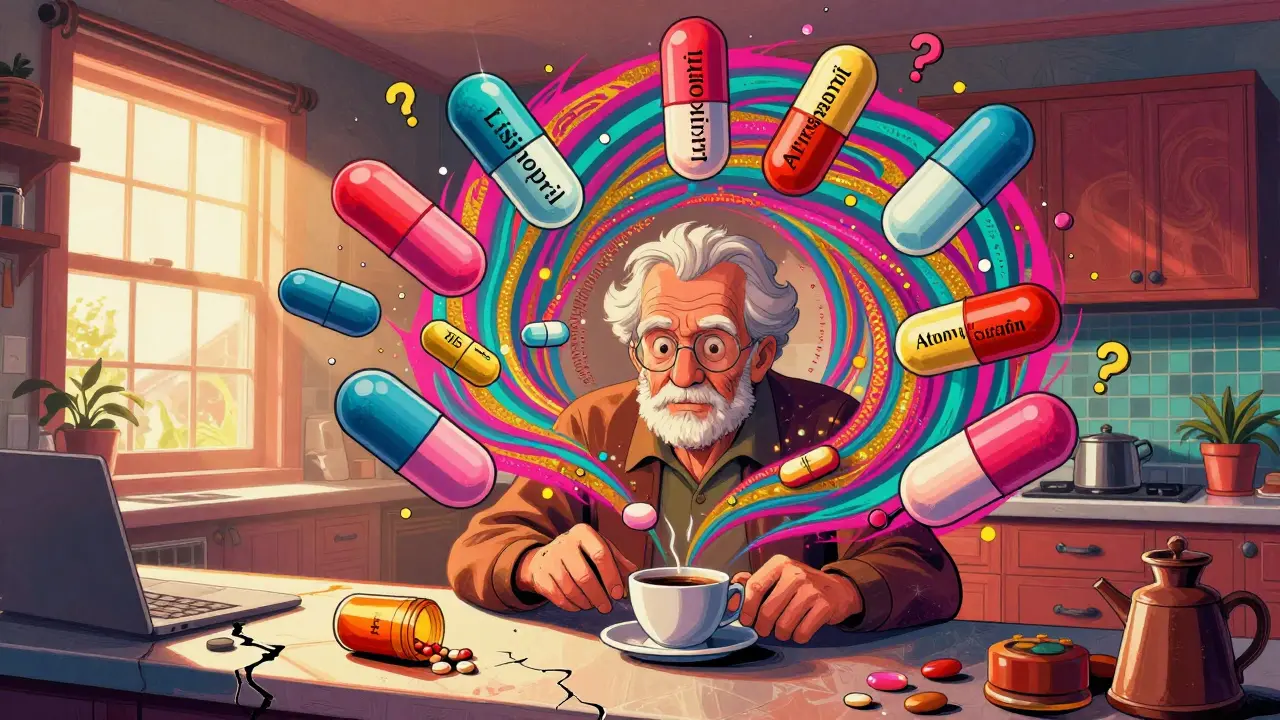
Imagine waking up every morning to a tray of 12 pills - some red, some blue, some with strange names you can’t read. You’re told to take them at different times: before breakfast, after lunch, at bedtime. Some you’ve been on for years. Others were added last week. You’re tired. Your hands shake. Your vision isn’t what it used to be. And the co-pay for that one pill? It’s $45 this month. You skip it. Just this once.
This isn’t rare. In fact, it’s normal for many older adults. About 89% of people 65 and older take at least one prescription drug. More than half take four or more. And nearly 1 in 3 aren’t taking them as directed.
It’s not because they don’t care. It’s because the system isn’t built for them.
Polypharmacy: Too Many Pills, Too Little Clarity
Polypharmacy - taking five or more medications at once - is the silent killer of adherence. It’s not just about the number of pills. It’s about the confusion. One pill treats high blood pressure. Another for arthritis. A third for cholesterol. A fourth for sleep. A fifth for acid reflux. Some need to be taken on an empty stomach. Others must be swallowed with water, not juice. Some interact badly with grapefruit. Others cause dizziness if you stand up too fast.
Studies show that people taking just one pill a day are twice as likely to stick to their regimen compared to those taking four or more. Each additional pill reduces adherence by about 10%. And when you add in over-the-counter drugs, vitamins, and supplements - which 44% of men and 57% of women over 65 take weekly - the complexity skyrockets.
Doctors often add medications without stepping back to ask: Do you really need all of these? A 2024 study found that nearly 30% of hospitalizations in seniors were caused by adverse drug reactions - many of which could have been avoided with a simple medication review.
The Real Culprits: Cost, Memory, and Isolation
Cost is the biggest reason seniors skip doses. The CDC found that 3.4% of older adults don’t take their meds because they can’t afford them. But that number hides a darker truth: among food-insecure seniors, cost-related non-adherence is six times higher. People choose between insulin and groceries. Between heart medication and heating their home.
Memory issues are another major barrier. Forgetfulness isn’t just about aging - it’s about cognitive overload. A person with mild dementia might forget whether they already took their pill. Or they might take it twice because the bottle looks empty. Some even hide pills because they’re afraid of side effects or don’t understand why they’re taking them.
And then there’s isolation. Many older adults live alone. No one checks in. No one helps them sort their pills. No one notices when they stop taking their blood thinner. Social support is the single biggest predictor of adherence - more than education, income, or health literacy. One Brazilian study found that lack of family or community support accounted for over one-third of adherence problems.
Physical Barriers You Can’t See
It’s not just about forgetting. It’s about not being able to open the bottle. Or read the label. Or swallow the pill.
Arthritis makes it hard to twist childproof caps. Poor eyesight turns small print into a blur. Tremors make it hard to pour pills into a hand. Swallowing difficulties - common after strokes or with Parkinson’s - lead people to crush pills they shouldn’t. One man in Perth stopped taking his blood pressure med because he couldn’t open the bottle. He didn’t tell his doctor. He just stopped.
And then there’s the fear. Many seniors notice dizziness, confusion, or falls after starting a new drug. They assume it’s just getting older. They don’t realize it’s the medication. So they cut the dose in half - or stop altogether. This is especially common with medications for anxiety, sleep, or pain. But these side effects aren’t normal. They’re warning signs.
Solutions That Actually Work
There’s no magic fix. But there are proven, practical steps that make a real difference.
1. Simplify the regimen. Ask your doctor: Can any pills be combined? Can twice-daily meds become once-daily? Can you switch to a long-acting version? Even reducing from four doses a day to two can boost adherence by 40%.
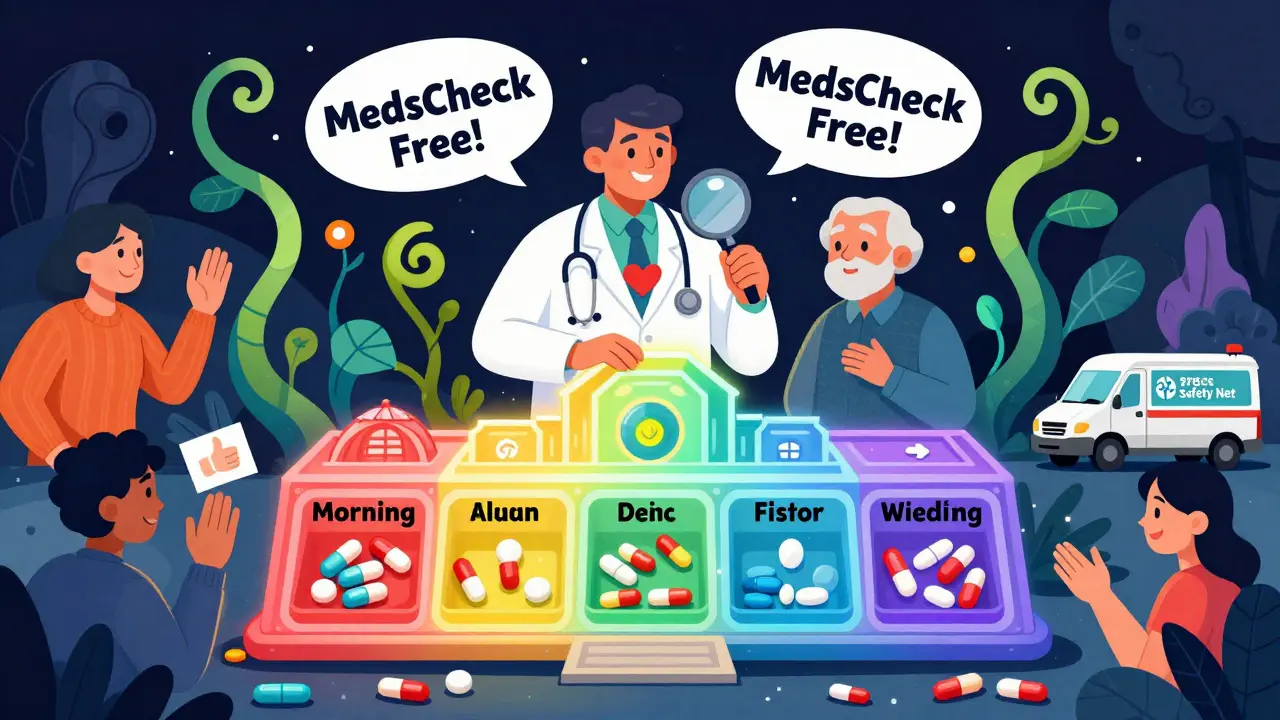
2. Use a pill organizer. A simple weekly box with morning, afternoon, evening, and bedtime slots works wonders. Buy one with alarms or one that locks. Some even text a family member if a dose is missed. Don’t rely on memory. Use the tool.
3. Get help from a pharmacist. Pharmacists aren’t just pill dispensers. They’re medication experts. Ask for a MedsCheck - a free, 20-minute review where they go through every pill, check for duplicates, interactions, and unnecessary drugs. Many pharmacies in Australia offer this at no cost.
4. Build a support system. If you live alone, ask a neighbor, friend, or community group to check in once a week. Some churches, senior centers, and Meals on Wheels programs now include medication checks as part of their service. If you have family, give them access to your pharmacy account. Let them get refill reminders.
5. Cut costs. Ask about generic versions. Ask your doctor for samples. Apply for the PBS Safety Net in Australia - it caps how much you pay for prescriptions each year. If you’re on a low income, you may qualify for free or discounted meds. Don’t be proud. Ask.
What Doctors and Pharmacies Should Be Doing
Too often, the system puts the burden on the patient. But it’s not fair. Doctors should do a full med review at least once a year - not just when something goes wrong. They should ask: “What’s the goal of this medicine? Is it still helping?” and “Is this pill worth the risk for someone with a life expectancy of five years?”
Pharmacies should offer home delivery for those with mobility issues. They should label bottles in large print. They should call if a prescription hasn’t been picked up in two weeks.
Hospitals need to do better too. When an older adult is discharged, they get a stack of new scripts. No one explains them. No one follows up. That’s when most errors happen.
Technology Can Help - But Only If It’s Simple
Smart pill dispensers that beep and send alerts? Great - if the person can use them. Many seniors find them overwhelming. A simple digital alarm on a phone works just as well. Some apps let family members see when pills are taken. But don’t buy fancy tech unless the user wants it.
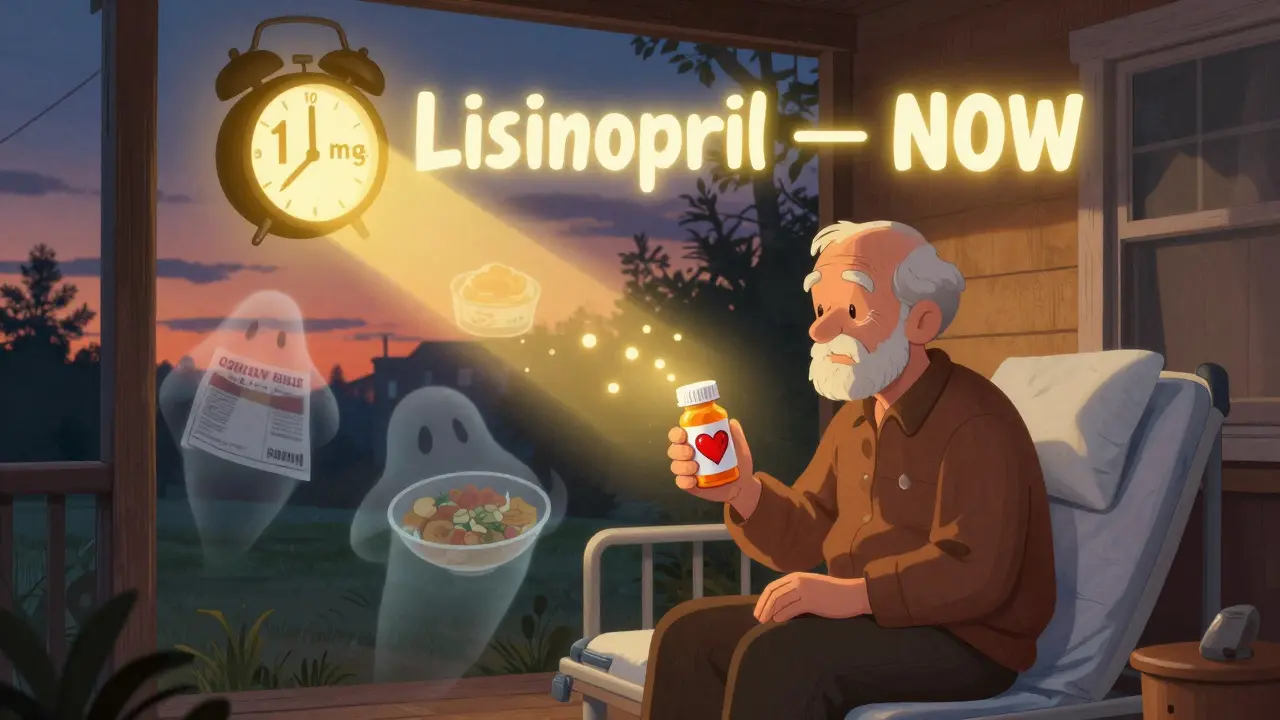
Text reminders? Yes. But only if they’re clear: “Take your 10mg Lisinopril - blood pressure pill - now.” Not “Take med #3.”
Telehealth check-ins? Even better. A 10-minute video call with a nurse every two weeks can catch problems before they become emergencies.
Real Stories, Real Changes
Mary, 78, from Bunbury, was taking 11 medications. She missed doses constantly. Her blood pressure was out of control. Her doctor reduced her regimen to 4 pills - one daily. She switched to a weekly pill box. Her daughter started leaving her a note every morning: “Pills done? 👍” Within three months, her BP stabilized. She stopped falling. She started gardening again.
John, 82, skipped his cholesterol pill because it cost $50 a month. He didn’t tell anyone. His pharmacist noticed he hadn’t picked it up in 6 months. They called. Turned out he was eating beans and rice because he couldn’t afford meat. The pharmacist connected him with a food bank and helped him apply for a concession card. His med is now $6.40 a script. He’s alive because someone asked why he wasn’t picking it up.
What You Can Do Today
- Make a list of every pill you take - including vitamins and OTC drugs.
- Bring it to your next doctor visit. Ask: “Which ones are absolutely necessary?”
- Get a pill organizer. Even a cheap one from the supermarket.
- Ask your pharmacist for a free MedsCheck.
- If you can’t afford a med, say so. There are programs. You’re not alone.
- Ask someone you trust to check in on your meds once a week.
Final Thought
Medications don’t work if they’re not taken. That’s not a failure of willpower. It’s a failure of design. The system was built for young, healthy people with good vision, steady hands, and full wallets. It wasn’t built for us.
But change is possible. It starts with one conversation. One pill box. One question: “Can we make this simpler?”
Why do older adults often skip their medications?
Older adults skip meds for many reasons: too many pills to manage, high out-of-pocket costs, memory problems, physical difficulty opening bottles or swallowing pills, fear of side effects, and lack of social support. Often, it’s not laziness - it’s a system that doesn’t account for aging.
Is polypharmacy really that big of a problem?
Yes. Taking five or more medications daily increases the risk of harmful drug interactions, falls, confusion, and hospitalization. About 35% of older adults on multiple meds experience an adverse drug reaction each year - nearly one-third of those require hospital care. Reducing unnecessary pills is one of the most effective ways to improve safety and adherence.
How can I tell if an older relative is not taking their meds?
Watch for signs: empty pill bottles that haven’t been refilled, missed appointments, unexplained falls or confusion, worsening symptoms like high blood pressure or blood sugar, or vague comments like “I don’t feel right” or “I don’t like how this pill makes me feel.” Don’t assume they’re just getting older - ask gently and check their meds.
Are there free services in Australia to help seniors with meds?
Yes. The Pharmaceutical Benefits Scheme (PBS) Safety Net caps out-of-pocket costs. Many pharmacies offer free MedsChecks - a 20-minute review of all medications. Community health centers and aged care services often provide medication support. If you’re on a pension, you may qualify for free or discounted scripts. Ask your pharmacist or call Medicare on 132 011.
Can technology help older adults remember to take their pills?
Simple tech works best. A digital alarm on a phone or clock, a weekly pill box with compartments, or a reminder text from a family member are more effective than complex apps or smart dispensers. The goal isn’t high-tech - it’s reliable. If the person can’t use it, it won’t help.
What should I do if I can’t afford my medications?
Don’t skip doses. Talk to your doctor - they may have samples or switch you to a cheaper generic. Ask your pharmacist about the PBS Safety Net or concession cards. Contact your local community health center - they often have programs to help with medication costs. In Australia, no one should have to choose between medicine and food.




Malik Ronquillo
January 21, 2026 AT 15:55Brenda King
January 23, 2026 AT 05:02Daphne Mallari - Tolentino
January 24, 2026 AT 15:05Neil Ellis
January 24, 2026 AT 16:22Rob Sims
January 26, 2026 AT 13:20Patrick Roth
January 27, 2026 AT 23:42Kenji Gaerlan
January 29, 2026 AT 20:46Tatiana Bandurina
January 31, 2026 AT 08:45