

Imagine buying a life-saving medication only to find out it's a fake, filled with chalk or, worse, a toxic chemical. This isn't a horror movie plot; it's a real-world danger. The only thing standing between a patient and a dangerous counterfeit is a string of numbers on a box. In the pharma world, track-and-trace is a system of tracking a drug's movement through the supply chain using unique identifiers. By using track-and-trace, companies can prove a bottle of medicine actually came from the factory and wasn't swapped for a fake in a warehouse somewhere.
The Difference Between Lot Numbers and Serial Codes
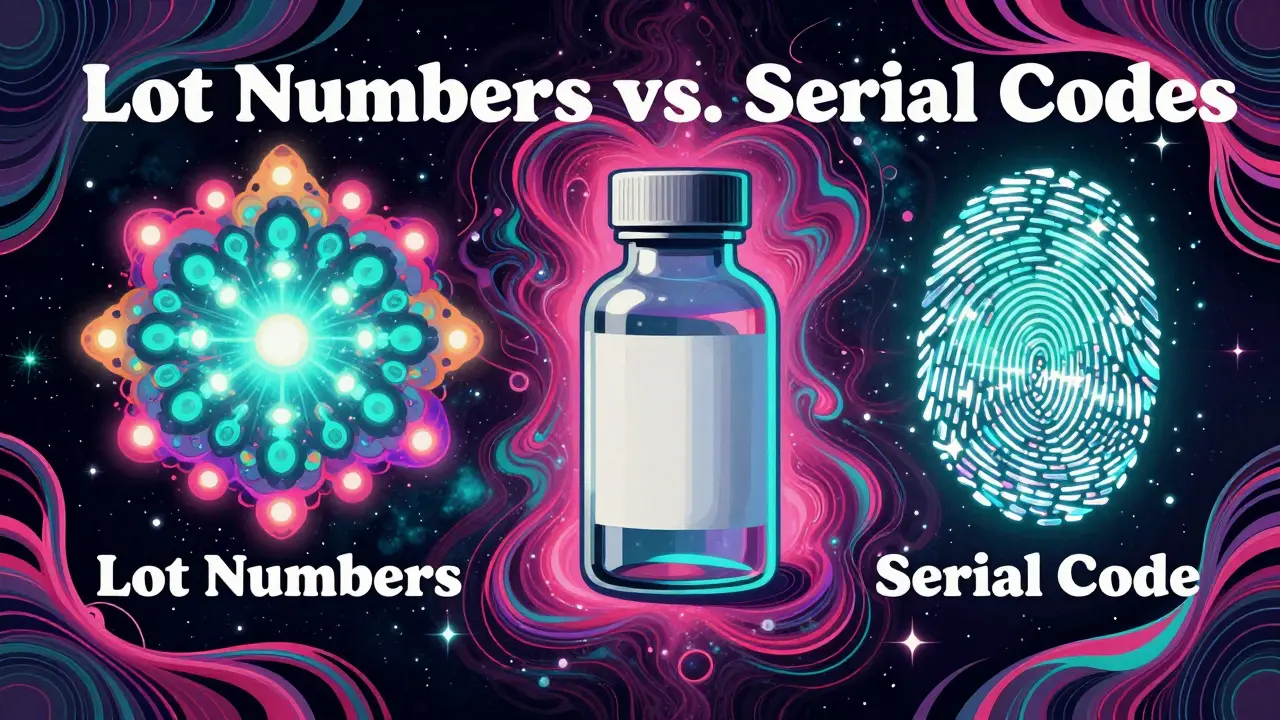
People often use these terms interchangeably, but they do very different jobs. Think of a lot number as a "group ID" and a serial code as a "fingerprint."
Lot numbers (also called batch numbers) identify a group of products made at the same time, using the same raw materials, under the same conditions. If a specific batch of ingredients was contaminated, the company uses the lot number to find every single bottle from that specific run. For example, if a factory in Perth produced 10,000 vials of insulin on Tuesday morning, all those vials share one lot number.
Serial codes take it a step further. These are unique to every single unit. No two bottles of the same medicine have the same serial code. This is the gold standard for fighting counterfeit drugs because it allows a pharmacist to scan a box and verify that this exact unit was produced and shipped by the legitimate manufacturer.
| Feature | Lot Tracking | Serial Tracking |
|---|---|---|
| Level of Detail | Group/Batch level | Individual unit level |
| Primary Goal | Quality control & recalls | Anti-counterfeiting & authenticity |
| Implementation | Standard in 92% of pharma | Essential for high-value/high-risk drugs |
| Recall Precision | Targets a whole batch | Targets specific units |
How Track-and-Trace Stops Counterfeits
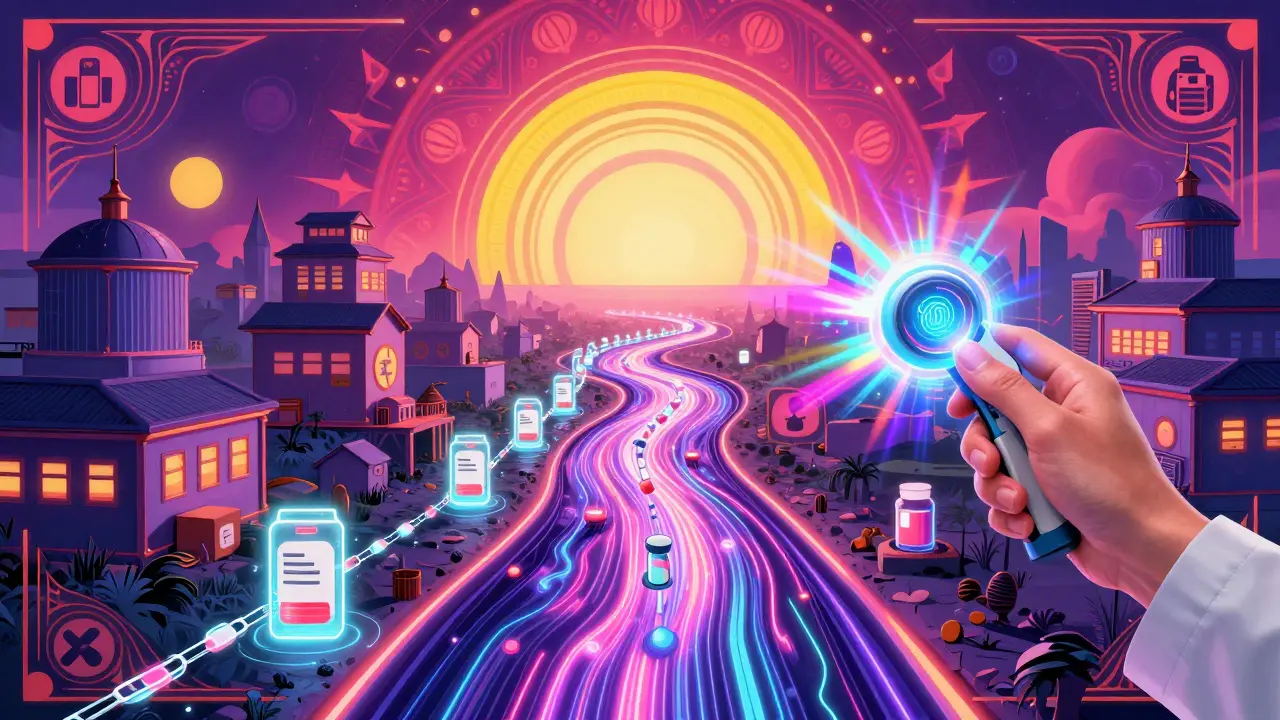
Counterfeiters rely on the "dark spots" in a supply chain. They slip fake drugs into the system at wholesalers or shipping hubs where no one is checking the IDs. Serialization is the process of assigning those unique serial codes to each package, which effectively turns the lights on in those dark spots.
When a drug is manufactured, its serial code is recorded in a secure database. As the drug moves from the factory to the distributor, then to the pharmacy, and finally to the patient, each hand-off is scanned. If a counterfeit bottle enters the chain, it won't have a valid serial code in the system. When the pharmacist scans it, the system flags it as "invalid" or "already dispensed," alerting the provider that the product is a fake.
This level of precision is a game-changer. According to data from NetSuite, integrated tracking systems can reduce the time it takes to investigate a recall by 72%. Instead of pulling every single drug of a certain type off the shelves, they can identify exactly which pharmacies received the compromised batches.
The High Cost of Getting it Wrong
We didn't always have these strict rules. The need for batch identification became a legal necessity after the 1937 Elixir Sulfanilamide tragedy, where an improperly formulated liquid medication killed over 100 people. That disaster led to the 1938 Food, Drug, and Cosmetic Act, which mandated that batches be identified.
Today, failing to maintain these records isn't just a safety risk; it's a legal nightmare. The FDA has ramped up enforcement, with warning letters regarding inadequate lot traceability increasing by 217% between 2018 and 2023. For a company, a lack of data discipline can lead to massive fines or the forced shutdown of production lines.
Modern Tech: QR Codes, Blockchain, and AI
The old way of tracking involved typing numbers into a spreadsheet-a recipe for human error. Modern systems have moved toward automated scanning. QR Inventory systems, for example, have pushed accuracy rates to 99.8%, compared to just 87% when humans enter data manually.
We're also seeing a shift toward more "immutable" records. Some companies are now integrating blockchain technology to ensure that once a serial code is scanned and moved, that record cannot be altered or deleted by a bad actor. This prevents counterfeiters from "cloning" valid serial codes to make fake boxes look real.
Looking ahead, AI is stepping in. Gartner predicts that by 2027, most tracking systems will use AI-driven anomaly detection. This means the system can flag a shipment as suspicious if it takes an unusual route or spends too much time in a warehouse, even if the serial codes are technically valid. This "predictive quality management" helps stop counterfeits before they even reach the pharmacy.
Practical Tips for Verifying Your Medication
While most of the heavy lifting happens behind the scenes, you can take a few steps to ensure your medicine is legitimate:
- Check the packaging: Look for inconsistencies in printing, spelling errors, or labels that seem peeled or reapplied.
- Verify the Lot and Expiry: Ensure the lot number and expiration date are clearly printed and not smudged or handwritten.
- Ask your pharmacist: If you are taking a high-value or high-risk medication, ask how your pharmacy verifies the authenticity of the shipment.
- Buy from reputable sources: Avoid "too good to be true" deals from online pharmacies that don't require a prescription or have vague shipping origins.
What happens if a lot number is missing from my medicine?
A missing lot number is a major red flag. Legitimate pharmaceutical manufacturers are required by law to include batch/lot identifiers for quality control and recalls. If the packaging is blank or the number is illegible, contact your pharmacist immediately and do not use the medication.
Can a counterfeit drug have a real lot number?
Yes, counterfeiters often copy real lot numbers from legitimate packaging. This is why serial codes are so important. While a lot number identifies a group, a serial code identifies the individual unit. If a counterfeiter copies one valid serial code onto 1,000 fake boxes, the system will flag it as a duplicate as soon as the second box is scanned.
How does track-and-trace help with drug recalls?
Instead of recalling every single bottle of a drug across the country, companies use lot numbers to pinpoint exactly which batches were affected. This reduces waste by about 63% and ensures that only the dangerous products are removed, preventing pharmacies from running out of safe versions of the medicine.
Is serialization required for all medications?
While lot tracking is almost universal in pharma (around 91% adoption), full individual serialization is more common for high-value, high-risk, or heavily regulated drugs. However, global regulations are moving toward mandating serialization for more product categories to combat the rise of sophisticated fakes.
Does the EU have different rules for tracking drugs?
The EU has very strict requirements, including the Falsified Medicines Directive. They are also moving toward a "Digital Product Passport" by 2027, which will expand serialized tracking to a wider range of products beyond just pharmaceuticals, including electronics and batteries.

Doug DeMarco
April 10, 2026 AT 12:52This is such a great breakdown! It's honestly wild how much we rely on these little codes to stay safe. Definitely a good reminder for everyone to just double-check their meds before taking them! 😊
Will Gray
April 10, 2026 AT 15:16Oh please, as if this "system" is actually about safety and not just another way for the global elite to monitor exactly who is taking what. It's obviously about data harvesting and control. Only a fool would think the government actually cares if you get chalk in your pills when they can just track your medical history via a QR code. Absolute joke.