The Quick Take: Which Path Should You Choose?
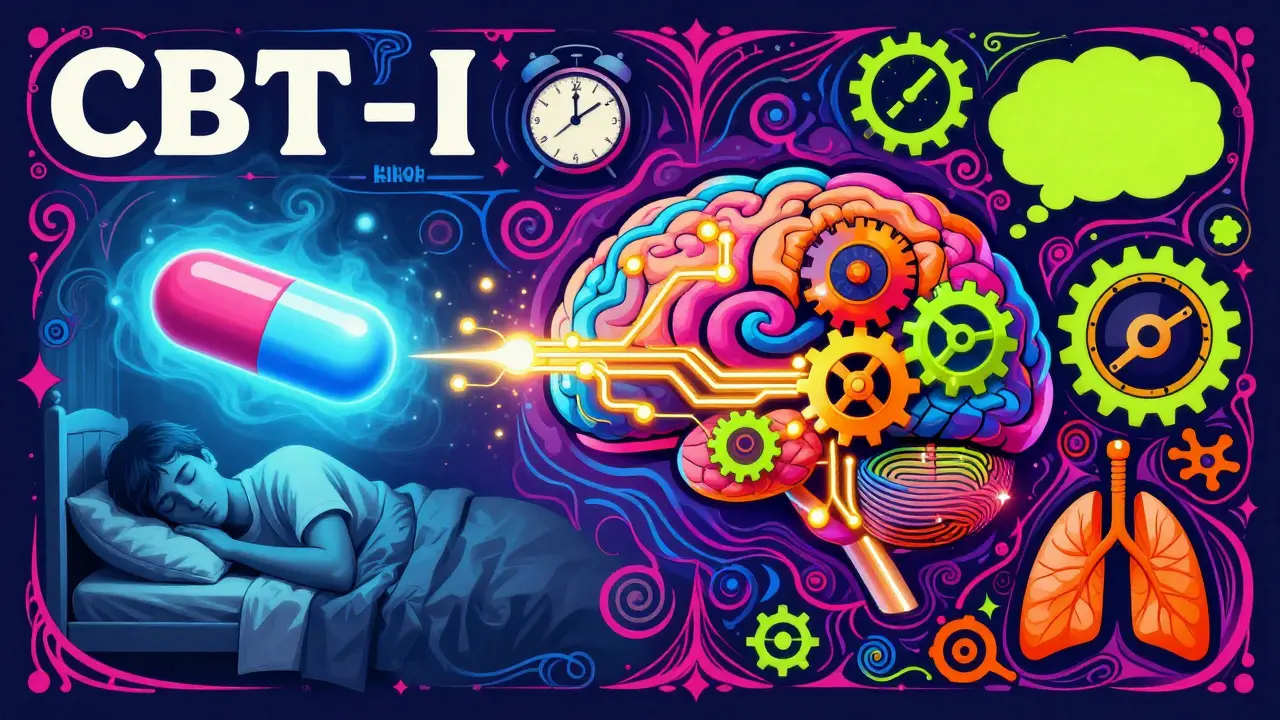
If you're trying to decide between a prescription and therapy, the evidence is pretty stark. While medications can knock you out tonight, CBT-I teaches you how to sleep for the next decade. The American College of Physicians recommends CBT-I as the first-line treatment for all adults with chronic insomnia because it addresses the root cause rather than just masking the symptoms.| Feature | CBT-I | Sleep Medications (e.g., Zolpidem) |
|---|---|---|
| Onset of Relief | Gradual (weeks) | Rapid (minutes/hours) |
| Long-term Efficacy | High (sustained for years) | Low (tolerance often develops) |
| Side Effects | Initial daytime sleepiness | Grogginess, dependency, memory issues |
| Root Cause Fix | Yes | No |
| Success Rate (12 mo) | ~68% maintain response | ~32% maintain response |
How CBT-I Actually Works: The Four Pillars
CBT-I isn't a single conversation; it's a toolkit. Most people undergo 6 to 8 weekly sessions, but the real work happens in your own bedroom. The goal is to eliminate the "effort" of sleeping-because the harder you try to sleep, the more awake you stay.One of the most powerful tools is Sleep Restriction Therapy (SRT). It sounds counterintuitive-limiting your time in bed to actually sleep more-but it works by building up a massive "sleep drive." If you only spend five hours in bed but only sleep four, your brain eventually becomes so desperate for sleep that it stops fighting you. This alone accounts for nearly 40% of the therapy's success.
Then there's Stimulus Control Therapy (SCT). This is all about association. If you spend hours tossing and turning, your brain starts to associate the bed with frustration and wakefulness. SCT forces a reset: you only use the bed for sleep and sex. If you aren't asleep in 20 minutes, you get out of bed. You stop the bed from becoming a place of battle.
We also tackle the mental game through cognitive restructuring. We've all had that thought: "If I don't get 8 hours tonight, I'll be a disaster at work tomorrow." That thought triggers a stress response (cortisol) that kills any chance of sleep. By challenging these catastrophic beliefs, you lower your physiological hyperarousal.
Finally, we add relaxation techniques. Diaphragmatic breathing and progressive muscle relaxation aren't just "fluff"; they physically lower your heart rate and prepare your nervous system to switch from "fight or flight" to "rest and digest."
The Reality of Sleep Medications
Now, let's talk about the pills. Zolpidem (Ambien) is one of the most common prescriptions in the US. It's incredibly effective at getting you to sleep *tonight*. But here is the catch: your brain is remarkably good at adapting. About 42% of users develop a tolerance within just eight weeks, meaning they need more of the drug to get the same effect.The problem with sedative-hypnotics is that they don't produce natural sleep. They produce a state of sedation. This is why many people report a "hangover" feeling or morning grogginess. More importantly, once you stop the medication, the original insomnia often returns-sometimes worse than before-because the underlying habits were never fixed.
Can You Do Both? The Combination Approach
Is it a choice of one or the other? Not necessarily. Some people find that a combination of medication and CBT-I offers the best results. Research shows that patients using both have a higher rate of clinically significant improvement at the six-month mark (around 74%) compared to those using just one method.The ideal strategy is to use medication as a temporary bridge to lower the acute distress while using CBT-I to build the skills needed to eventually taper off the drugs. This prevents the "rebound insomnia" that often happens when people quit meds cold turkey.
Modern Access: Digital CBT-I (dCBT-I)
One of the biggest hurdles to getting help is that not many primary care doctors are trained to deliver CBT-I. This is where digital platforms like Sleepio and Somryst come in. These are not just "sleep tracking apps"; they are prescription digital therapeutics that guide you through the SRT and SCT protocols using algorithms.For most people, dCBT-I is just as effective as seeing a therapist in person. It's especially helpful for those who can't afford the high cost of specialized sleep clinics or those who live in areas where experts are scarce. Even older adults, who sometimes struggle with tech, have shown high success rates with tailored digital versions of the program.
Common Pitfalls and How to Avoid Them
If you decide to try CBT-I, be warned: the first two to three weeks are the hardest. Because of sleep restriction, you will likely feel more tired during the day initially. Many people quit right here. The key is to stay consistent with your wake-up time, even on weekends. If you sleep in on Saturday to "make up" for a bad Friday, you destroy the sleep drive you've spent all week building.Another mistake is thinking that "sleep hygiene"-like avoiding caffeine or keeping the room cool-is enough. While a cool room helps, it won't cure chronic insomnia. Sleep hygiene is the foundation, but CBT-I is the actual house. You need the behavioral changes to see a real shift.
How long does it take for CBT-I to work?
Most people start seeing a 15-20% improvement in sleep efficiency by the third session. While the full course typically lasts 6-8 weeks, the most significant changes in sleep onset (falling asleep faster) and total sleep time usually solidify after the first month of strict adherence to sleep restriction and stimulus control.
Is CBT-I safe for everyone?
CBT-I is generally safe, but there are exceptions. Because sleep restriction causes temporary daytime sleepiness, it can be dangerous for people with untreated sleep apnea, bipolar disorder (where sleep loss can trigger mania), or those in high-risk professions like long-haul trucking or operating heavy machinery. Always consult a doctor first.
Can I do CBT-I on my own?
Yes, through digital therapeutics or reputable workbooks, but it's challenging. The "restriction" part is mentally taxing, and having a clinician or an AI-driven program to adjust your sleep window based on your daily diary prevents you from restricting too aggressively or not enough.
Why are sleep medications prescribed if CBT-I is better?
Medications are faster and easier to prescribe. A doctor can write a script in 30 seconds, whereas CBT-I requires weeks of commitment and effort from the patient. Additionally, in acute crises (like severe grief or trauma), medication can provide the immediate stabilization needed before a person is mentally ready for the hard work of therapy.
What happens if I fail at CBT-I?
Failure is usually due to inconsistent scheduling or not following the "out of bed" rule. If standard CBT-I doesn't work, it may be because the insomnia is secondary to another issue, such as restless leg syndrome or obstructive sleep apnea, which require different medical treatments.