

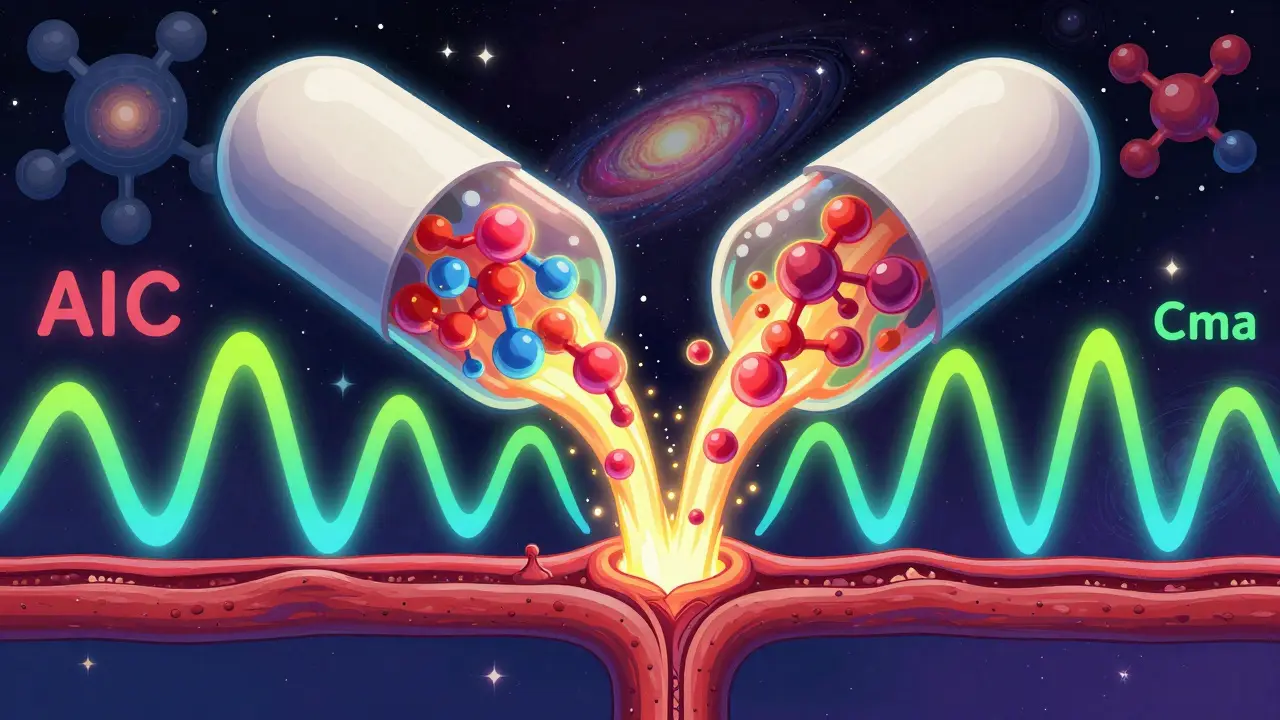
When you pick up a generic pill at the pharmacy, you expect it to work just like the brand-name version. But how does the FDA make sure it does? The answer lies in bioequivalence studies - the scientific backbone of every generic drug approval in the U.S.
Why Bioequivalence Matters
Generic drugs save patients and the healthcare system billions every year. But cost savings can’t come at the cost of safety or effectiveness. That’s why the FDA doesn’t just check the ingredients. It demands proof that the generic drug behaves the same way in your body as the original. The legal foundation for this requirement comes from the 1984 Hatch-Waxman Act. Before this law, generic manufacturers had to run full clinical trials - the same expensive, time-consuming process as brand-name drug companies. Hatch-Waxman changed that. It allowed generics to rely on the brand’s safety data, as long as they could prove they delivered the same amount of active ingredient, at the same speed, to the same place in the body. That’s bioequivalence: no significant difference in the rate and extent of absorption. In plain terms, if you take a generic version of a blood pressure pill, it needs to hit your bloodstream just like the brand-name version - not slower, not faster, not less, not more.The Core Requirements: AUC and Cmax
The FDA doesn’t guess. It measures. For nearly all oral drugs, the gold standard is a pharmacokinetic study in healthy volunteers. These studies track how the drug moves through the body over time. Two key numbers are measured:- AUC - Area Under the Curve. This tells you how much of the drug gets into your bloodstream overall. Think of it as the total exposure.
- Cmax - Maximum Concentration. This shows how high the drug peaks in your blood. It tells you how fast it’s absorbed.
Study Design: Who, When, and How
Most bioequivalence studies involve 24 to 36 healthy adults. They’re given the generic and the brand-name drug in a random order, with a washout period in between. This is called a crossover design - it reduces variability by comparing each person to themselves. The studies are usually done under fasting conditions. That’s because food can change how a drug is absorbed. But if the brand-name drug is meant to be taken with food, the FDA requires a second study under fed conditions. The blood samples are analyzed using highly accurate methods - often mass spectrometry. The labs must follow Good Laboratory Practice (GLP) rules. Every step, from sample collection to storage, is documented. A single study can cost between $500,000 and $2 million.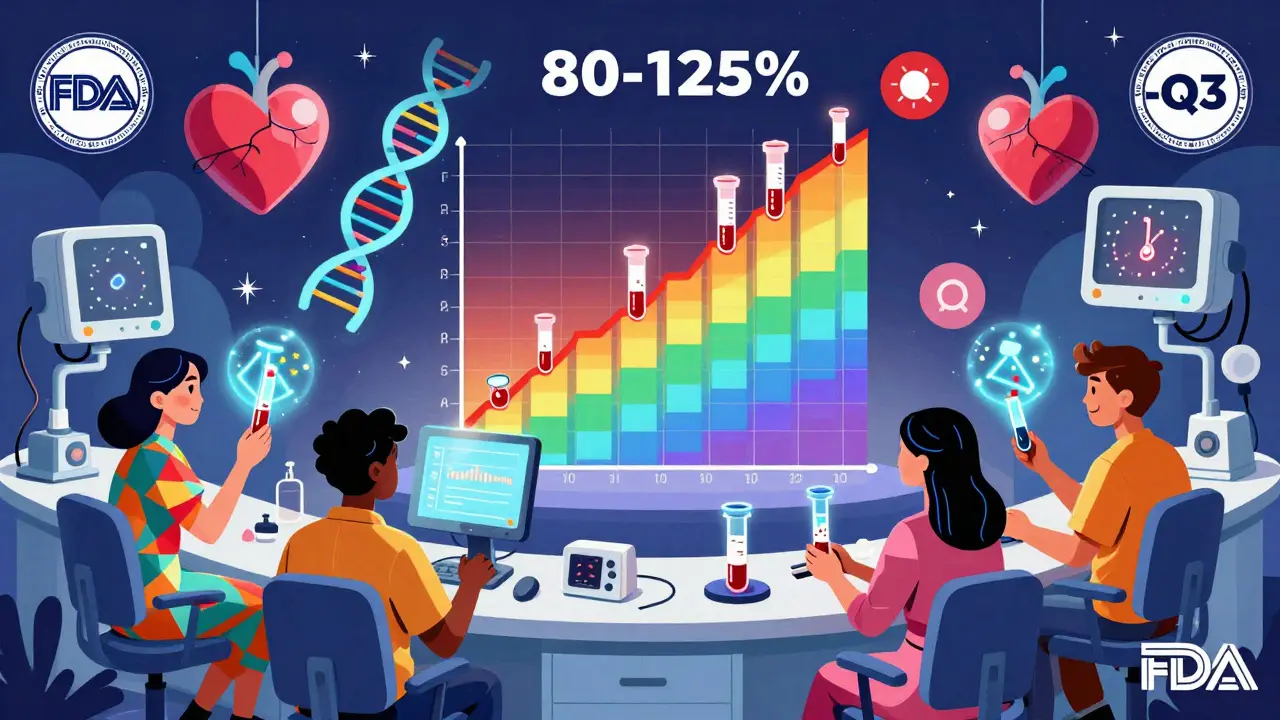
When Bioequivalence Studies Aren’t Needed: Biowaivers
Not every drug needs a full human study. The FDA allows biowaivers - exceptions based on science, not testing. For example:- Oral solutions with the same active and inactive ingredients as an approved drug - no study needed.
- Topical creams or gels meant to work on the skin (like hydrocortisone) - if they match the reference product in pH, viscosity, and active ingredient concentration, in vitro tests can replace human trials.
- Inhalers with identical propellants and particle size - if they deliver the same dose to the lungs, a bioequivalence study isn’t required.
- Q1: Same active and inactive ingredients.
- Q2: Same dosage form and strength.
- Q3: Same physicochemical properties (like solubility, pH, particle size).
Tougher Rules for High-Risk Drugs
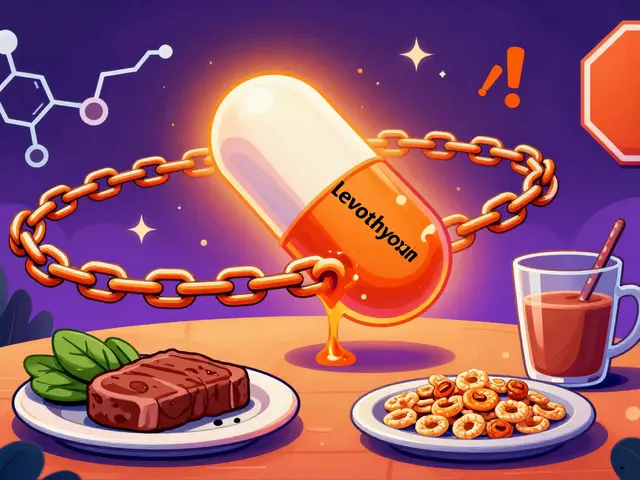
Not all drugs are created equal. Some have a narrow window between working and causing harm. These are called Narrow Therapeutic Index (NTID) drugs. Examples: warfarin (blood thinner), levothyroxine (thyroid hormone), phenytoin (seizure medicine). For these, the 80/125 rule is too wide. The FDA tightened the requirement to 90% to 111% for the 90% confidence interval. That’s a much smaller range. It means the generic must be nearly identical in how it’s absorbed. The same applies to Highly Variable Drugs (HVDs) - drugs where absorption varies a lot between people. For these, the FDA uses a method called Scaled Average Bioequivalence (SABE), which adjusts the acceptance range based on how variable the drug is. This prevents safe drugs from being unfairly rejected because of natural human differences.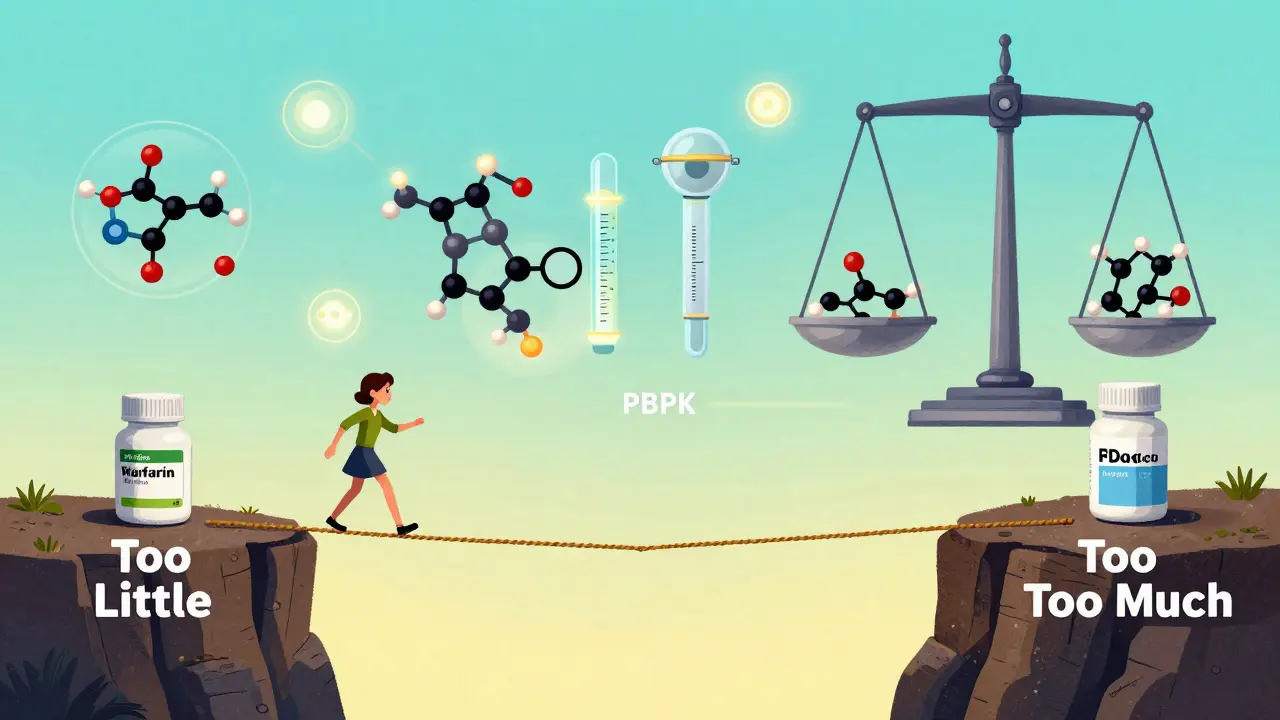
Why So Many ANDAs Get Rejected
In 2022, only 43% of generic drug applications (ANDAs) got approved on the first try. That’s a lot of rejections. The most common reasons? Poor study design, too few volunteers, bad lab methods, or not following the FDA’s Product-Specific Guidance (PSG). The FDA publishes over 2,100 PSGs - detailed instructions for each brand-name drug and its generics. If you don’t follow the PSG, your application will likely be rejected. Companies that follow them have a 68% first-cycle approval rate. Those that don’t? Just 29%. A well-organized submission isn’t just nice to have - it’s the difference between getting approved in 14 months or waiting 2 years.The Future: More Complex Drugs, Better Tools
The FDA is moving beyond simple blood tests. For complex drugs - like inhalers, patches, or injectables - they’re using new tools:- Physiologically Based Pharmacokinetic (PBPK) modeling - computer simulations that predict how a drug behaves in the body based on its chemistry and human physiology.
- In vitro permeation testing (IVPT) - measuring how well a topical drug passes through skin in the lab.
- Quantitative systemic exposure comparisons - using advanced analytics to match drug levels in the body without full human trials.
What This Means for Patients
You don’t need to understand AUC or Cmax to benefit from this system. But knowing that the FDA requires hard proof helps you trust your generic meds. Today, 90% of prescriptions in the U.S. are filled with generics. They’re safe, effective, and cost 80% less than brand names. That’s not luck. It’s science - enforced by strict, transparent rules. The system isn’t perfect. But it works. And every time you save money on a prescription, it’s because someone followed the bioequivalence rules - down to the last decimal point.What is bioequivalence and why is it required for generic drugs?
Bioequivalence means a generic drug delivers the same amount of active ingredient into the bloodstream at the same rate as the brand-name version. The FDA requires this to ensure that generic drugs work just as well and are just as safe. Without this proof, a generic might be absorbed too slowly, too quickly, or not enough - which could mean it doesn’t work or causes side effects.
What are the FDA’s acceptance criteria for bioequivalence?
For most drugs, the 90% confidence interval for the ratio of the generic to brand-name drug’s AUC and Cmax must fall between 80% and 125%. This is called the 80/125 rule. For high-risk drugs like warfarin or levothyroxine, the range is tighter: 90% to 111%. These numbers are based on decades of research showing this range predicts therapeutic equivalence.
Do all generic drugs need human bioequivalence studies?
No. Some generics qualify for biowaivers - meaning no human study is needed. This applies to products like oral solutions, topical creams for local effect, and certain inhalers, if they match the brand-name drug in ingredients, strength, and physical properties. The FDA uses the Q1-Q2-Q3 framework to determine eligibility.
How long do bioequivalence studies take to complete?
A single bioequivalence study typically takes 6 to 12 months from planning to final report. This includes recruiting volunteers, conducting the study, analyzing samples, and writing the submission. The entire ANDA approval process, including FDA review, usually takes 14 to 18 months - but can take longer if the application is incomplete or doesn’t follow product-specific guidance.
Why do some generic drugs get rejected by the FDA?
The most common reasons are failing to follow the FDA’s Product-Specific Guidance, poor study design, inadequate sample size, inaccurate analytical methods, or incomplete documentation. In 2022, 57% of ANDAs were rejected on the first try - often because manufacturers skipped the PSG or misunderstood the bioequivalence criteria.
Can bioequivalence studies be done outside the U.S.?
Yes. The FDA accepts studies conducted anywhere, as long as they follow U.S. regulations (GLP, GCP) and use validated methods. However, the FDA’s Domestic Generic Drug Manufacturing Pilot Program gives priority review to generics made and tested in the U.S. - so many manufacturers now prefer U.S.-based studies to speed up approval.
What’s the difference between pharmaceutical equivalence and bioequivalence?
Pharmaceutical equivalence means two drugs have the same active ingredient, strength, dosage form, and route of administration. Bioequivalence means they also perform the same way in the body - same absorption rate and amount. A drug can be pharmaceutically equivalent but not bioequivalent - for example, if the inactive ingredients change how it dissolves. Both are required for FDA approval.
How does the FDA ensure the quality of bioequivalence studies?
The FDA inspects study sites, reviews lab methods, and audits raw data. All bioanalytical labs must validate their testing methods. The FDA also checks for data integrity - no missing samples, no selective reporting. If a study is found to be flawed or manipulated, the application is rejected, and the manufacturer may be barred from future submissions.
Are bioequivalence standards the same in other countries?
Most major regulators - including the EMA in Europe, Health Canada, and PMDA in Japan - use the same 80/125 rule for bioequivalence. As of 2023, 87% of FDA and EMA requirements are aligned. This global harmony makes it easier for manufacturers to develop generics for multiple markets using one set of studies.
What happens if a generic drug is approved but later found to be not bioequivalent?
The FDA can withdraw approval and issue a recall. This is rare, but it has happened. For example, in 2012, several generic versions of the blood thinner warfarin were pulled after post-market studies showed inconsistent absorption. The FDA now requires post-market surveillance for high-risk generics and encourages manufacturers to report any unexpected clinical outcomes.
Generic drugs are one of the most successful public health innovations of the last 40 years. But behind every affordable pill is a complex, tightly regulated process - and bioequivalence studies are at the heart of it.



Chris Buchanan
December 24, 2025 AT 20:34So let me get this straight - we’re spending millions to prove a pill dissolves the same way as another pill? And this is what passes for ‘science’ in 2024? 😅 I mean, if it looks the same, tastes the same (kinda), and doesn’t make me hallucinate, why not just trust the pharmacist? 🤷♂️
Rachel Cericola
December 26, 2025 AT 11:01Actually, Chris - this isn’t about trust, it’s about math and physiology. The 80/125 rule isn’t arbitrary; it’s based on decades of pharmacokinetic data showing that within that range, clinical outcomes are statistically indistinguishable. You think it’s overkill until you’re the one on warfarin and your INR spikes because the generic absorbed 15% slower. Then you realize - this isn’t bureaucracy, it’s life support.
And yeah, it costs half a mil per study. But that’s still 90% cheaper than running full Phase III trials. We’re not just saving money - we’re saving lives, efficiently.
claire davies
December 27, 2025 AT 09:15Wow, this is actually so beautifully explained - like someone took the dry FDA handbook and turned it into a cozy bedtime story for science nerds 🌿✨
I used to be skeptical about generics too, until my mum switched from brand-name levothyroxine to a generic and her energy levels didn’t drop. Turns out, the 90–111% range for NTIDs? That’s the difference between feeling like yourself and feeling like a zombie who forgot how to make coffee.
Also, the fact that they use mass spectrometry to track molecules in blood? That’s like having a molecular detective on the case. I’m weirdly proud of American science right now.
And hey - if you’re reading this from India or Ghana or Brazil - know that this system, imperfect as it is, is what lets your local pharmacy stock affordable meds. Global harmony in drug regulation? Yes please. 🌍💊
Harsh Khandelwal
December 27, 2025 AT 19:50Yeah right. And I’m sure the FDA isn’t in bed with Big Pharma. You think they’d let some little Indian lab make a pill that’s 80% as strong? Nah. That’s why all the ‘approved’ generics come from the same 5 factories in New Jersey. You think they’re testing 24 volunteers? More like 24 interns who got paid in burritos.
My cousin took a generic antidepressant and started crying during cartoons. Guess what? The FDA didn’t care. They just stamped ‘bioequivalent’ and moved on. Wake up, sheeple.
Also - why do they always use healthy adults? What about people with liver disease? Or diabetes? Oh wait - you don’t matter unless you’re a guinea pig in a clinical trial. 😏
Andy Grace
December 28, 2025 AT 19:06Interesting read. I’ve always assumed generics were just cheaper copies, but the level of precision here is surprising. The 80/125 rule feels oddly specific - like a magic number pulled from a hat - but the fact that it’s backed by decades of data makes me reconsider.
I wonder how many people realize that the same standards apply to their asthma inhaler or thyroid med. It’s easy to take for granted until something goes wrong. Good to know there’s someone checking the math.
Blow Job
December 30, 2025 AT 19:02Love how this breaks it down without jargon overload. The PBPK modeling part? That’s the future. Imagine simulating how a drug behaves in 10,000 virtual patients before ever touching a human. Saves time, money, and lives. The FDA’s moving in the right direction.
Also - ‘Blow Job’ is my new favorite Reddit username. 😎
Spencer Garcia
December 31, 2025 AT 15:18Biowaivers for oral solutions? That’s smart. No need to test what’s essentially just dissolving the same powder in water.
Abby Polhill
January 1, 2026 AT 08:34Per the FDA’s Product-Specific Guidance (PSG) v.12.4, the Cmax variability threshold for Class II BCS drugs under fed conditions requires a minimum of 30 subjects with a 2:1 crossover design to meet the 90% CI criteria - unless exempted under Q1-Q2-Q3 biowaiver eligibility. The 2022 rejection rate reflects noncompliance with Annex C of the 2021 guidance update, particularly regarding bioanalytical method validation (ICH M10).
Austin LeBlanc
January 2, 2026 AT 14:51So you’re telling me some guy in a lab coat in Maryland decided 80-125% is ‘safe’? What if I told you the real number is 85-115%? Or 75-130%? Who’s to say? This is all just corporate math dressed up as science. And don’t get me started on the ‘healthy volunteers’ - they’re all college kids who’ll take anything for cash.
Meanwhile, your grandma’s blood pressure pill? Probably fine. But don’t tell me this is ‘rigorous.’ It’s a loophole with a lab coat.
Delilah Rose
January 3, 2026 AT 11:48I really appreciate how this post doesn’t just say ‘generics are good’ - it shows why they’re good. The part about NTIDs really hit home. I have a friend on phenytoin and she’s terrified to switch brands. I get it now - that 90–111% range isn’t just a number, it’s her stability.
Also, the fact that the FDA requires documentation for every blood sample? That’s next-level accountability. Most industries would’ve cut corners after 10 years. But here? They’re still checking the logs. That’s integrity.
And yes, I know some generics fail. But the system catches them. That’s more than I can say for a lot of other things we trust blindly.
Also - the part about global alignment? That’s the quiet hero of this whole thing. It means someone in Manila can get the same medicine as someone in Milwaukee. That’s not just science - that’s justice.
Lindsey Kidd
January 4, 2026 AT 07:50❤️ This is why I love science! The 80/125 rule is basically the ‘Goldilocks zone’ for pills - not too little, not too much, just right! 🌟
Also, biowaivers? YES. If it’s the same ingredients and same texture, why make people swallow a pill just to prove it dissolves? 😅
And PBPK modeling? That’s like a digital twin of your body. We’re basically living in the future. 🤖💊
Thank you for making pharmacology feel human.
Wilton Holliday
January 5, 2026 AT 06:22Love this breakdown. Seriously. The fact that they use crossover designs? Genius. Each person is their own control - cuts out so much noise.
And the $500k–$2M cost? That’s the price of trust. Every time you pick up a $4 generic, you’re benefiting from someone who spent a year making sure it won’t kill you.
Also - if you’re a student thinking about pharma science? This is the stuff that matters. Not the hype. The data.
Keep pushing the science, FDA. We see you. 👏
niharika hardikar
January 5, 2026 AT 13:30While the regulatory framework appears robust on paper, it remains fundamentally flawed in its epistemological underpinnings. The reliance on pharmacokinetic parameters derived from homogeneous healthy cohorts fails to account for inter-individual pharmacodynamic variability, particularly in elderly, renally impaired, or polypharmacological populations. The 80/125 rule, while statistically defensible, constitutes a reductionist approximation that commodifies therapeutic equivalence at the expense of clinical nuance. One must question whether the economic imperative has superseded the Hippocratic obligation to ensure true therapeutic fidelity across all demographic strata.
Joseph Manuel
January 5, 2026 AT 14:01Statistical equivalence ≠ clinical equivalence. The 80/125 rule is a regulatory convenience, not a biological truth. You cannot infer therapeutic outcome from AUC and Cmax alone. Drug interactions, transporter polymorphisms, and gut microbiome variations are ignored. This is not science - it’s compliance theater.
And yet, you still trust your generic? That’s not confidence. That’s resignation.
Chris Buchanan
January 6, 2026 AT 10:04Wow. Okay, Rachel - you just shut me up. And honestly? I needed that.
I was being a dumbass. You’re right - this isn’t about bureaucracy. It’s about someone’s mom not crashing her car because her seizure med didn’t kick in.
Sorry for the sarcasm. This post - and your reply - just made me realize I took this whole system for granted. Thanks for the reality check. 🙏