Corticosteroid-Induced Hyperglycemia Risk Calculator
Risk Assessment
Enter your information to calculate your risk of developing steroid-induced hyperglycemia
When someone starts taking corticosteroids - whether for asthma, rheumatoid arthritis, or after an organ transplant - they’re often told about common side effects like weight gain, mood swings, or trouble sleeping. But one of the most dangerous and overlooked effects is a sudden spike in blood sugar. This isn’t just a temporary inconvenience. It’s corticosteroid-induced hyperglycemia, and it can lead to serious complications if not caught early.
What Exactly Is Steroid-Induced Diabetes?
Steroid-induced diabetes, also called corticosteroid-induced hyperglycemia or SIDM, happens when glucocorticoid drugs - like prednisone, dexamethasone, or hydrocortisone - disrupt how your body handles sugar. It’s not the same as type 2 diabetes. You don’t need to be overweight or have a family history. Even healthy people can develop it. In fact, about half of hospitalized patients on high-dose steroids develop blood sugar levels high enough to need treatment, according to a 2022 study. And 19 to 32% of people without prior diabetes suddenly show signs of hyperglycemia after starting these drugs.
The problem isn’t just high numbers on a glucometer. These spikes can lead to hyperglycemic hyperosmolar state - a life-threatening condition that occurs in nearly 5% of severe cases - or even diabetic ketoacidosis, which shows up in over 2% of hospitalized patients on steroids. Long-term, uncontrolled sugar levels raise the risk of nerve damage, kidney disease, and heart problems.
How Do Steroids Raise Blood Sugar?
It’s not just one thing. Steroids attack blood sugar control from multiple angles.
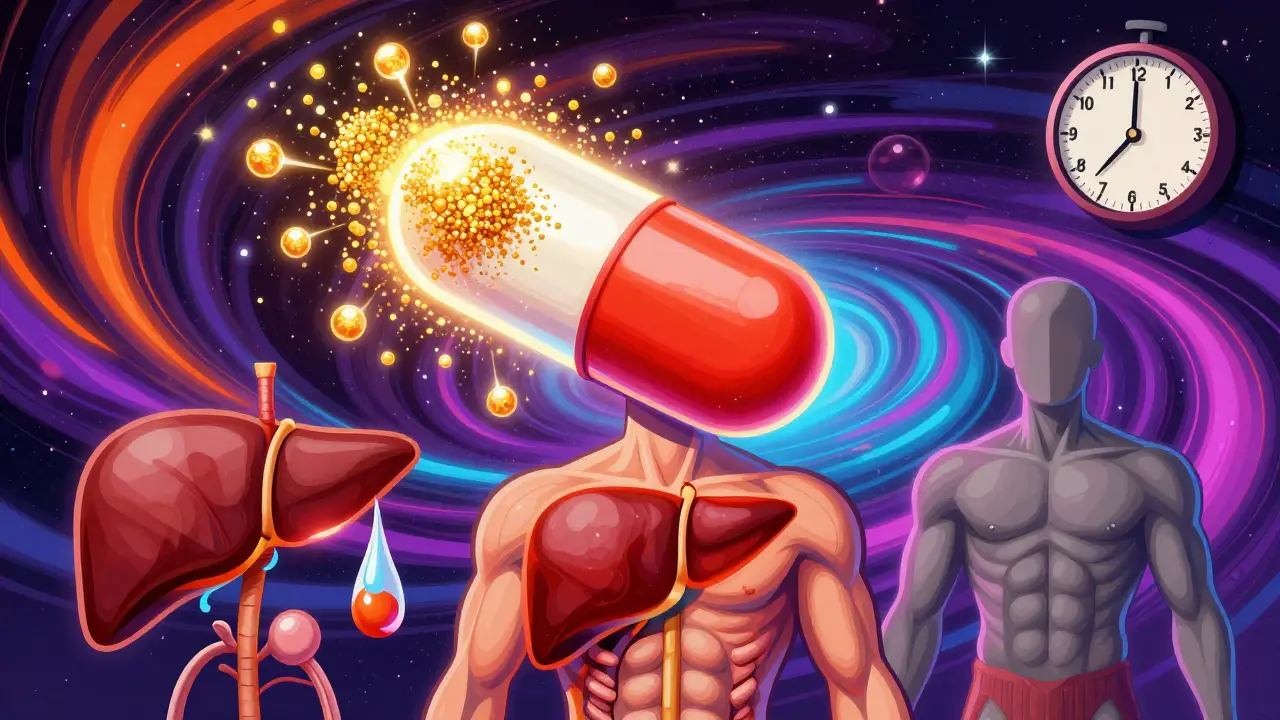
First, they tell your liver to make more glucose. Studies show glucocorticoids boost glucose production by nearly 38%. They activate enzymes like phosphoenolpyruvate carboxykinase and glucose-6-phosphatase - the same ones your body uses when fasting - but now they’re stuck in overdrive.
Second, they block insulin from working properly. In your muscles - which normally soak up 80% of the sugar after a meal - steroids cut glucose uptake by over 40%. That’s because they interfere with GLUT4, the transporter that lets sugar into muscle cells. They also damage the insulin signaling chain, reducing IRS1 and PI3K activity by nearly a third.
Third, they reduce insulin production. Your pancreas’s beta cells, which make insulin, get confused. Steroids lower the expression of GLUT2 and glucokinase - the sensors that tell your pancreas when blood sugar is high. A single 75 mg dose of prednisolone can shut down insulin secretion within two hours.
Finally, fat tissue gets involved. Steroids increase lipolysis by over 28%, flooding your bloodstream with free fatty acids. These fats further worsen insulin resistance and push the liver to make even more glucose.
Why This Isn’t Just ‘Diabetes’
Many doctors treat steroid-induced hyperglycemia like regular type 2 diabetes. That’s a mistake.
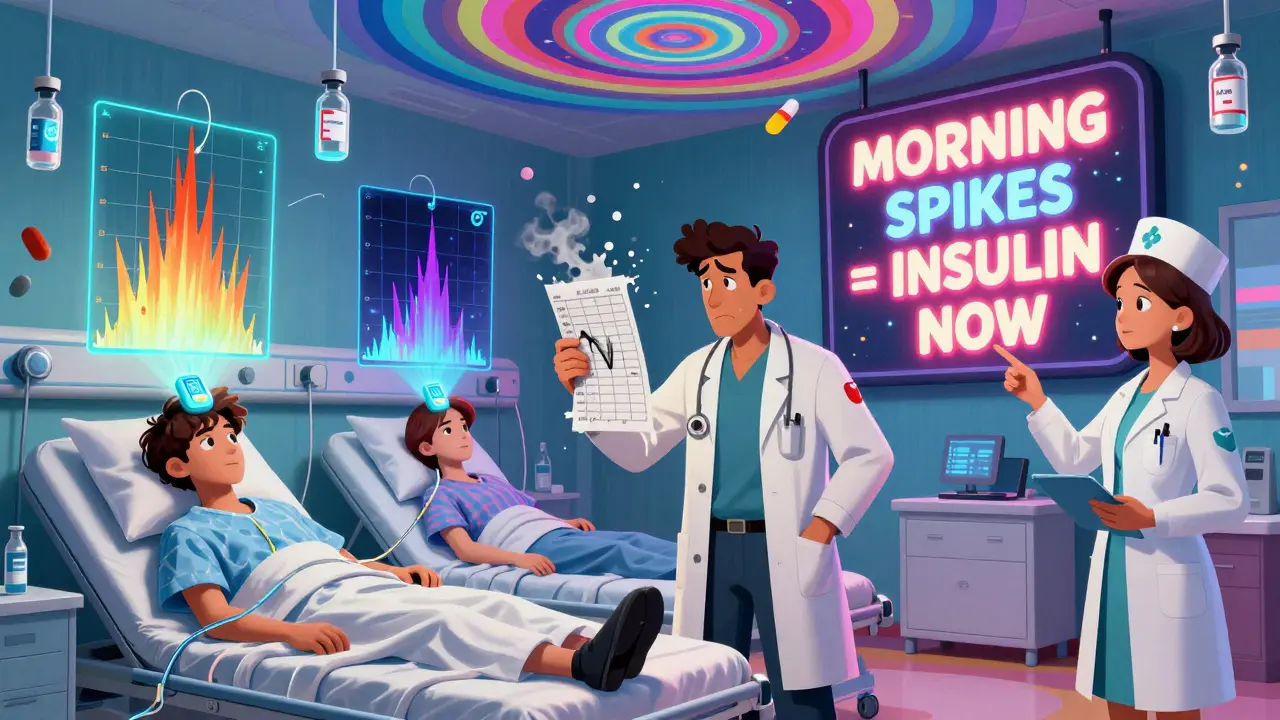
Unlike type 2 diabetes, where insulin resistance builds slowly over years, steroid-induced hyperglycemia hits fast and follows a clear pattern: severe morning highs, with glucose dipping back toward normal by afternoon or evening. That’s because most steroids are taken once daily in the morning - and their effects last 16 to 24 hours.
Research shows insulin secretion drops even before glucose rises. One study gave healthy men a cortisol bolus and found insulin dropped within 30 minutes, while glucose stayed normal for hours. Then, insulin resistance kicked in 4 to 6 hours later and stuck around for over 16 hours.
This means sliding scale insulin - where you give insulin based on blood sugar at the time - often fails. It’s like trying to put out a fire by pouring water on it after it’s already burned down.
Who’s at Highest Risk?
Not everyone gets it. But some people are far more likely to.
- BMI over 30: 3.2 times higher risk than those with BMI under 25.
- Pre-existing prediabetes or impaired glucose tolerance: 4.7 times higher risk.
- Dose matters: Anything above 20 mg of prednisone daily (or equivalent) puts you in the high-risk zone.
- Duration: The longer you’re on steroids, the more your body’s sugar control system gets overwhelmed.
Even people with normal HbA1c levels can develop hyperglycemia. That’s why checking past glucose history isn’t enough.
How to Monitor Properly
Waiting until symptoms appear - thirst, fatigue, frequent urination - is too late. By then, damage may already be done.
The NIH recommends starting glucose monitoring within 24 hours of beginning steroid therapy. For high-risk patients, that means checking fasting glucose and post-meal glucose at least twice daily.
But here’s the catch: fingerstick tests miss a lot. Continuous glucose monitors (CGMs) detect hyperglycemic episodes in 68% of patients who appear normal with standard testing. They also catch dangerous nighttime lows - which happen in over 22% of patients during steroid tapering.
For patients on alternate-day dosing, monitor on both steroid and non-steroid days. The insulin resistance doesn’t vanish just because you skipped a dose - it lingers for 16 to 24 hours.
How to Treat It
There are two groups: those with pre-existing diabetes, and those who develop it new.
If you already have diabetes, your insulin dose may need to go up by 20 to 50%. But don’t just increase everything evenly. Because steroids cause morning spikes, you need more insulin in the morning and less in the afternoon or evening.
If you’re new to this - no prior diabetes - basal-bolus insulin is the gold standard. A 2022 JAMA Internal Medicine trial found it was 34.8% more effective than sliding scale insulin at keeping glucose in range. That means one long-acting insulin shot at night (basal) plus fast-acting insulin before meals (bolus), timed to match the steroid peak.
Oral diabetes drugs? Mostly useless. Metformin doesn’t help much with the liver’s glucose overproduction. SGLT2 inhibitors can be risky - dehydration and ketoacidosis risk go up. GLP-1 agonists? Too slow. Insulin is still the only reliable option for acute control.
What Goes Wrong in Real Hospitals
Here’s the scary part: most hospitals aren’t ready.
A 2023 study found only 58% of non-critical care units had any protocol for managing steroid-induced hyperglycemia. That meant patients waited over 42% longer to get treatment. In one case series, 32% of errors happened because insulin was given at the wrong time - like giving a big dose at night when the steroid effect was already fading.
Even doctors get confused. Only 44% of non-endocrinology physicians correctly identified the morning hyperglycemia pattern. Many treat it like type 2 diabetes and give the same insulin regimen all day. That leads to dangerous lows in the afternoon or evening.
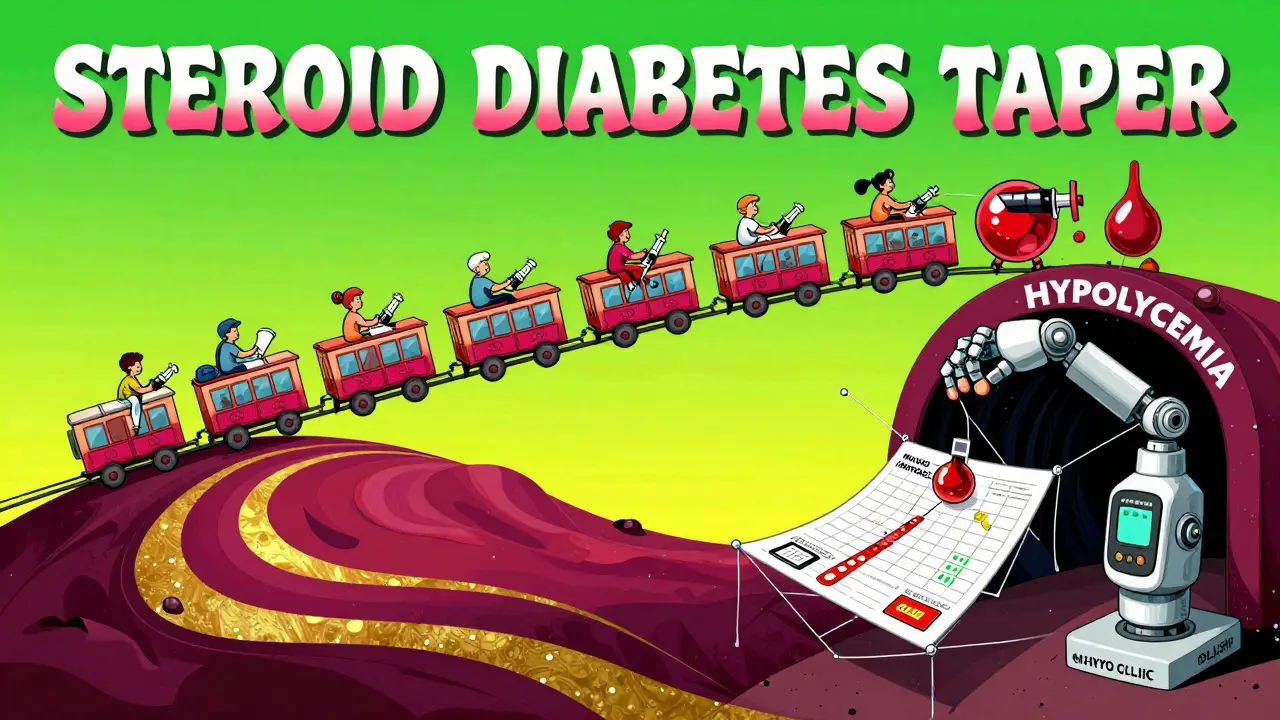
Patients on tapering regimens report a ‘rollercoaster’ effect. One survey of 1,243 people found 67% had unexpected hypoglycemia during dose reduction. Why? Because insulin resistance fades faster than the insulin you were given. Your body’s still on high insulin, but the steroid that was blocking it is gone.
What Works: Real-World Success
The Mayo Clinic’s Steroid Diabetes Protocol, started in 2019, cut complications by over 50%. Here’s how:
- Point-of-care glucose testing within 4 hours of the first steroid dose.
- Automated alerts when two consecutive readings exceed 180 mg/dL.
- Insulin started immediately - not waiting for HbA1c or fasting levels.
- Clear, written insulin dosing algorithms based on steroid dose and timing.
They also trained nurses and pharmacists to spot the pattern. Now, patients are discharged with a clear plan: when to check glucose, when to hold insulin, and when to call for help.
The Future: Predicting and Preventing
The NIH is running a trial called GLUCO-STER (NCT04987231) to predict who’s at risk before they even get the first dose. It uses a machine learning model that looks at:
- BMI
- Baseline HbA1c
- Steroid dose and type
- Genetic markers - especially GR-1B polymorphisms, which affect how strongly your cells respond to cortisol
Preliminary results show it predicts risk with 84% accuracy. Imagine knowing you’re going to spike before you even take the pill - and getting preemptive insulin or a different steroid.
Long-term, researchers are developing ‘steroid-sparing’ drugs - new immunomodulators and tissue-selective glucocorticoid receptor modulators that fight inflammation without wrecking your blood sugar. Three are already in Phase II trials, and they’ve reduced hyperglycemia by over 60% compared to standard dexamethasone.
What You Need to Do
If you’re on corticosteroids:
- Ask for glucose monitoring from day one - don’t wait for symptoms.
- If you’re on 20 mg or more of prednisone daily, insist on a CGM or at least twice-daily fingersticks.
- Know your steroid’s timing. Morning dose? You’ll need more insulin in the morning.
- During tapering, watch for shakiness, sweating, confusion - those are signs of low blood sugar, not just ‘feeling tired’.
- Don’t assume your old diabetes meds will work. Insulin is often needed.
If you’re a caregiver or healthcare provider:
- Build a protocol. Even a simple checklist helps.
- Train staff on the morning hyperglycemia pattern.
- Use basal-bolus insulin, not sliding scale, for new-onset cases.
- Communicate clearly with patients about the ‘rollercoaster’ effect during tapering.
Steroid-induced hyperglycemia isn’t rare. It’s predictable. And with the right monitoring and timing, it’s preventable.