

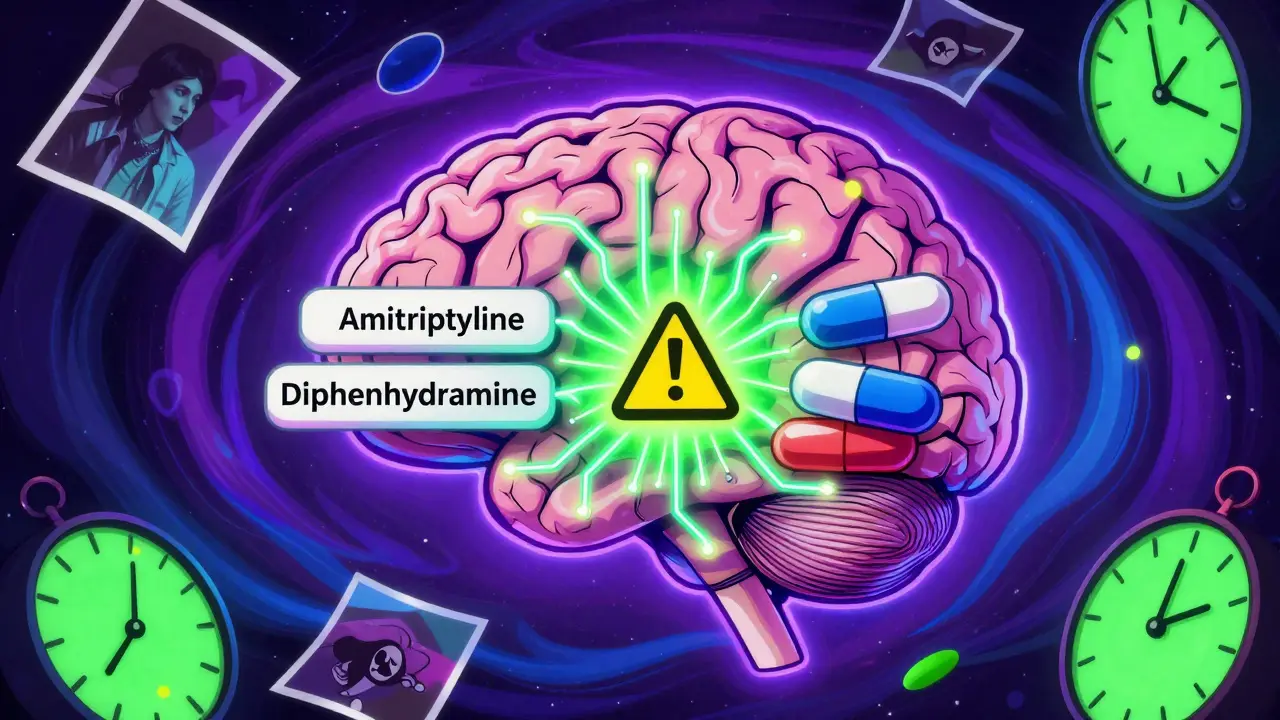
Tricyclic antidepressants (TCAs) like amitriptyline and nortriptyline were once the go-to treatment for depression. But today, their use is sharply declining-not because they don’t work, but because the hidden costs are too high. These drugs carry a heavy anticholinergic burden, meaning they block acetylcholine, a key brain chemical involved in memory, attention, and heart rhythm. For many patients, especially those over 50, the side effects aren’t just annoying-they’re dangerous and sometimes irreversible.
What Is Anticholinergic Burden?
Anticholinergic burden isn’t about one drug. It’s the total effect of all medications in your system that block acetylcholine. Think of it like stacking up weak signals until they drown out the message. TCAs are among the strongest offenders, scoring a 3-the highest possible-on the Anticholinergic Cognitive Burden (ACB) Scale. That means even one pill a day can push your total burden into the danger zone.
Other common medications that add to this burden include over-the-counter sleep aids like diphenhydramine (Nytol®), allergy pills like chlorphenamine (Piriton®), and bladder drugs like oxybutynin. When you take a TCA along with even one of these, your total ACB score can jump to 4 or 5. Research shows that a score of 3 or higher increases dementia risk by 54% over seven years. And here’s the scary part: the damage doesn’t always reverse when you stop the drug.
Cognitive Risks: Mistaking Drug Side Effects for Dementia
Many older adults are misdiagnosed with dementia because their symptoms-memory lapses, confusion, trouble finding words-look identical. But for some, the real culprit is amitriptyline. A 2022 survey found that 68% of patients over 65 taking TCAs reported at least two anticholinergic side effects, and 32% said their memory problems were bad enough to consider quitting. Clinicians on Reddit’s r/psychiatry report case after case where patients improved dramatically after stopping TCAs, only to realize they’d been labeled with early dementia.
It’s not just memory. Patients describe feeling foggy, slow to react, or unable to follow conversations. These aren’t normal signs of aging. They’re direct results of acetylcholine being blocked. The brain needs this chemical to form new memories, stay focused, and switch between tasks. When TCAs shut it down, cognitive performance drops. Studies using the Mini-Mental State Examination (MMSE) show that after deprescribing TCAs, patients’ scores improved by an average of 2.7 points over a year. That’s the difference between struggling to remember names and remembering them again.
Cardiac Risks: The Silent Heart Threat
While cognitive issues get attention, the heart risks are just as serious-and often overlooked. TCAs act like class 1A antiarrhythmics, which means they slow electrical signals in the heart. That sounds helpful until you realize it can cause dangerous delays in heart rhythm. Amitriptyline can prolong the QT interval by 20-30% at normal doses and over 50% in overdose. This isn’t theoretical. Patients in support groups describe sudden palpitations, dizziness, and ER visits because their ECG showed a dangerously long QT interval.
Compared to SSRIs like sertraline, TCAs carry about three times the risk of arrhythmias. For someone with existing heart disease, high blood pressure, or a history of fainting, this is a ticking time bomb. The American Heart Association warns that TCAs can reduce cardiac contractility by 15-20% while increasing the chance of abnormal heartbeats. In one case from the Mended Hearts forum, a 68-year-old man developed life-threatening ventricular tachycardia after just three weeks on amitriptyline for depression. He had no prior heart issues. His only risk factor? The medication.

Why Are TCAs Still Prescribed?
If the risks are so clear, why do doctors still write these prescriptions? The answer is simple: they work-sometimes better than anything else. For treatment-resistant depression, severe chronic pain (especially neuropathic pain), or patients who didn’t respond to SSRIs or SNRIs, TCAs can be a last-resort lifeline. Nortriptyline is often preferred over amitriptyline because it’s slightly less anticholinergic, though both still score ACB=3.
But here’s the truth: for 90% of patients, alternatives exist that are safer. SNRIs like duloxetine or venlafaxine have ACB scores of 0-1. SSRIs like escitalopram or sertraline score 0. Even non-drug options like cognitive behavioral therapy (CBT) have proven results. The real issue isn’t efficacy-it’s inertia. Many prescribers still default to TCAs out of habit, not because they’re the best choice.
What Should You Do If You’re on a TCA?
If you’re taking a TCA and you’re over 50, ask yourself: Is this still necessary? Start by calculating your total anticholinergic burden. Use the ACB Calculator-many clinics now have it built into their electronic records. Look at every medication, including OTC ones. If your total score is 3 or more, it’s time to talk to your doctor about deprescribing.
Don’t stop suddenly. Withdrawal can cause nausea, insomnia, or even rebound depression. Tapering over 4-8 weeks is standard. Many patients see cognitive improvements within 3-6 months. One NHS Somerset program found that 63% of older adults who stopped TCAs showed measurable gains in memory and attention. Cardiac risks also drop quickly-QT prolongation often normalizes within weeks of discontinuation.
Ask your doctor about alternatives. If you’re on amitriptyline for depression, could duloxetine work? If it’s for nerve pain, could gabapentin or pregabalin be safer? Even low-dose mirtazapine has fewer anticholinergic effects.
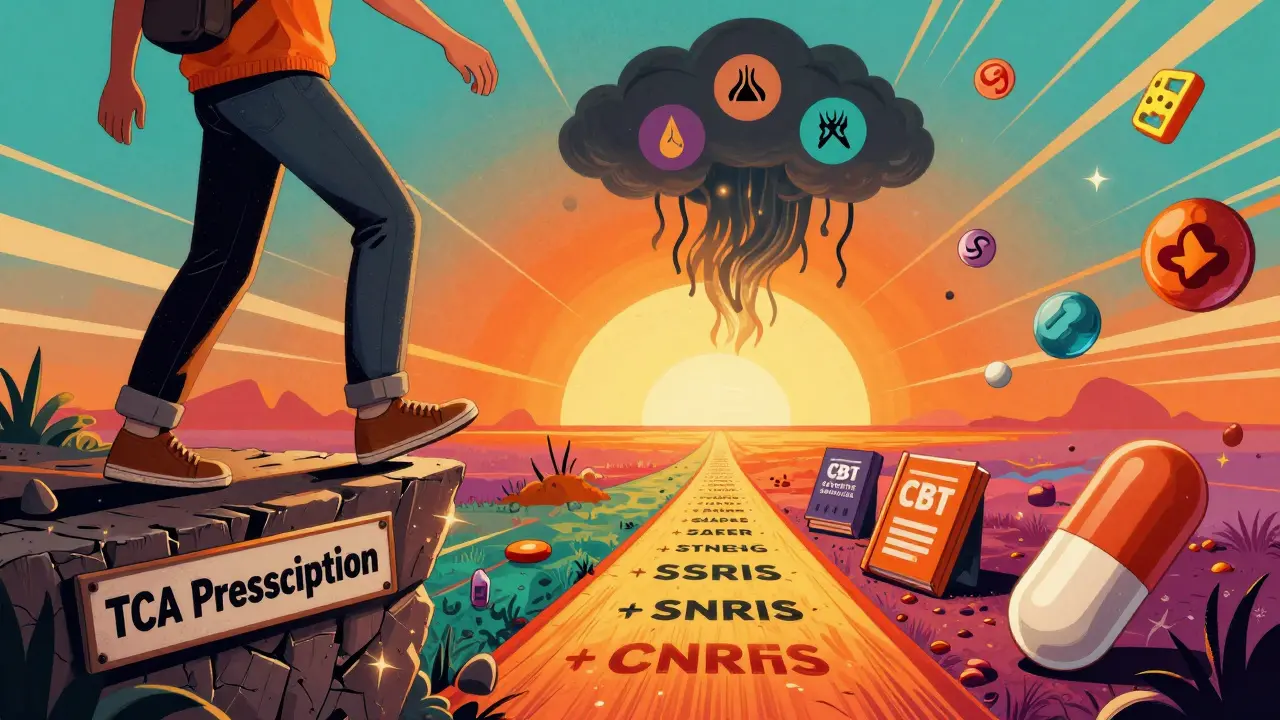
The Bigger Picture: A System That Still Lets TCAs Slip Through
Despite decades of evidence, TCAs are still prescribed to older adults. The Beers Criteria, updated in 2023, says they should be avoided in people over 65 unless all else has failed. Yet in the U.S., 4.7% of antidepressant prescriptions in 2020 were still TCAs. In the UK, 63% of electronic health records now flag anticholinergic burden automatically-but not everywhere. Many doctors still don’t check.
AI tools are starting to change that. NHS Digital is piloting systems that scan prescriptions in real time and warn prescribers when a TCA is being added to a patient already on other anticholinergics. This isn’t science fiction-it’s happening now. But until every clinic has these safeguards, patients need to be their own advocates.
Final Thoughts: When TCAs Might Still Make Sense
There’s no one-size-fits-all answer. For a 72-year-old with treatment-resistant depression who’s tried everything else, TCAs might still be the best option. For a 55-year-old with mild depression and a family history of dementia? Almost certainly not. The key is intentionality. Every prescription should be reviewed-not just once, but regularly. And if you’re taking a TCA, you deserve to know the real risks. This isn’t about fear. It’s about informed choice.
Medication isn’t a one-way street. You can step off. And sometimes, stepping off is the healthiest choice you’ll ever make.
Can tricyclic antidepressants cause dementia?
Yes, long-term use of tricyclic antidepressants (TCAs) is strongly linked to an increased risk of dementia. A major study tracking over 3,400 adults over 65 for seven years found that those taking medications with high anticholinergic burden-including TCAs-had a 54% higher risk of developing dementia. These effects may persist even after stopping the drug, suggesting potential irreversible damage. The risk is highest when TCAs are combined with other anticholinergic medications, such as sleep aids or bladder drugs.
Why are TCAs still used if they’re so risky?
TCAs are still used because they can be effective for treatment-resistant depression and certain types of chronic pain, especially neuropathic pain. For patients who haven’t responded to safer alternatives like SSRIs or SNRIs, TCAs may be the only option left. However, current guidelines (including NICE and Beers Criteria) recommend using them only when other treatments have failed and the benefits clearly outweigh the risks. Their use has dropped sharply since the 1990s, and they are no longer first-line treatment for most patients.
How do I know if my medication has anticholinergic burden?
Check the Anticholinergic Cognitive Burden (ACB) Scale, which rates medications from 0 (no activity) to 3 (high activity). TCAs like amitriptyline and nortriptyline are rated as ACB=3. Other common high-burden drugs include diphenhydramine (Nytol®), chlorphenamine (Piriton®), and oxybutynin. Many online calculators and electronic health record systems now auto-calculate total burden. You can also ask your pharmacist or doctor to review all your medications-including over-the-counter ones-for anticholinergic effects.
Are there safer alternatives to TCAs for depression and pain?
Yes. For depression, SSRIs like sertraline or escitalopram and SNRIs like duloxetine or venlafaxine are preferred because they have little to no anticholinergic activity (ACB=0 or 1). For neuropathic pain, gabapentin, pregabalin, or topical capsaicin are often safer options. Non-drug therapies like cognitive behavioral therapy (CBT) are also proven effective for both depression and chronic pain. Many patients improve significantly after switching from TCAs to these alternatives.
Can stopping TCAs improve cognitive function?
Yes. Studies show that after discontinuing TCAs, many patients experience measurable improvements in memory, attention, and processing speed. One NHS Somerset program found that 63% of older adults showed cognitive gains within six months of stopping TCAs. Improvements were confirmed using standard tests like the Mini-Mental State Examination (MMSE), with average score increases of 2.7 points. The earlier the drug is stopped, the better the chances of recovery.
What heart problems can TCAs cause?
TCAs can cause dangerous heart rhythm disturbances, including QT interval prolongation, which raises the risk of sudden cardiac arrest. They can also slow electrical conduction in the heart, leading to widened QRS complexes, low blood pressure, and reduced heart muscle contraction. These effects are dose-dependent and especially dangerous in patients with existing heart disease, electrolyte imbalances, or those taking other QT-prolonging drugs. Amitriptyline is particularly risky, with studies showing it’s 2.8 times more likely to prolong QT than sertraline.
Is it safe to stop TCAs on my own?
No. Stopping TCAs abruptly can cause withdrawal symptoms like nausea, dizziness, insomnia, anxiety, and even rebound depression. Always work with your doctor to create a tapering plan. Most patients need 4-8 weeks to safely reduce their dose. Your doctor may switch you to a safer antidepressant first, then gradually lower both. Never change your dose without medical supervision.


Sandy Wells
March 21, 2026 AT 15:07TCAs are a relic. If your doctor still prescribes amitriptyline like it's 1995 you need a new doctor.
Simple as that.
Not rocket science.
Allison Priole
March 23, 2026 AT 03:55i totally get why people are freaked out about this but honestly? i was on nortriptyline for 3 years for chronic pain and honestly it was the only thing that helped.
but yeah i did notice my memory got kinda fuzzy and i'd forget where i put my keys like 5x a day.
when i finally tapered off (took like 6 months) my brain felt lighter, like someone turned off a fog machine inside my skull.
still miss the pain relief sometimes but not worth the brain fog. also i stopped taking benadryl for sleep and that helped a ton. who knew my nightly zzzs were part of the problem? 🤦♀️
Casey Tenney
March 25, 2026 AT 01:34People die from this. Not 'might die.' Not 'could die.' DIED. Because some doctor didn't bother to check the ACB scale.
It's not negligence. It's criminal.
Timothy Olcott
March 26, 2026 AT 14:02AMERICA STILL LETS THIS HAPPEN?!? 🇺🇸
we got AI systems that can predict your Netflix binge but can't stop a 70-year-old from getting a 3+ ACB score?!
someone's getting rich off this mess.
pharma = evil.
end of story. 💀
Paul Cuccurullo
March 28, 2026 AT 01:19While the risks are undeniably significant, I believe we must approach deprescribing with nuance. Many patients on TCAs have exhausted all other therapeutic options. Abrupt cessation without adequate alternatives can precipitate severe depressive relapse, which itself carries substantial morbidity and mortality.
What is needed is not blanket condemnation, but a structured, patient-centered transition plan - one that integrates psychiatric, cardiac, and cognitive monitoring. The goal is not merely to remove a drug, but to replace it with a safer, sustainable alternative - and to ensure continuity of care.
Too often, the conversation becomes polarized. We must remember: the patient is not a data point. They are a person.
Bryan Woody
March 28, 2026 AT 05:43Let me break this down for the folks still clinging to amitriptyline like it's the last slice of pizza at a party
1. You think it's 'working'? Maybe. But are you working? Or just surviving with a brain full of static?
2. Your 'pain relief' is being paid for with memory loss and a ticking time bomb in your chest
3. SSRIs don't magically turn you into a robot. They don't make you weep into your cereal
4. You think CBT is 'just talk'? Try it. It's cheaper than your meds and doesn't require a lab
5. Your pharmacist has a free ACB calculator. Use it. Before your next refill
6. You're not 'special'. You're not 'different'. You're just statistically more likely to end up in an ER because you ignored the signs
7. The data isn't opinion. It's 3,400 people. And 54% more dementia.
8. Stop romanticizing outdated drugs. Your brain is not a museum. It's a living organ. Treat it like one.
Chris Dwyer
March 29, 2026 AT 09:57hey everyone - i just want to say i was scared to stop my nortriptyline too.
but after 4 months of slowly tapering with my doc's help, i can finally read a book without forgetting the first page.
i can remember my grandkids' names without writing them down.
my heart rate stopped doing that weird fluttery thing.
and yeah - i still have bad days. but now they're *my* bad days, not drug-induced fog.
if you're on a TCA and feeling stuck - you're not alone. and you can do this. it's not easy, but it's worth it.
you got this. 💪
Desiree LaPointe
March 30, 2026 AT 14:16Oh look, another 'oh my gosh TCAs are bad' post from the same 3 people who read the Beers Criteria once and now think they're neurologists.
Let me guess - you also think statins cause Alzheimer's and that vitamin D cures cancer.
Let me guess - you've never actually *met* a patient who's been on TCAs for 20 years and is still functioning like a Swiss watch.
Or maybe you're just terrified of the word 'deprescribing' because you've never had to treat someone who doesn't respond to SSRIs.
For the love of god, stop treating medicine like a BuzzFeed quiz.
Real patients aren't data points. They're complex. And sometimes, the 'dangerous' drug is the only thing keeping them alive.
But sure. Let's all panic about a 54% relative risk increase like it's the apocalypse. 🤦♀️