


Euglycemic DKA Risk Assessment Tool
This tool helps you assess your risk of euglycemic DKA based on your symptoms and medication use. Remember: DKA can occur with normal blood sugar levels (below 250 mg/dL) when taking SGLT2 inhibitors. If you experience symptoms, check ketones immediately.
Critical Reminder: If ketone levels exceed 3 mmol/L AND you're taking an SGLT2 inhibitor, seek emergency medical care immediately.
Risk Assessment Results
EMERGENCY ALERT
Ketone levels above 3 mmol/L with SGLT2 use requires immediate medical attention. Go to emergency room or call emergency services now.
Most people think diabetic ketoacidosis (DKA) only happens when blood sugar is sky-high-like over 300 mg/dL. But if you're taking an SGLT2 inhibitor for diabetes, that assumption could cost you your life. There’s a dangerous variant called euglycemic DKA, where ketones build up to toxic levels even when blood glucose stays below 250 mg/dL. It doesn’t look like classic DKA. It doesn’t scream for attention. And because of that, it’s often missed-until it’s too late.
What Exactly Is Euglycemic DKA?
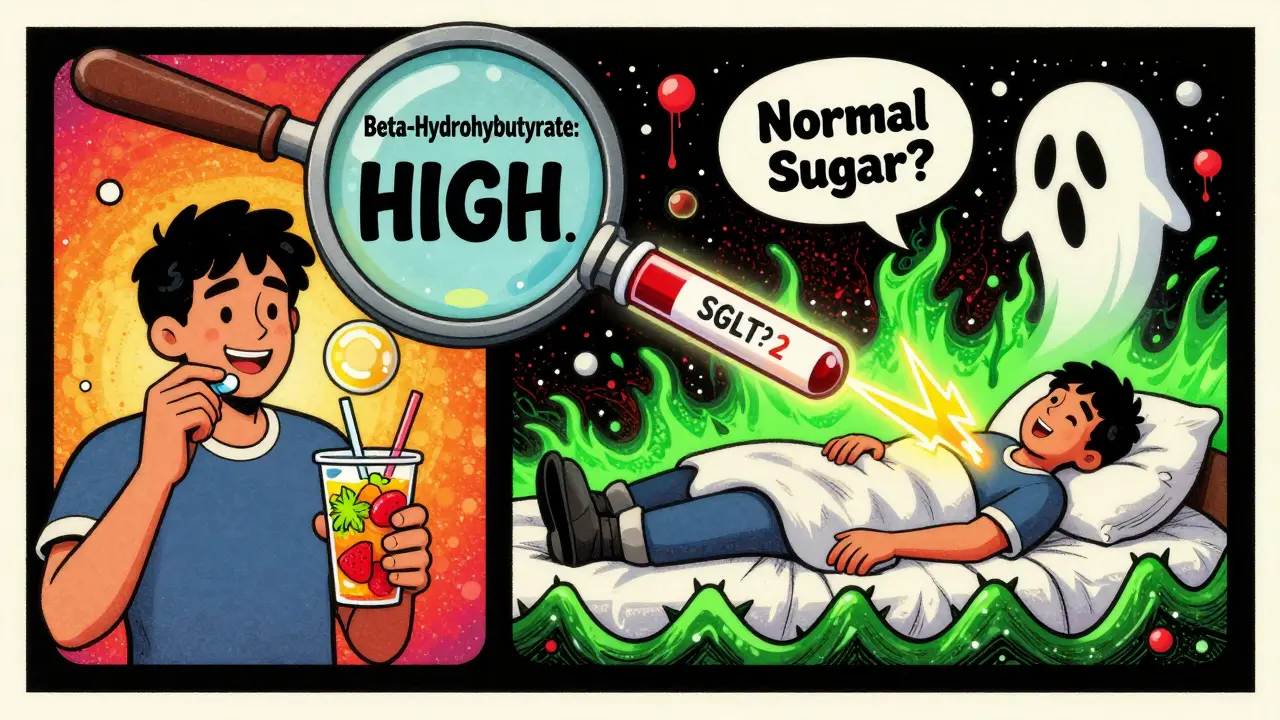
Euglycemic diabetic ketoacidosis (EDKA) is a form of DKA that occurs without the usual red flag: very high blood sugar. Instead of glucose readings above 300 mg/dL, patients often have levels between 100 and 240 mg/dL. That’s normal enough to make both patients and doctors think, "This can’t be DKA." But the real danger is hidden in the numbers: low pH (below 7.3), low bicarbonate (under 18 mEq/L), and elevated ketones-especially beta-hydroxybutyrate above 3 mmol/L.This isn’t rare. Studies show EDKA accounts for 2.6% to 3.2% of all DKA hospitalizations. And among people on SGLT2 inhibitors, the risk jumps up to 7 times higher than those not taking these drugs. The FDA issued its first warning in 2015 after 13 cases were documented across U.S. clinics. Since then, over 1.7 million patients have been prescribed these medications annually. And while they’re effective for lowering blood sugar and protecting the heart and kidneys, they come with a quiet, deadly side effect.
Why Do SGLT2 Inhibitors Trigger This?
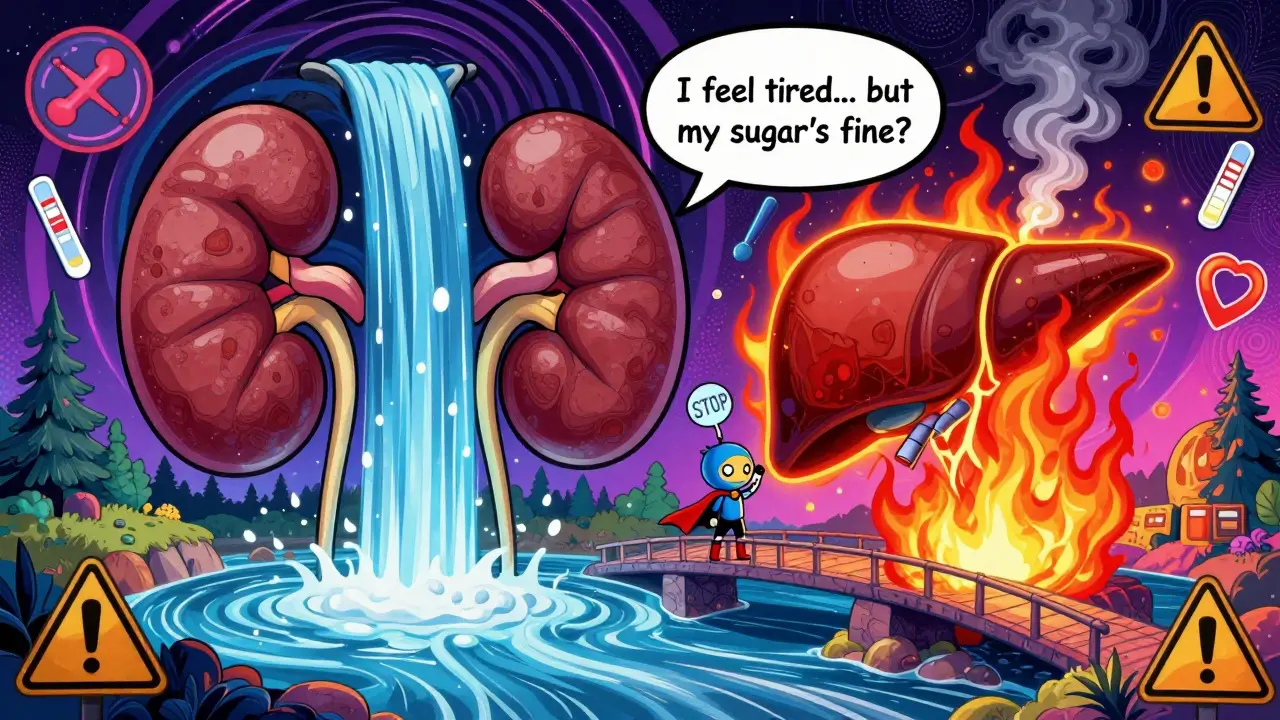
SGLT2 inhibitors-like dapagliflozin (Farxiga), empagliflozin (Jardiance), and canagliflozin (Invokana)-work by making your kidneys dump glucose into your urine. That lowers blood sugar. But here’s the twist: that glucose loss tricks your body into thinking it’s starving. Your pancreas responds by releasing more glucagon, which tells your liver to break down fat for energy. The result? Ketones flood your bloodstream.Insulin levels don’t rise to match this surge. So even though your blood sugar looks fine, your body is in fat-burning overdrive. Studies using glucose clamping show that when blood sugar is held steady during SGLT2 inhibitor use, glucagon doesn’t spike. That proves the drop in glucose is the trigger. It’s not the drug itself-it’s how your body reacts to the glucose loss.
Other factors make it worse: skipping meals, getting sick, drinking alcohol, or having surgery. Even healthy-looking patients with type 2 diabetes-who’ve never had DKA before-can slip into EDKA. About 20% of cases happen in people with no prior history of ketoacidosis. And while these drugs aren’t approved for type 1 diabetes, around 8% of type 1 patients use them off-label. In that group, DKA rates jump to 5-12%.
How to Spot It: The Silent Symptoms
Patients don’t come in saying, "I think I’m in ketoacidosis." They say things like:- "I’ve been nauseous for two days."
- "My stomach hurts, but my sugar’s normal."
- "I’m exhausted and can’t catch my breath."
These are the classic signs-nausea (85%), vomiting (78%), abdominal pain (65%), trouble breathing (62%), and extreme tiredness (76%). But because blood sugar is normal, many ERs and clinics skip ketone testing. That’s the fatal mistake.
Some patients have fruity-smelling breath, but not always. And unlike classic DKA, you won’t see dehydration as dramatically. That’s why labs are critical. An anion gap metabolic acidosis? Check. Elevated ketones? Check. Normal glucose? Still check. This combo = EDKA.
Leukocytosis (high white blood cell count) shows up in 40% of cases-but it’s not infection. It’s dehydration. Mistaking it for sepsis can lead to unnecessary antibiotics and delays in the right treatment.
Emergency Treatment: What Works
Treating EDKA isn’t the same as treating classic DKA. Here’s what emergency teams now follow:- Test serum ketones immediately. Don’t wait. Use a point-of-care beta-hydroxybutyrate meter. If it’s over 3 mmol/L and you’re on an SGLT2 inhibitor, assume EDKA.
- Start IV fluids with 0.9% saline-15-20 mL/kg in the first hour. This fixes dehydration and helps flush out ketones.
- Give insulin at 0.1 units/kg/hour. But don’t wait for high glucose to start it. You need insulin to stop ketone production.
- Switch to dextrose-containing fluids (like 5% dextrose) when glucose drops below 200 mg/dL. This prevents dangerous hypoglycemia. In classic DKA, you wait until glucose is 250+ before adding sugar. In EDKA, you add it much earlier.
- Replace potassium aggressively. Even if serum potassium looks normal, total body stores are usually low. About 65% of patients need extra potassium.
Stopping the SGLT2 inhibitor is non-negotiable. Keep it off until the patient is fully recovered and the trigger (illness, fasting, etc.) is resolved.
Prevention: What Patients and Providers Must Do
The best way to handle EDKA is to prevent it. Here’s how:- Patients on SGLT2 inhibitors should check urine or blood ketones whenever they’re sick, fasting, or under stress-even if their glucose is normal.
- Temporarily stop the medication during acute illness, surgery, or heavy alcohol use. Don’t wait for symptoms.
- Never skip meals. Even a single day of low-carb eating can trigger this.
- Doctors should avoid prescribing SGLT2 inhibitors to patients with a history of DKA. The American Association of Clinical Endocrinology recommends this.
- Teach patients to recognize the symptoms. A simple handout: "If you feel nauseous, tired, or have stomach pain, test for ketones. Don’t wait for high sugar."
Since 2015, the FDA has required all SGLT2 inhibitor packaging to include a boxed warning: "Stop taking this medication and seek medical help immediately if you have symptoms of ketoacidosis-even if your blood sugar is normal."
The Changing Landscape
Awareness has improved. Since 2015, overall DKA cases linked to SGLT2 inhibitors have dropped by 32%. But here’s the twist: EDKA now makes up 41% of all SGLT2-related DKA cases-up from 28% in 2015. That means more providers are catching it… but it’s still happening.New research is looking at early warning signs. A 2023 study found that a high ratio of acetoacetate to beta-hydroxybutyrate in the blood can predict EDKA 24 hours before symptoms appear. That’s promising. Another study, tracking 1,250 patients since 2023, is testing whether combining HbA1c variability with C-peptide levels can identify high-risk patients with 82% accuracy.
But the real breakthrough isn’t a new test. It’s a mindset shift. As Dr. Kieren Mather said at the FDA’s 2023 meeting: "The key isn’t avoiding these drugs. It’s stopping the false belief that DKA only happens with high sugar."
For anyone on an SGLT2 inhibitor-whether type 1 or type 2 diabetes-this isn’t theoretical. It’s real. And it’s silent. The next time someone says, "My sugar’s normal, so I’m fine," ask: "Have you checked your ketones?"
Can you get euglycemic DKA if you have type 2 diabetes?
Yes. While SGLT2 inhibitors are approved for type 2 diabetes, about 20% of euglycemic DKA cases occur in people with no prior history of DKA. Even if you’ve never had ketoacidosis before, the combination of the drug, illness, or low food intake can trigger it. Blood sugar may look normal, but ketones can still rise to dangerous levels.
Should I stop taking my SGLT2 inhibitor if I’m sick?
Yes. If you’re ill, vomiting, fasting, or having surgery, stop your SGLT2 inhibitor immediately. This isn’t optional. The FDA and major medical societies recommend holding the drug during acute illness. Restart it only after you’ve recovered and ketones are normal. Don’t wait for symptoms to get worse.
Do I need to test for ketones if my blood sugar is normal?
Absolutely. If you’re on an SGLT2 inhibitor and feel nauseous, tired, or have abdominal pain, test for ketones-even if your glucose is 150 or 200 mg/dL. Normal sugar doesn’t rule out ketoacidosis. In fact, that’s the whole danger of euglycemic DKA. Many patients are misdiagnosed because providers assume high sugar is required.
Can alcohol cause euglycemic DKA on SGLT2 inhibitors?
Yes. Alcohol lowers blood sugar and reduces insulin secretion. When combined with SGLT2 inhibitors, it can push your body into fat-burning mode without enough insulin to stop ketone production. Several case reports link heavy drinking with EDKA in patients on these drugs. Avoid alcohol if you’re on an SGLT2 inhibitor, especially if you’re not eating well.
Why is insulin given in euglycemic DKA if blood sugar is normal?
Insulin doesn’t just lower blood sugar-it stops ketone production. In euglycemic DKA, your body is making too many ketones because insulin is too low relative to glucagon. Giving insulin shuts down fat breakdown and reduces ketones. You’ll also need to add glucose-containing fluids early to prevent dangerous drops in blood sugar during treatment.
Are SGLT2 inhibitors still safe to use?
Yes-but only if you use them correctly. These drugs lower heart failure risk, kidney damage, and death in type 2 diabetes. But they require awareness. If you follow prevention steps-checking ketones when sick, stopping the drug during illness, and not skipping meals-the risk is very low. The danger isn’t the drug. It’s the lack of education.
What should I do if I think I have euglycemic DKA?
Go to the ER immediately. Don’t wait. Don’t call your doctor first. Call an ambulance if you’re too weak to drive. Tell them you’re on an SGLT2 inhibitor and have symptoms of ketoacidosis. Bring your medication bottle. Request a serum beta-hydroxybutyrate test. Time is critical-delayed treatment can lead to coma or death.
Can I get euglycemic DKA if I don’t have diabetes?
No. Euglycemic DKA only occurs in people with diabetes who are taking SGLT2 inhibitors. It doesn’t happen in non-diabetic individuals, even with fasting or alcohol use. The drug is required to create the unique metabolic imbalance that leads to this condition.



pradnya paramita
February 4, 2026 AT 16:11Euglycemic DKA is a silent killer because clinicians default to glucose-centric thinking. The pathophysiology hinges on the glucagon-insulin imbalance triggered by SGLT2i-induced glucosuria. Even with euglycemia, hepatic ketogenesis proceeds unchecked due to relative insulinopenia. Beta-hydroxybutyrate >3 mmol/L with anion gap acidosis is diagnostic-no glucose threshold required. Point-of-care ketone meters are non-negotiable in high-risk patients. I’ve seen three cases in the last year alone-all missed because labs didn’t order ketones. The FDA warning needs to be printed on every prescription label.
Jesse Naidoo
February 5, 2026 AT 13:00So basically, these drugs are just slowly poisoning people and the pharma companies know it? I mean, why would they keep selling something that causes metabolic chaos? It’s not like they’re unaware. They’ve got the data. They’ve got the lawsuits. They’ve got the FDA warnings. And yet-still on the market. Coincidence? Or just greed in a lab coat?
Zachary French
February 6, 2026 AT 23:43Okay so let me get this straight-your body thinks it’s starving because you’re peeing out sugar? That’s like telling your car it’s out of gas because the fuel gauge is broken. I mean, SGLT2 inhibitors are basically hacking your metabolism like a glitch in The Matrix. And now you gotta give insulin to a person whose sugar is NORMAL? That’s like putting gas in a car that’s got a full tank just because the engine is sputtering. Wild. I’m not even mad, I’m impressed. Pharma’s got a PhD in chaos engineering.
Daz Leonheart
February 8, 2026 AT 14:31This is why we need better education at every level. I’ve had patients tell me they skipped ketone checks because their glucometer said ‘normal.’ That’s not safety-it’s false confidence. The key is proactive monitoring: ketones when sick, ketones when fasting, ketones when stressed. It’s not complicated. It’s not expensive. It’s just not taught enough. You don’t need to stop the drug-you just need to respect the risk. And if you do that? You get all the benefits without the danger.
Samuel Bradway
February 8, 2026 AT 18:42I had a cousin on Jardiance who got sick with the flu and didn’t stop the med. Ended up in the ER with abdominal pain and confusion. They thought it was gastroenteritis. Took 18 hours to test ketones. She nearly didn’t make it. Now she’s off the drug, but she carries ketone strips in her wallet. I told her: ‘If your body feels wrong, check the ketones-even if your sugar looks fine.’ It saved her life. This isn’t theory. It’s real. And it’s happening every day.
Caleb Sutton
February 9, 2026 AT 20:01They’ve been hiding this since 2015. The FDA knew. The manufacturers knew. The doctors knew. And still they pushed these drugs like they were candy. Now they’re calling it a ‘rare side effect’? 1.7 million prescriptions a year? That’s not rare. That’s a public health disaster waiting for the next flu season. And don’t even get me started on off-label use in type 1. They’re playing Russian roulette with insulin-dependent patients and calling it ‘innovation.’
Jamillah Rodriguez
February 10, 2026 AT 03:54OMG I just read this and I’m so done. 😩 I’m on Farxiga and I literally just had a stomach bug last week. I didn’t check ketones. I thought I was fine. Now I’m terrified. I’m gonna throw my prescription in the trash. Who even thought this was a good idea? 🤦♀️
Susheel Sharma
February 10, 2026 AT 09:11The economic calculus of SGLT2 inhibitors is deeply flawed. While they demonstrably reduce cardiovascular mortality and slow nephropathy progression, the marginal benefit is offset by the systemic cost of emergency interventions for EDKA. The hospitalization burden, ICU admissions, and diagnostic delays represent a negative ROI for public health systems. Furthermore, the cultural normalization of ‘normal glucose = safe’ creates a dangerous cognitive bias in primary care. Until clinical protocols mandate ketone screening in all SGLT2i users presenting with non-specific symptoms, this epidemic will persist.
Roshan Gudhe
February 11, 2026 AT 16:01There’s a deeper lesson here beyond biochemistry. We treat diabetes like a number to be controlled, not a system to be understood. We optimize for glucose, not metabolic harmony. Euglycemic DKA exposes our reductionism. The body doesn’t care if your HbA1c is 6.2-if your insulin-to-glucagon ratio is off, it will burn itself alive. Maybe the real question isn’t ‘how do we treat this?’ but ‘how do we stop treating patients like machines?’ Maybe the drug isn’t the villain-it’s the symptom of a system that forgot to listen.
Rachel Kipps
February 12, 2026 AT 11:22