Children's Antihistamine Dosing Calculator
When your child breaks out in hives after eating peanuts, or their nose won’t stop running during pollen season, it’s tempting to reach for an antihistamine. But not all antihistamines are created equal - especially for kids. Giving the wrong one, or the wrong dose, can lead to serious side effects. The good news? There are clear, science-backed guidelines for what works, what doesn’t, and when to call the doctor instead.
Why Kids Need Different Antihistamines Than Adults
Children aren’t just small adults. Their bodies process medicine differently. A baby’s liver and kidneys are still developing, which means drugs can stay in their system longer or build up to dangerous levels. First-generation antihistamines like diphenhydramine (Benadryl) cross the blood-brain barrier easily. That’s why they cause drowsiness - and why they can cause confusion, rapid heartbeat, or even seizures in young children. Studies show up to 60% of kids under 5 feel sleepy after taking Benadryl. That’s not just tiredness; it’s a central nervous system reaction.
Second-generation antihistamines like cetirizine (Zyrtec) and loratadine (Claritin) were designed to avoid this. They barely enter the brain, so they’re much less likely to cause drowsiness or confusion. In fact, only about 10-15% of children on cetirizine report feeling sleepy, and just 7% on loratadine. That’s why pediatric allergists now recommend these as the first choice for most allergy symptoms.
Dosing by Age: What Actually Works
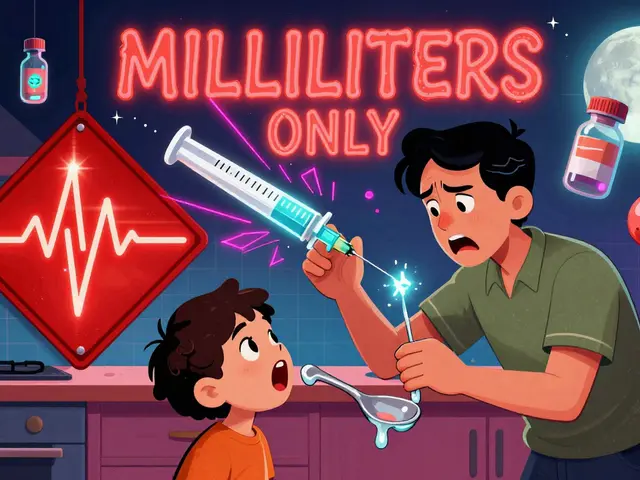
Dosing isn’t about age alone - it’s about weight, formulation, and the specific drug. Using a kitchen spoon? That’s a mistake. A regular teaspoon holds anywhere from 3 mL to 7 mL. The difference between a safe dose and a dangerous one can be as small as one spoonful.
- Infants 6-11 months: Cetirizine is approved for this age group. The dose is 0.25 mg per kilogram of body weight, once daily. For an 8 kg baby, that’s 2 mg total. Some doctors start lower - at 0.125 mg/kg - especially if symptoms are mild. This is based on a 2020 study published in Pediatric Allergy and Immunology that showed no serious side effects at this dose.
- Children 2-5 years: Cetirizine: 2.5 mg to 5 mg daily (½ to 1 teaspoon of liquid). Loratadine: 5 mg daily (1 teaspoon of liquid). Never give chewables unless you’ve checked the label - some are 5 mg, others are 10 mg.
- Children 6-11 years: Cetirizine: 5-10 mg daily. Loratadine: 10 mg daily. If using liquid, measure carefully. If using tablets, make sure they’re not adult-strength (10 mg tablets are common - don’t split them unless instructed).
- 12 years and older: 10 mg daily of cetirizine or loratadine. Same as adult dose.
Diphenhydramine (Benadryl) is still used - but only in specific cases. For children weighing 38-49 lbs, the dose is 12.5 mg every 4-6 hours. That’s 5 mL of liquid (12.5 mg per 5 mL) or 1.5 chewable tablets. Maximum of 6 doses in 24 hours. Never give it to a child under 2 without a doctor’s order. The FDA warned about this in 2008, and the risk hasn’t changed.
What to Avoid at All Costs
Here are the most common mistakes parents make - and why they’re dangerous.
- Using adult formulations. A 10 mg tablet meant for adults is too much for a 3-year-old. Even half a tablet can be too much.
- Adding decongestants. Products like “Children’s Benadryl Plus” contain pseudoephedrine or phenylephrine. These are not approved for kids under 6. They raise blood pressure, increase heart rate, and can cause agitation or hallucinations.
- Using antihistamines as sleep aids. This is a big one. About 300% more overdoses happen in kids under 2 when parents use antihistamines to help them sleep. The American College of Allergy, Asthma, and Immunology says this practice is unsafe and unnecessary.
- Not using the measuring device. The cap that comes with the bottle has markings. Use it. Never guess with a spoon, syringe, or medicine cup from another drug.

When to Choose Cetirizine Over Loratadine
Both are second-generation, both are safe. But they’re not identical.
Cetirizine works a little faster - about 1 hour - and lasts 24 hours. It’s the go-to for hives, eczema flare-ups, and allergic rhinitis. It’s also the only one approved for infants as young as 6 months. But it causes slightly more drowsiness than loratadine. In studies, 14.7% of kids on cetirizine felt sleepy compared to 6.9% on loratadine.
Loratadine is the pick if you want the least chance of sleepiness. It’s ideal for daily use in kids with seasonal allergies who need to stay alert at school. It takes a bit longer to kick in - 1 to 2 hours - but it’s very consistent.
For most families, cetirizine is the better first choice. It’s effective, approved for younger kids, and once-daily dosing is easier to remember. But if your child gets drowsy on it, switch to loratadine. Talk to your pediatrician before changing.
What About Infants Under 6 Months?
This is where things get tricky. No antihistamine is FDA-approved for babies under 6 months. But severe allergic reactions - like large hives or swelling - don’t wait for approval.
Dr. Eric Macy, a leading pediatric allergist, says in these rare cases, doctors may prescribe cetirizine at 0.125 mg/kg/day. For a 7 kg baby, that’s less than 1 mg - about 0.4 mL of the 1 mg/mL liquid. This is off-label, meaning it’s not officially approved, but it’s based on real-world safety data. Never do this without a doctor’s guidance. The risk of overdose is real, and symptoms can be subtle: unusual sleepiness, trouble feeding, or a slower heartbeat.
For mild rashes or itching in infants, non-medication options are safer: cool compresses, loose cotton clothes, and avoiding known triggers like pet dander or certain soaps. Antihistamines aren’t always needed.

Signs of Overdose - And What to Do
Antihistamine overdose in kids can look like a bad cold - or worse. Watch for:
- Extreme drowsiness or inability to wake up
- Confusion, agitation, or hallucinations
- Rapid heartbeat or flushed skin
- Dry mouth, dilated pupils, or trouble urinating
- Seizures (in severe cases)
If you suspect an overdose, call Poison Control immediately: 1-800-222-1222. Don’t wait for symptoms to get worse. Keep the medicine bottle handy - the poison control team will need to know the exact drug and amount taken.
What’s Changing in 2026?
Guidelines are evolving. Since 2020, hospitals like Boston Children’s and Children’s Hospital Colorado have updated their protocols to make cetirizine the default for kids over 6 months. The FDA is reviewing new data from clinical trials (NCT04567821) that could lead to approval of cetirizine for infants under 6 months by 2026. But for now, caution remains the rule.
What’s clear? First-generation antihistamines like diphenhydramine are no longer the standard for routine use. They’re reserved for emergencies - like anaphylaxis - and even then, only under medical supervision. Second-generation options are safer, more predictable, and better suited for daily life.
Parents aren’t expected to be pharmacists. But knowing which drug to ask for, how to measure it, and when to skip it entirely can make all the difference. When in doubt, call your pediatrician. Better safe than sorry - especially when your child’s health is on the line.
Can I give my 1-year-old Benadryl for allergies?
The FDA advises against giving diphenhydramine (Benadryl) to children under 2 years without a doctor’s approval. While some parents use it for hives or itching, it carries a high risk of over-sedation, rapid heart rate, and breathing problems. Cetirizine (Zyrtec) is approved for infants 6 months and older and is safer for routine use. Always check with your pediatrician before giving any antihistamine to a child under 2.
Is Zyrtec safer than Claritin for toddlers?
Both are safe, but Zyrtec (cetirizine) works slightly faster and is approved for younger children (6 months and up), while Claritin (loratadine) is approved for 2 years and up. Zyrtec has a slightly higher chance of causing drowsiness (about 15% vs. 7% for Claritin), so if your child is sensitive to sleepiness, Claritin might be better. For most toddlers, Zyrtec is the preferred first choice because of its broader approval and proven effectiveness.
How do I measure liquid antihistamine correctly?
Always use the measuring device that comes with the medicine - usually a syringe or dosing cup. Kitchen spoons vary too much: one can hold 3 mL, another 7 mL. A wrong dose can be dangerous. For example, if you give 2 teaspoons instead of 1, you might give twice the intended dose. Look for markings on the syringe, and double-check the concentration: some liquids are 5 mg per 5 mL, others are 1 mg per mL. Read the label carefully.
Can I give my child an antihistamine every day?
Yes - if it’s a second-generation antihistamine like cetirizine or loratadine. These are designed for daily use in children with chronic allergies. But never use them long-term without checking in with your doctor. If symptoms don’t improve after 2-4 weeks, or if your child develops new symptoms like irritability or trouble sleeping, it’s time to revisit the diagnosis. Antihistamines treat symptoms, not the root cause.
What should I do if my child accidentally takes too much?
Call Poison Control right away at 1-800-222-1222. Do not wait for symptoms to appear. Keep the medicine bottle nearby so you can tell them the exact name, strength, and amount taken. Signs of overdose include extreme sleepiness, confusion, fast heartbeat, or trouble breathing. If your child is unconscious or having seizures, call 911 immediately.