Quick Tips for Medication Safety
- Use a 7-day pill organizer with AM/PM slots for immediate visual confirmation.
- Designate a single person as the "dose giver" in multi-caregiver homes.
- Sync your medicine schedule with a daily habit, like brushing your teeth.
- Never use kitchen spoons for liquid meds; always use the provided syringe.
- Combine a physical tracker with a digital reminder app for the best results.
The scale of the problem is staggering. The U.S. Food and Drug Administration (FDA) estimates that medication errors lead to at least one death every single day. When we look at the home environment, about 50% of all medication-related adverse events happen right in the living room or kitchen. This isn't just about being "forgetful"; it's often about the complexity of modern health. Many seniors now take four or five different prescriptions daily, making it incredibly easy to lose track of whether a dose was actually swallowed.
The Best Tools to Stop Double-Dosing
Depending on your lifestyle and the number of meds you take, different tools work better. For most people, a pill organizer is the gold standard. These plastic containers with compartments for each day of the week allow you to see at a glance if today's dose is gone. Research shows that using these alone can cut double-dosing errors by about 35%. If you take meds multiple times a day, look for one with AM, noon, PM, and bedtime slots.
If you only take one pill a day, you might prefer the "bottle flip" method. This is a simple low-tech trick where you flip the bottle upside down after you take the dose and flip it back at night. It's a quick visual cue that tells you, "Yes, I already did this today." However, for anyone on a complex regimen, this method is too risky and should be replaced by a structured organizer.
For those who love their tech, smartphone medication reminder apps are game-changers. Apps like Medisafe help synchronize tracking and send alerts to your phone. When you combine a digital app with a physical pillbox, the effectiveness of prevention jumps to 62%. It's a double-layer of security: the app tells you it's time, and the empty slot in the box proves you did it.
| Method | Best For... | Pros | Cons |
|---|---|---|---|
| Pill Organizers | Complex daily regimens | Visual proof of dose | Requires weekly setup |
| Bottle Flipping | Single daily dose | Zero cost, instant | Easy to forget to flip back |
| Reminder Apps | Tech-savvy users | Active alerts/reminders | Screen fatigue, battery dependent |
| Smart Dispensers | High-risk/Dementia care | Locks after dosing | Expensive, bulky |
Special Precautions for Kids and Seniors
Children are particularly vulnerable because they can't track their own meds. A huge risk here is "shared responsibility." When two parents both think the other gave the child their medicine, a double dose often happens. To fix this, designate one person as the official "medicine giver." This single-point-of-contact strategy can reduce errors by nearly 50%.
Another danger for kids is the use of kitchen spoons. A standard teaspoon in your drawer could vary in volume by 20% to 65%. This means you could be giving a child significantly more medication than prescribed. Always use the oral syringe or the specific dosing cup that comes with the product.
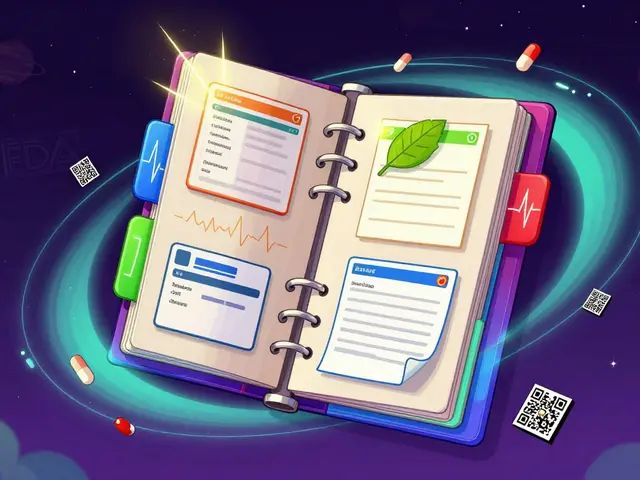
For seniors, the challenge is often "dose anxiety"-that nagging feeling of "Did I take my pill?" This stress often leads to taking an extra dose just to be safe, which is where the danger lies. Maintaining a simple medication journal or checking off a list provides the cognitive reassurance needed to avoid that second, unnecessary dose.
Identifying Hidden Double-Doses
Double-dosing isn't always about taking the same pill twice. Sometimes it's about taking two different products that contain the same active ingredient. For example, many over-the-counter cold medicines contain acetaminophen. If you take a prescription painkiller and a multi-symptom cold syrup, you might be double-dosing on the same drug without knowing it. This is why it's vital to keep a comprehensive list of all over-the-counter (OTC) medications, vitamins, and supplements.
Pharmacists often see this happen. Some data suggests that nearly a third of double-dosing incidents involve overlapping active ingredients. Your best move is to bring all your bottles to your pharmacist and ask, "Are any of these doing the same thing?" They can spot redundancies that a regular person would miss.
Building a Fail-Safe Routine
The secret to not forgetting-or over-doing-your meds is "habit stacking." Instead of trying to remember a random time, sync your medication with a task you already do. If you brush your teeth every morning at 7 AM, put your pill organizer right next to your toothbrush. When you finish brushing, you take your pill. This integrates the medication into your existing life flow, making it much harder to forget (or accidentally repeat).
Be mindful of "trigger' events" that disrupt your routine. Travel, daylight saving time changes, and holiday visits with family are the top three scenarios where dosing errors spike. When your schedule changes, your risk increases. During these times, rely more heavily on your digital alerts and physical checklists than your memory.
What should I do if I realize I've double-dosed?
First, stay calm. Do not try to "compensate" by skipping the next few doses unless a doctor tells you to. Immediately call a poison control center or your primary healthcare provider. In the US, the National Poison Control Center can be reached at 1-800-222-1222. Have the medication bottle and the exact time of the double-dose ready so the expert can give you the correct guidance.
Are smart pill dispensers worth the cost?
For high-risk individuals, such as those with early-stage dementia or very complex medication lists, yes. Some smart dispensers lock after a dose is administered, which can reduce double-dosing incidents by as much as 76% compared to traditional boxes. However, for most healthy adults, a standard weekly organizer combined with a free reminder app is sufficient.
Why can't I just use a regular kitchen spoon for liquid meds?
Kitchen spoons are not measuring tools. Research shows that a typical "teaspoon" in a home kitchen can hold anywhere from 2.5mL to 7.3mL. This variance is huge and can lead to a significant overdose, especially in children whose dosages are based on precise body weight.
How do I handle medication during travel to avoid errors?
Travel is a high-risk trigger for double-dosing due to time zone changes and schedule disruptions. Use a travel-sized pill organizer and set your smartphone alarms to the local time of your destination as soon as you land. Avoid taking meds "from the bottle" while on the move; stick to your organizer to keep a visual record of what's been taken.
Can vitamins and supplements also cause double-dosing issues?
Absolutely. Many supplements contain ingredients that overlap with prescription drugs or other vitamins. For example, taking a multivitamin and a separate high-dose Vitamin D supplement could lead to excessive intake. Treat all supplements as medications and include them in your master list and organizer.
Next Steps for a Safer Home
If you're currently managing medications for yourself or a loved one, start by auditing your system today. Do you have a master list? Are you using a measuring tool or a spoon? If you're in a multi-caregiver household, sit down and decide who the "designated giver" will be. Small changes in how you organize your morning routine can be the difference between a healthy recovery and a dangerous trip to the emergency room.