

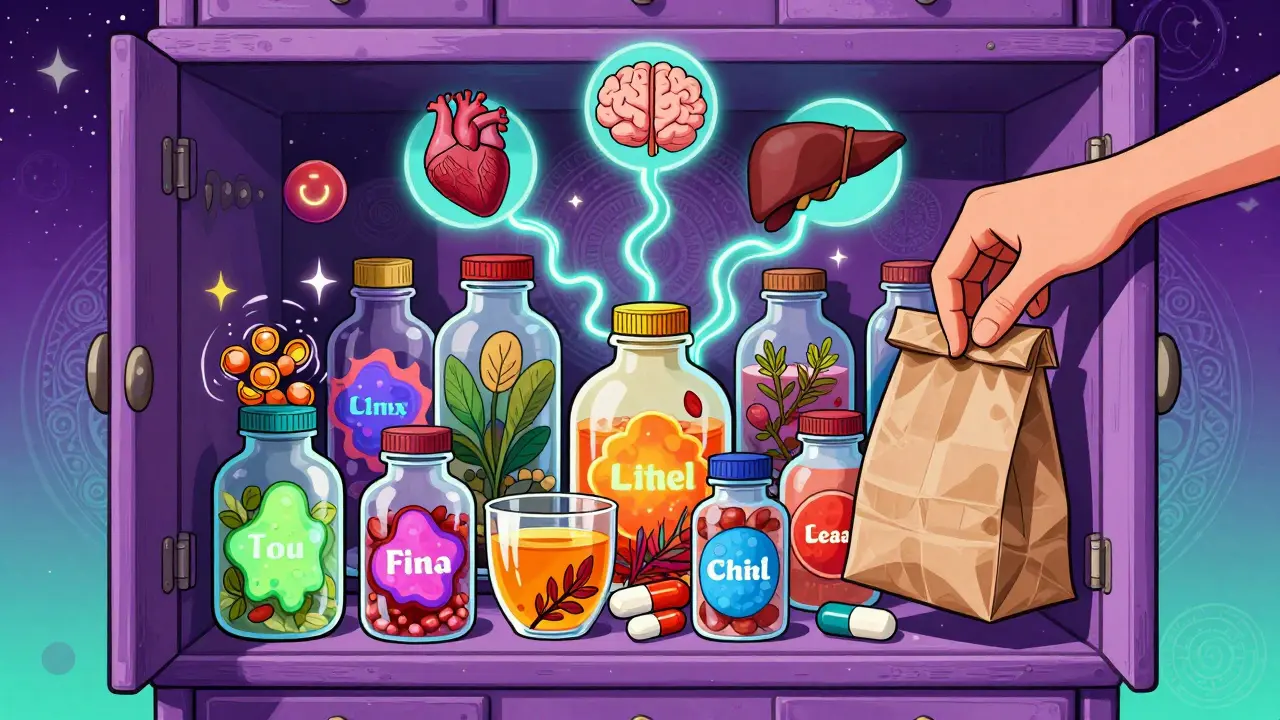
When you walk into a doctor’s office, emergency room, or hospital, the most important thing you can bring isn’t your insurance card or ID-it’s your medical history. Not the vague summary you think you remember. Not the list you scribbled on a napkin last year. But a full, accurate, up-to-date record of every pill, patch, injection, supplement, and herbal remedy you’ve taken. Why? Because medication errors kill thousands of people every year-and most of them are preventable.
Think about this: You’re on five different medications. Your cousin gives you a new supplement for joint pain. You pick up a painkiller at the pharmacy without telling your doctor. A week later, you’re rushed to the hospital with dizziness and nausea. The doctors don’t know about the supplement. They don’t know you stopped your blood thinner last month. They don’t know you take melatonin every night. By the time they figure it out, you’ve had a bad reaction. This isn’t rare. It happens every day.
Why Your Medication List Matters More Than You Think
Medication reconciliation isn’t just a hospital formality. It’s the process of making sure every clinician who treats you knows exactly what you’re taking-and why. The Joint Commission made it a national safety goal back in 2006. Today, every hospital, clinic, and pharmacy in the U.S. is required to do it during admission, transfer, and discharge. And yet, nearly half of all medication errors happen because someone didn’t know what the patient was really taking.
Here’s the hard truth: If you don’t tell your doctor about that over-the-counter painkiller, the fish oil, the turmeric capsules, or the sleep aid your sister swears by, they can’t protect you. Studies show that 67% of patients forget or don’t mention OTC meds. That’s two out of three people. And those missing meds? They’re often the ones causing dangerous interactions.
For example, mixing blood thinners like warfarin with certain herbal supplements can lead to internal bleeding. Taking NSAIDs like ibuprofen with heart medications can spike your blood pressure. Even something as simple as grapefruit juice can turn a common cholesterol drug into a toxic dose. These aren’t hypothetical risks. They’re documented, preventable dangers.
What Exactly Should Be on Your List?
Your list isn’t just for prescriptions. It needs to include everything:
- Brand and generic names of all prescription drugs
- Dosage and how often you take them
- Over-the-counter medicines (pain relievers, antacids, cold pills)
- Vitamins, minerals, and supplements (even if you think they’re "natural" or "safe")
- Herbal remedies and teas (St. John’s wort, ginkgo, echinacea, etc.)
- Topical treatments (creams, patches, eye drops)
- Any medications you stopped taking-and why
Don’t rely on memory. Write it down. Use your phone. Keep a physical copy. Update it every time your doctor changes something-even if it’s just a dosage tweak.
There’s a reason doctors ask you to bring your meds in a brown bag. The "brown bag method"-where you show up with all your bottles-reduces medication errors by 40%. Why? Because you can’t fake a bottle. You can’t misremember a label. You can’t say "I think it was 5 mg" when it’s actually 10. Seeing the real thing eliminates guesswork.
How Technology Helps (and Where It Falls Short)
Most hospitals now use electronic systems that pull your medication history from pharmacies. Services like Surescripts connect to 98% of U.S. pharmacies and 100% of major insurance providers. They can tell your doctor what you’ve filled in the last six months. That’s powerful.
But here’s the catch: These systems don’t know about cash-pay meds, supplements, or drugs you got from a friend. They don’t know you stopped taking your blood pressure pill because it made you dizzy. They don’t know you started taking CBD for anxiety last month. And they definitely don’t know about the herbal tea your grandma swears by for digestion.
One study found that even with the best tech, electronic systems still miss over half of actual medication discrepancies. That’s not a failure of technology-it’s a failure of communication. The system can only give you what’s in the data. You have to give it the rest.

Your Role in the Process
You are the most important person in this equation. No system, no app, no nurse can replace you.
Here’s what you need to do:
- Keep your list updated after every visit. Add new meds, cross out discontinued ones.
- Bring your list-and your meds-to every appointment. Even if it’s just a checkup.
- Ask: "Is this new medication safe with everything else I’m taking?" Don’t assume the doctor already knows.
- Speak up if something feels off. Dizziness? Nausea? Unusual fatigue? Say it. Even if it seems minor.
- Teach a family member how to read your list. If you’re ever unable to speak for yourself, someone else needs to know what’s in your bag.
Health literacy is a real barrier. Nearly 60% of Americans struggle to understand basic medication instructions. If you’re confused about why you’re taking something, ask again. Use the "teach-back" method: After your doctor explains, say, "So, just to make sure I got this right-I take this pill every morning with food to lower my blood pressure, and I shouldn’t drink grapefruit juice. Is that correct?" This cuts misunderstandings by 75%.
What Happens When You Don’t Share
Let’s say you’re admitted to the hospital for pneumonia. You’ve been taking aspirin daily for heart health, but you forgot to mention it. The doctor prescribes a new antibiotic. Unbeknownst to them, that antibiotic increases aspirin’s effect on your blood. You start bleeding internally. You’re transferred to ICU. Your family is terrified. Your recovery takes weeks longer than it should.
This isn’t fiction. It’s a real case from Johns Hopkins. In one study, hospitals that improved medication reconciliation cut anticoagulant-related errors by 62%. That’s not a small number. That’s life or death.
And it’s not just hospitals. A 2023 survey found that 41% of family caregivers for elderly relatives have experienced at least one medication error in the past year. Often, it’s because the patient didn’t tell their doctor about a new pill they started, or they couldn’t remember what they were taking.

What Providers Are Doing Right-and Wrong
Good providers use structured communication tools like SBAR (Situation, Background, Assessment, Recommendation) to hand off patient info clearly. They check your list against pharmacy records. They flag high-risk drugs like insulin, blood thinners, and opioids. They ask open-ended questions: "What else are you taking?" not "Are you on any other meds?"
But many still rely on outdated methods. In rural clinics, nearly one-third still use paper forms and verbal reports. That means errors slip through. One study found that manual reconciliation misses 25% of home medications. Electronic systems cut that to 8%. That’s a 17-point difference in safety.
And even with tech, alert fatigue is real. Doctors get so many pop-up warnings that they start ignoring them. One study found nearly half of all drug interaction alerts are overridden because they’re too vague or too frequent. So your list isn’t just helpful-it’s essential.
The Bigger Picture: Why This Isn’t Just About You
Medication safety isn’t just a personal issue. It’s a system-wide crisis. The U.S. spends $4.2 billion a year on medication safety tools. Medicare fines hospitals that have too many errors. The FDA is pushing for clearer drug labels to reduce mix-ups. The National Academy of Medicine predicts that if we get this right, we could prevent 1.2 million adverse drug events by 2030-and save $21 billion.
But none of that matters if you don’t speak up.
You’re not being difficult when you ask for clarification. You’re not being a burden when you bring your brown bag. You’re the missing link in a chain that’s designed to protect you. The system can’t work without you.
What to Do Next
Right now, open your medicine cabinet. Take out every bottle, box, and packet. Write down everything. Include dosages, frequency, and why you take it. Update it. Keep it in your wallet. Share it with your primary doctor. Show it to your pharmacist. Give a copy to a trusted family member.
And next time you’re asked, "What medications are you taking?"-don’t say "I think I’m on a few." Say this: "Here’s my full list. I take X, Y, Z. I stopped A last month because of side effects. I started B two weeks ago. I also take C and D for my joints. I take E every night to help me sleep. I’m not sure if any of these interact. Can you check?"
That’s not just good communication. That’s how you save your own life.
Why is it important to tell my doctor about supplements and herbal remedies?
Many supplements and herbs interact dangerously with prescription medications. For example, St. John’s wort can reduce the effectiveness of birth control, antidepressants, and blood thinners. Garlic and ginkgo can increase bleeding risk when taken with aspirin or warfarin. Even common ones like vitamin E or fish oil can affect blood clotting. Your doctor needs to know everything you’re taking-not just what’s on a prescription label.
Can my pharmacist help me keep track of my medications?
Yes. Pharmacists are trained to spot drug interactions and can review your entire list-prescriptions, OTC meds, and supplements. Many offer free medication reviews. Bring your brown bag to your pharmacy once or twice a year. Ask them to print you a current list. They often have access to your fill history and can flag missing meds or duplicates.
What if I’m seeing multiple doctors? Do I need to tell each one?
Absolutely. Each doctor only sees their own part of your care. Your cardiologist doesn’t know what your rheumatologist prescribed. Your dentist doesn’t know about your new antidepressant. Always bring your updated list to every appointment-even if you think they’ve seen it before. Things change fast, and communication gaps are where errors happen.
Is it safe to share my medication list through patient portals?
Yes, and it’s encouraged. Under HIPAA, providers can share your health information for treatment purposes without extra consent. Most patient portals now let you view your medication list, add notes, and even flag discrepancies. Use it. Update your list online after each visit. It’s one of the easiest ways to keep everyone on the same page.
What should I do if I notice a mistake on my medication list?
Speak up immediately. If your list says you’re still taking a drug you stopped, or it’s missing one you’re currently using, tell your provider right away. Don’t wait for your next appointment. Call the office or message your provider through the portal. A wrong list can lead to dangerous prescriptions or missed treatments. Accuracy isn’t optional-it’s life-saving.
Don’t wait for an emergency to realize your medication list is outdated. Start today. Write it down. Keep it current. Share it without hesitation. Your health isn’t a guessing game. And you’re the only one who knows the full story.

steve rumsford
January 7, 2026 AT 05:04Man I used to think my meds were no one's business until my aunt ended up in the ER because she forgot to mention her fish oil. Now I keep a laminated card in my wallet. No more guessing. No more "I think I took it yesterday." Just facts. Simple. Life-saving.
Andrew N
January 7, 2026 AT 05:50Studies show 67% of patients forget OTC meds. That's not a failure of patients. That's a failure of the system. Why are we putting the burden on people to remember every pill they've ever taken? Why not have pharmacies auto-update a central database? Why make everyone a medical administrator?
Aparna karwande
January 8, 2026 AT 04:46India has been doing this for decades. Our elders never forget a single herb or tablet. They carry their medicine list like a sacred scroll. You Americans think you're advanced? You're just lazy. We don't need apps or portals. We have memory. We have respect. We have culture. You have... a brown bag and a Google search.
Jessie Ann Lambrecht
January 9, 2026 AT 03:34This is the most important post I've read all year. I'm a nurse and I see this every single day. One woman came in with a seizure because she didn't tell her neurologist she started taking St. John’s wort for depression. That stuff cuts her seizure meds in half. She thought it was "natural" so it was safe. Natural doesn't mean harmless. Please, if you take anything that isn't a multivitamin-tell someone. Your life isn't a secret.
Vince Nairn
January 10, 2026 AT 12:01So you're telling me I need to carry my meds to every appointment... and update a list... and teach my kid how to read it... and ask my doctor if it's safe... and check my portal... and call if there's a mistake...
Wow. So what's the catch? Is this a new workout routine disguised as healthcare?
Ayodeji Williams
January 10, 2026 AT 21:47bro i just started taking CBD gummies for anxiety and my cousin said its fine but now im scared lmao 🤯 i dont know what to do i just want to chill 😭
Kyle King
January 11, 2026 AT 23:40Let me guess-this whole thing is just a ploy to get you into the system so they can track your every pill, right? The FDA, Big Pharma, Surescripts-they all want you dependent. Why do you think they made "medication reconciliation" a national goal? It's not about safety. It's about control. They don't want you knowing what's really in your meds. They want you asking permission.
Kamlesh Chauhan
January 13, 2026 AT 13:45why do we even bother reading this i mean honestly who has time to write down every pill they took since 2012 i just take what the doc says and hope for the best
Rachel Steward
January 15, 2026 AT 04:02What this post fails to address is the epistemological crisis of medical authority. The assumption that a patient’s self-reported data is the primary source of truth presupposes a Cartesian dualism between body and narrative-yet the body is always already mediated by institutional power structures. The brown bag is not a tool of liberation-it’s a performative gesture that reinforces the hegemony of clinical epistemology. The real solution isn’t better lists. It’s dismantling the physician-patient hierarchy entirely. Until then, you’re just optimizing a broken system. And that’s not safety. That’s compliance dressed up as care.